Tab 1 of 12
Heat pump & AC installation
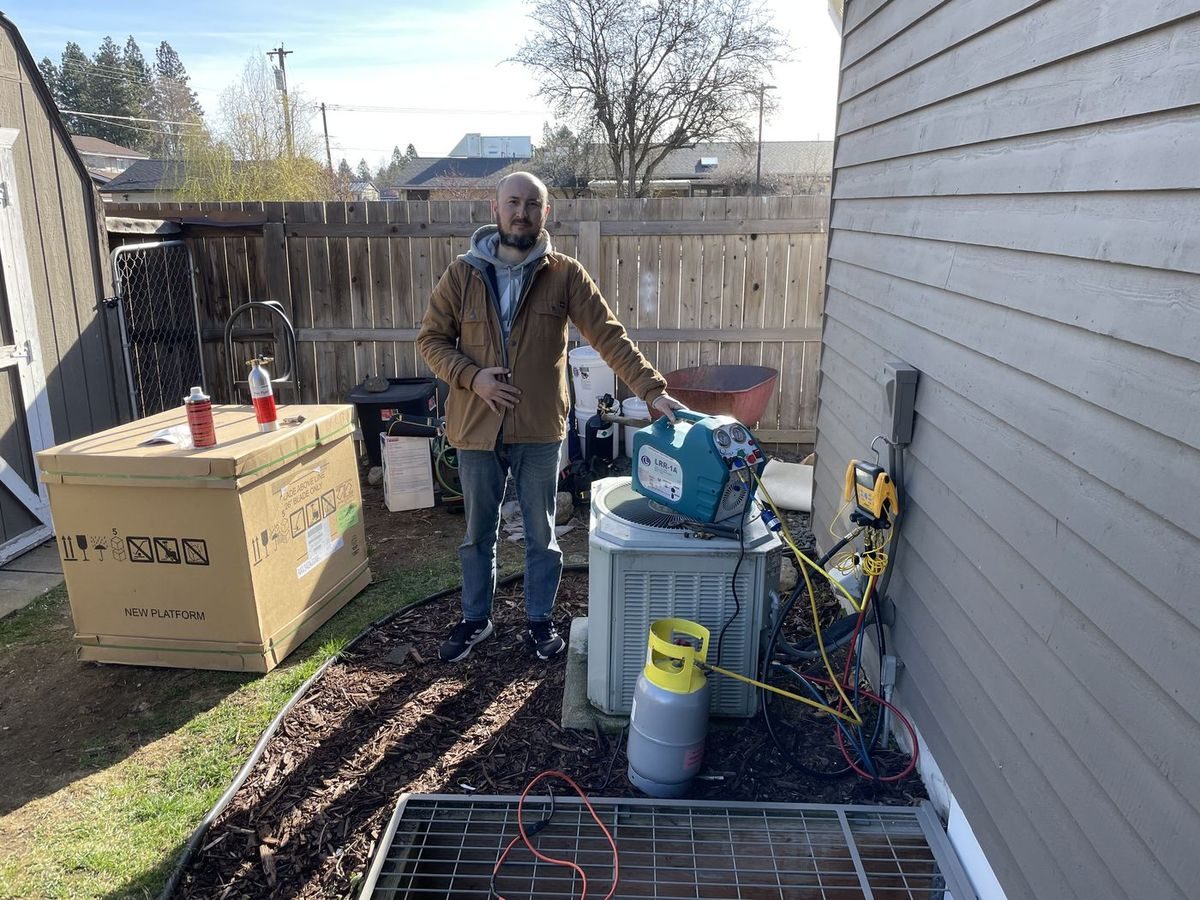
Placement matters on the peninsula: a raised pad clear of wet ground, back from salt spray where the lot allows, and out from under the needle drop.
See the service page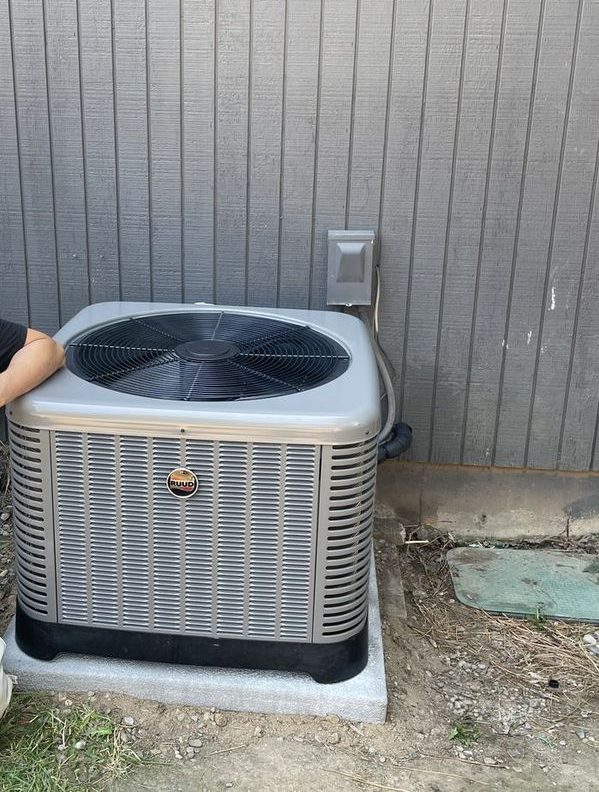
Heat pump and air conditioner installation
Plenty of peninsula houses were built with no central air, and Bremerton's 110-degree afternoon in June 2021 convinced a lot of owners to fix that. We install heat pumps, air conditioners and air handlers sized to the house, offer salt-air options near the water, and quote the job as one written figure.
Straight to it
Sizing starts with a load calculation done room by room, never the old unit's label. We then inspect the ducts and the electrical supply and give you a written quote in which the equipment and its installation share one total. Waterfront homes can choose coated coils and stainless hardware. Installs run under our General contractor license and the 06A HVAC/Refrigeration specialty, with refrigerant work done under EPA 608 Universal.
Mostly people who sweltered through June 2021. Bremerton touched 110°F on June 28 of that year, its hottest reading on record, while the rest of the peninsula baked between 105 and 110. Lots of houses here had baseboards, an electric furnace or gas heat and no cooling whatsoever. Since then many owners have added a heat pump or a ductless system, which covers that rare hot week and the long, damp heating season in a single piece of equipment.
The second group is retiring tired equipment. A heat pump or AC whose compressor has died, that still runs on R-22, or whose outdoor coil salt has eaten through often costs less over its remaining life to replace than to keep patching. Systems sold now use newer refrigerants such as R-454B and R-32, and many current heat pumps hold their output in colder weather than older models did, so backup strips get called on less during frosty spells.
Our quotes are written under two licenses you can look up through the state's Labor & Industries Verify tool: LARCHHA745PW, our General contractor registration, and LARCHHA742PL, our electrical contractor license, whose specialty list includes 06A HVAC/Refrigeration. We work with equipment from Mitsubishi, Daikin, Fujitsu, LG, Carrier, Trane, Lennox, Bryant, York, Goodman, Rheem and Ruud. To get started, set up a measuring visit.
It begins with a visit to measure the house. The technician walks each room, notes window area, insulation and ceiling heights, and runs a load calculation so the system is sized for the house rather than copied from the old unit's nameplate. We look at the existing ductwork and its static pressure, the spot for the outdoor cabinet, the path a line set would take, and how condensate will leave the house. If the install needs electrical work outside our scope, such as more capacity at the home's service, we raise it before quoting so you can plan around it with the right contractor.
Then comes the written quote: model numbers listed, and a single total for hardware plus installation. Nothing gets ordered until you sign off. On install day our technicians set the outdoor unit level, mount the indoor coil or air handler, tie the ductwork into it, then run and braze a new line set or flush a sound one for reuse. A nitrogen pressure test follows, then evacuation until the micron gauge holds steady at a deep vacuum, then charging by weight. Before leaving we record superheat or subcooling, static pressure and temperature split, set up the thermostat with its auxiliary heat lockout, and show you how it all works. The invoice we leave behind carries our warranty, in writing.
Each tab holds a photo from our service calls and a note on what we check first. Pick any tab; left alone, they turn every few seconds.
Tab 1 of 12
Placement matters on the peninsula: a raised pad clear of wet ground, back from salt spray where the lot allows, and out from under the needle drop.
See the service page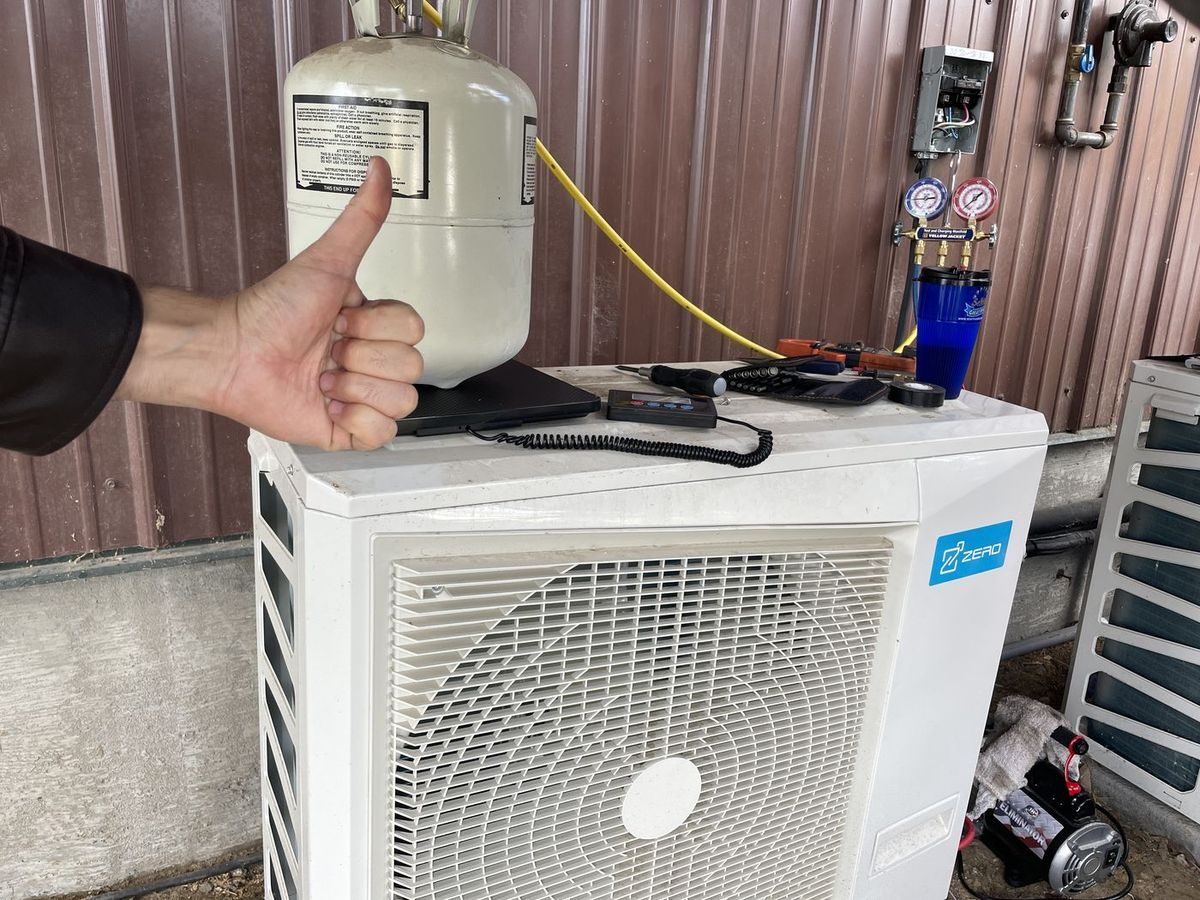
Tab 2 of 12
Through the gray months we watch the defrost cycle closely, because a coil that never clears is the classic Kitsap winter call. Capacitors and the reversing valve come next.
See the service page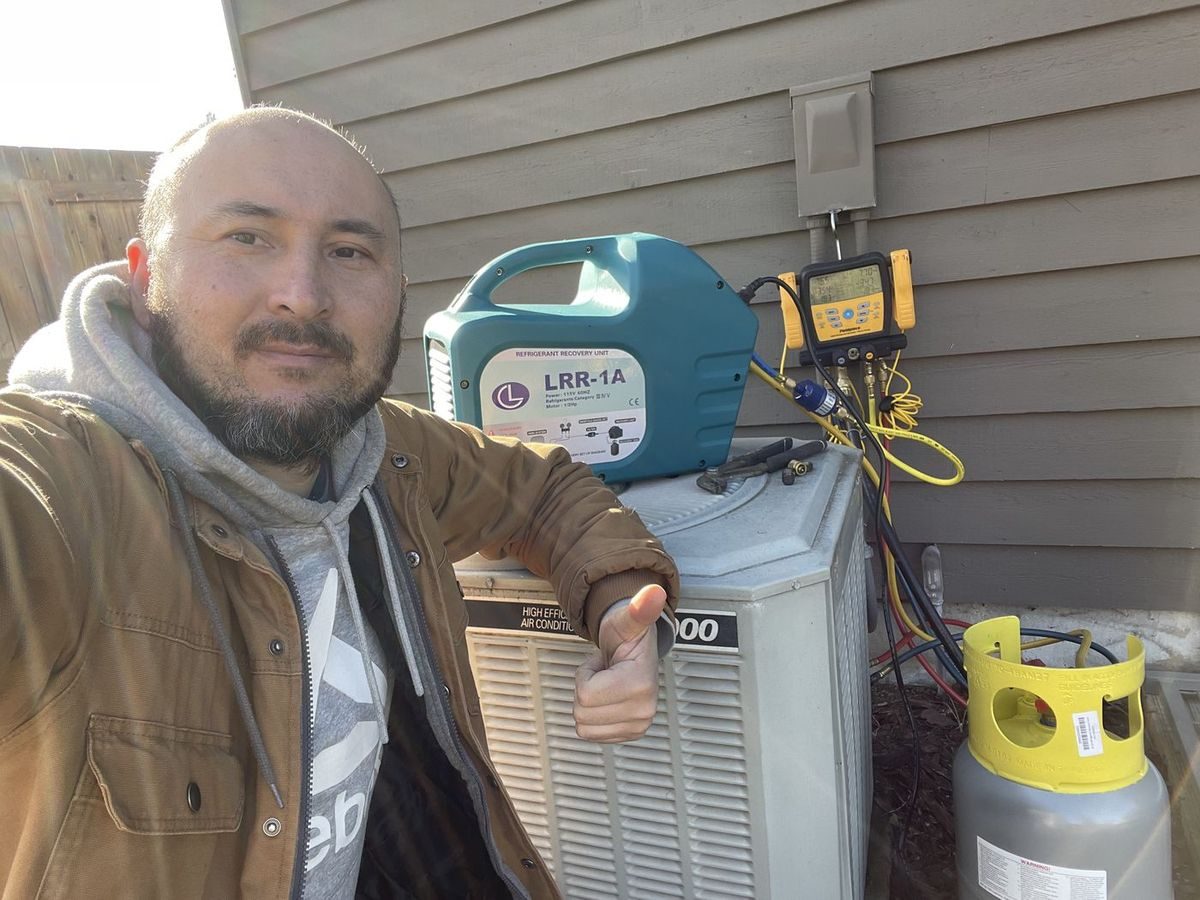
Tab 3 of 12
More Kitsap homes have cooling since the 2021 heat dome. When a system falls behind on a hot afternoon, we start with airflow, the capacitor and the refrigerant charge.
See the service page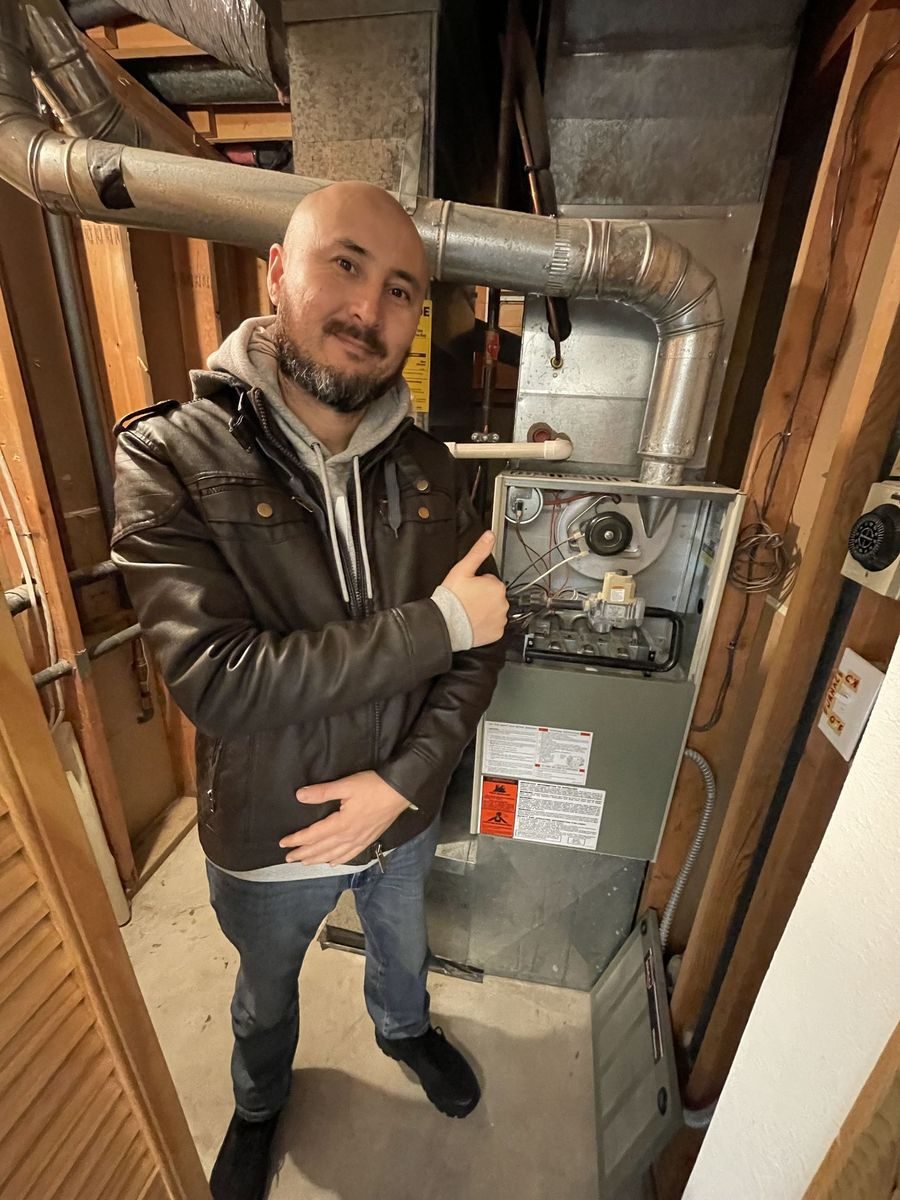
Tab 4 of 12
Many older Bremerton and Manette houses keep the furnace in a closet or under the floor. Filter, inducer, flame sensor and limit switch all get checked in that tight space.
See the service page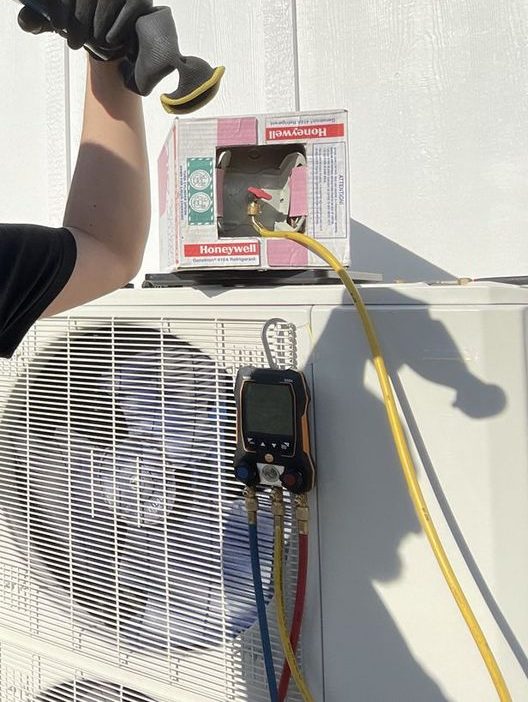
Tab 5 of 12
Mini-splits fit older homes with no room for ducts. Their line sets need sound insulation where they cross a damp crawlspace, and the outdoor unit needs a clear drain path.
See the service page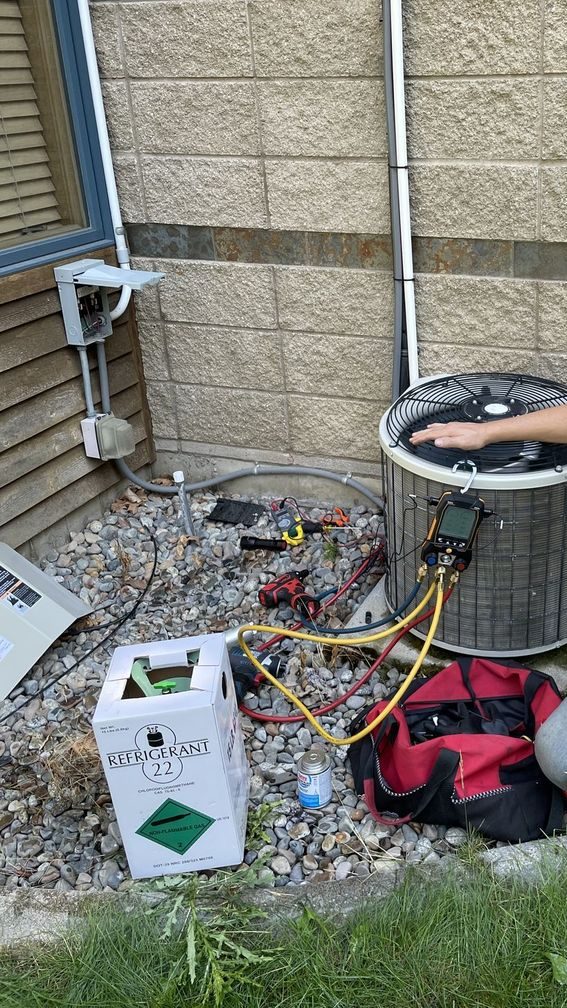
Tab 6 of 12
A seasonal visit near the water means a coil rinse, a look at the fasteners for salt rust and a base pan that drains. Those three buy waterfront equipment years.
See the service page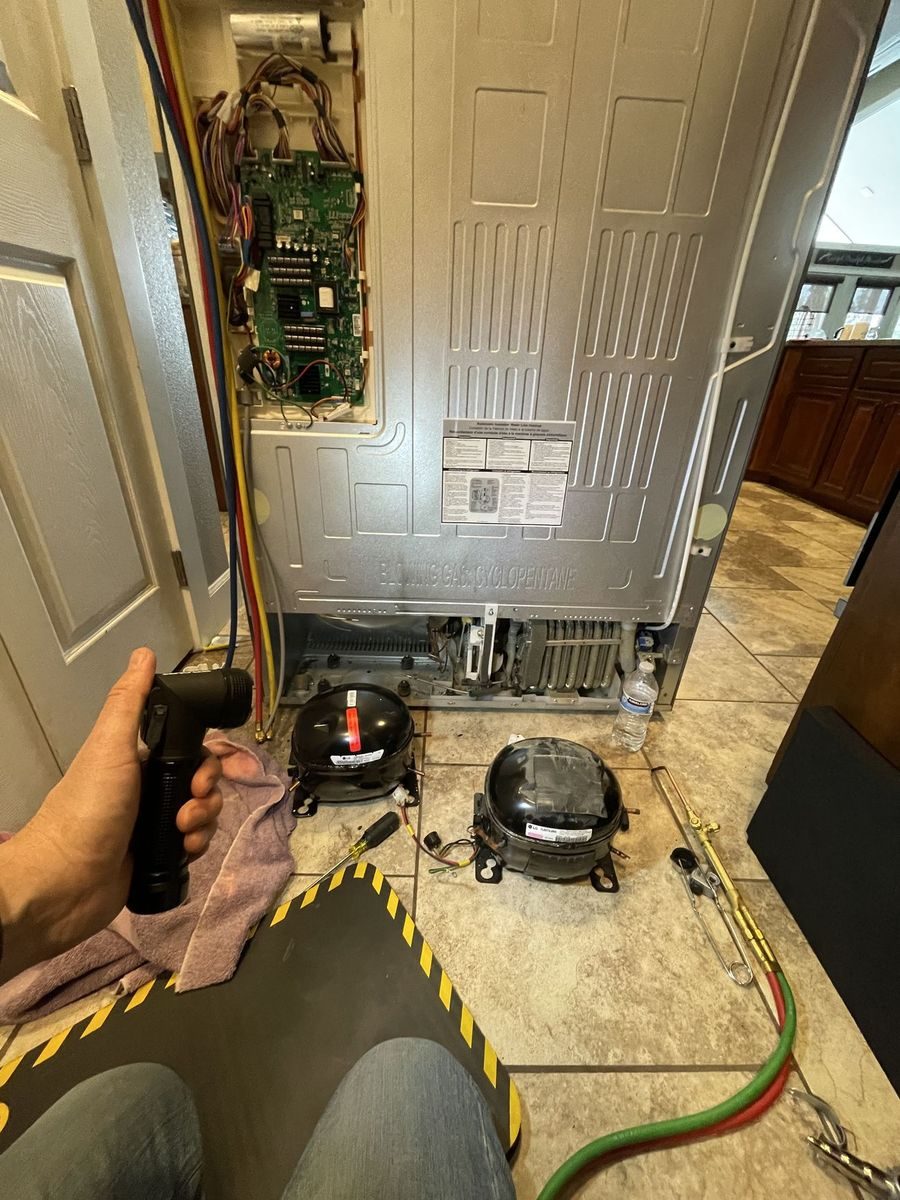
Tab 7 of 12
Sealed-system work, from leak search to recharge, happens right in the kitchen under EPA 608 Universal credentials, so the fridge stays where it stands.
See the service page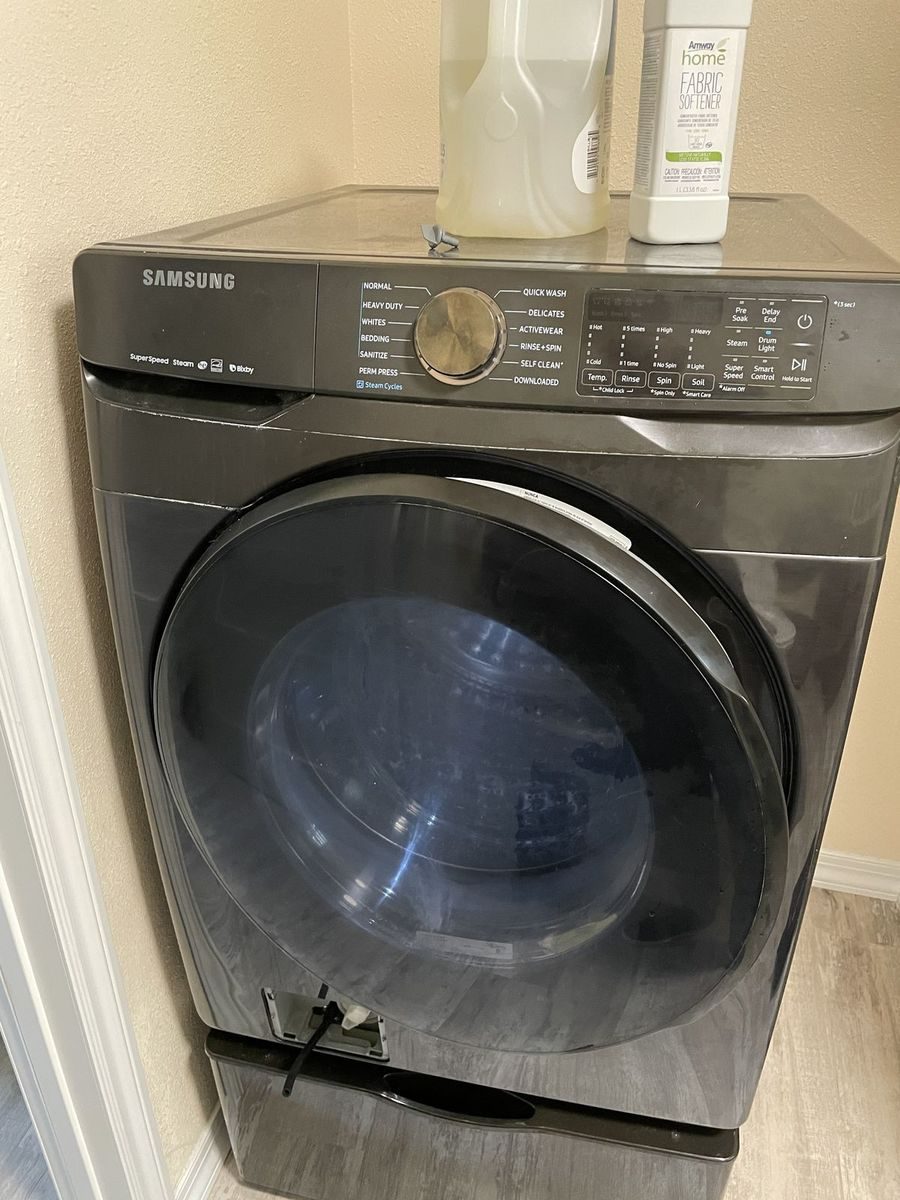
Tab 8 of 12
Damp Kitsap laundry rooms are hard on door boots, so mildew, torn folds and a clogged pump filter are the first things we look at on a front-loader.
See the service page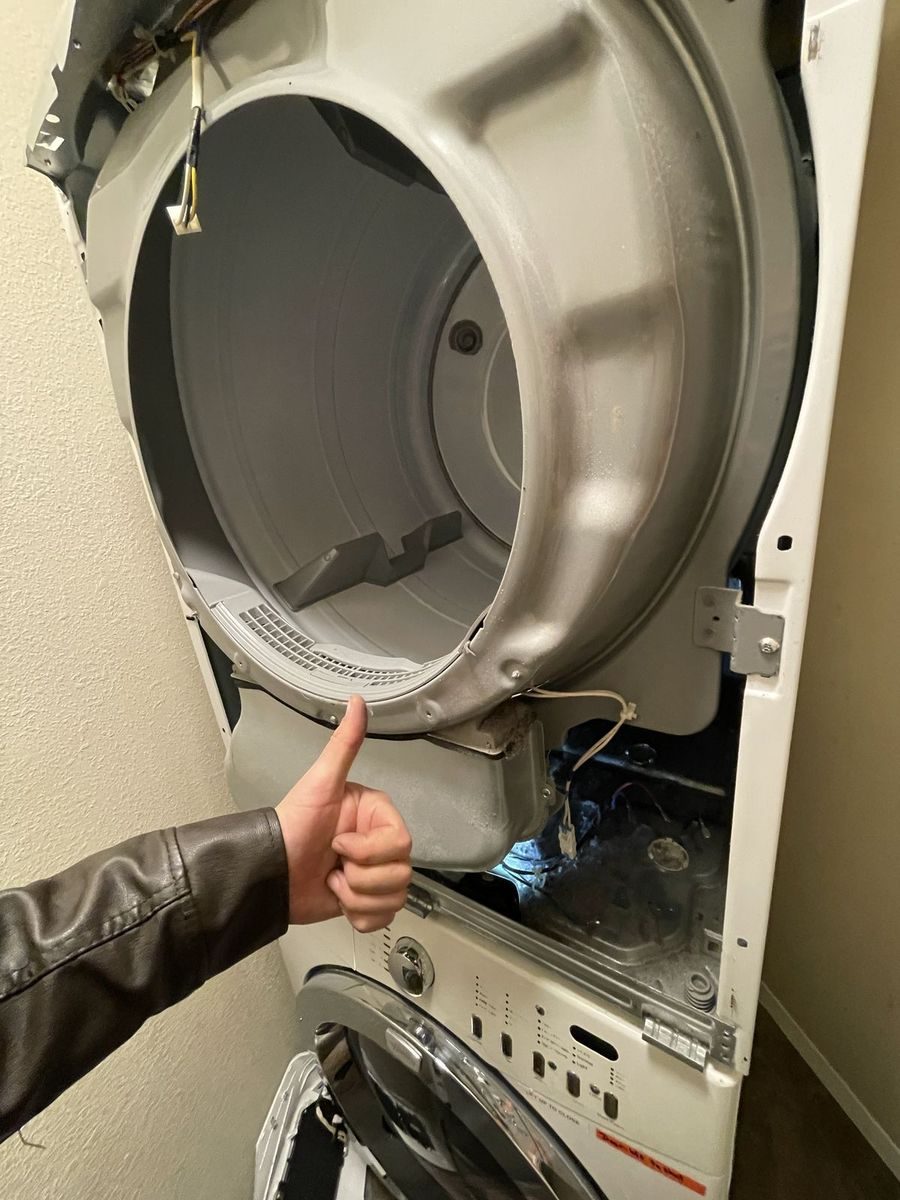
Tab 9 of 12
Long vent runs through damp walls fill with lint quickly, so the vent gets tested along with the heating side: element or burner, thermal fuse and thermostats.
See the service page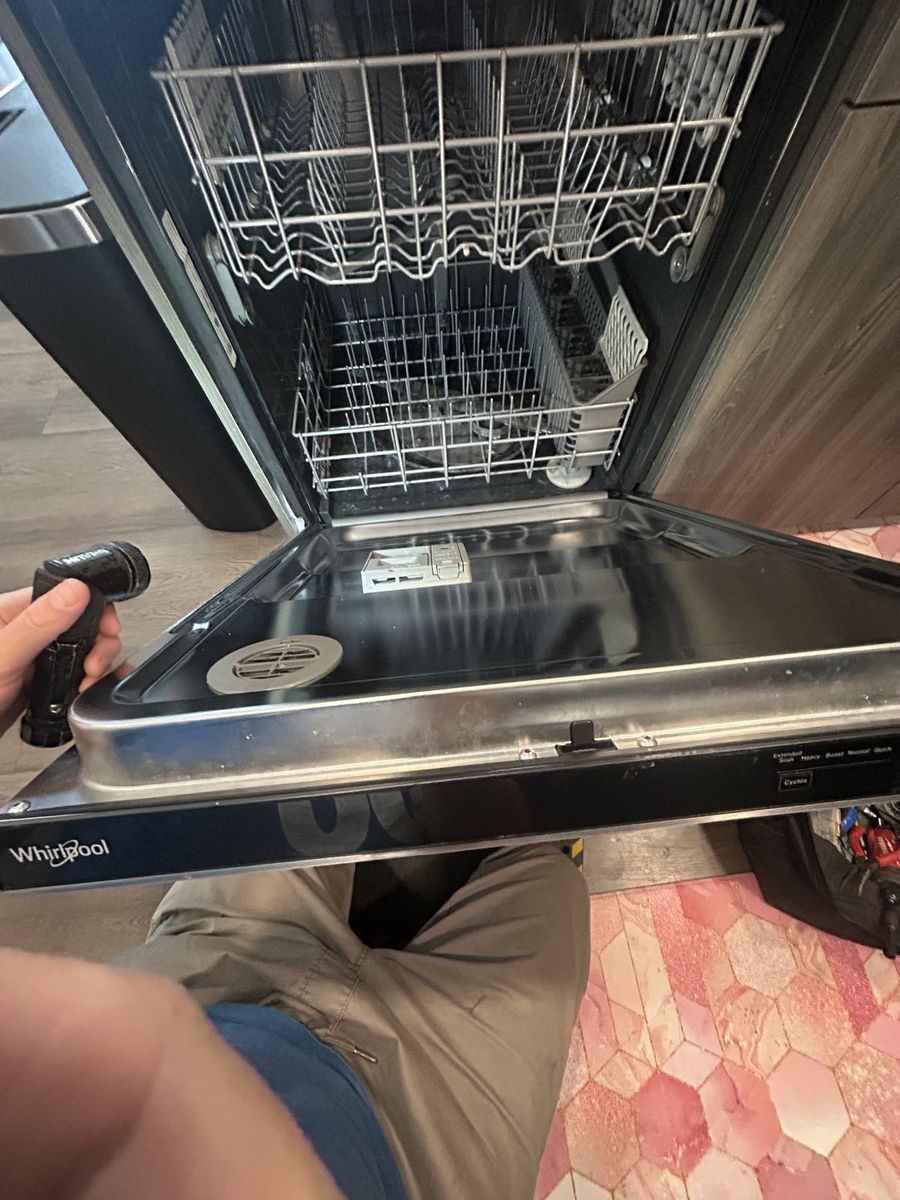
Tab 10 of 12
Well water leaves minerals on the spray arms and the inlet screen, two early stops when dishes come out dull or the tub fills slowly.
See the service page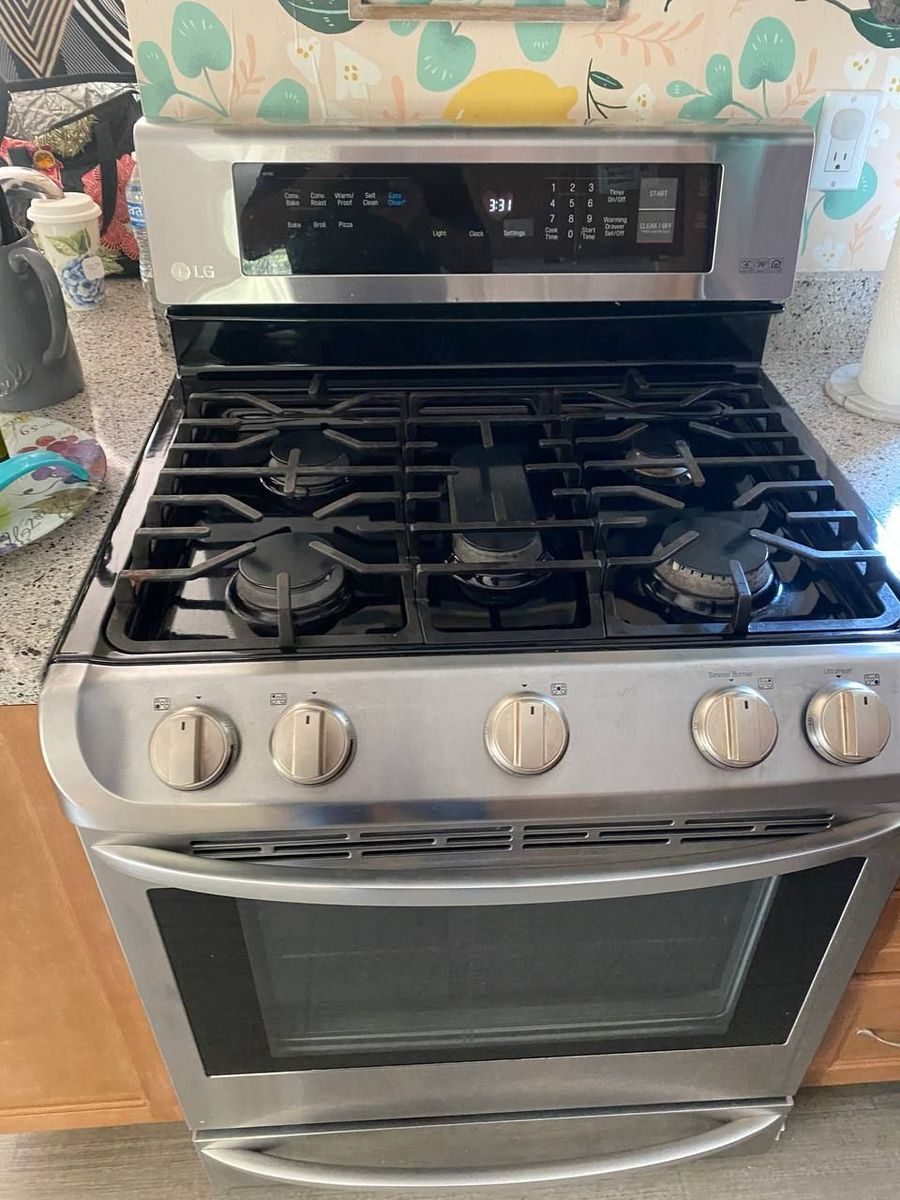
Tab 11 of 12
Natural gas and propane ranges both get igniter, valve and flame checks. The tank and its lines stay with your propane supplier.
See the service page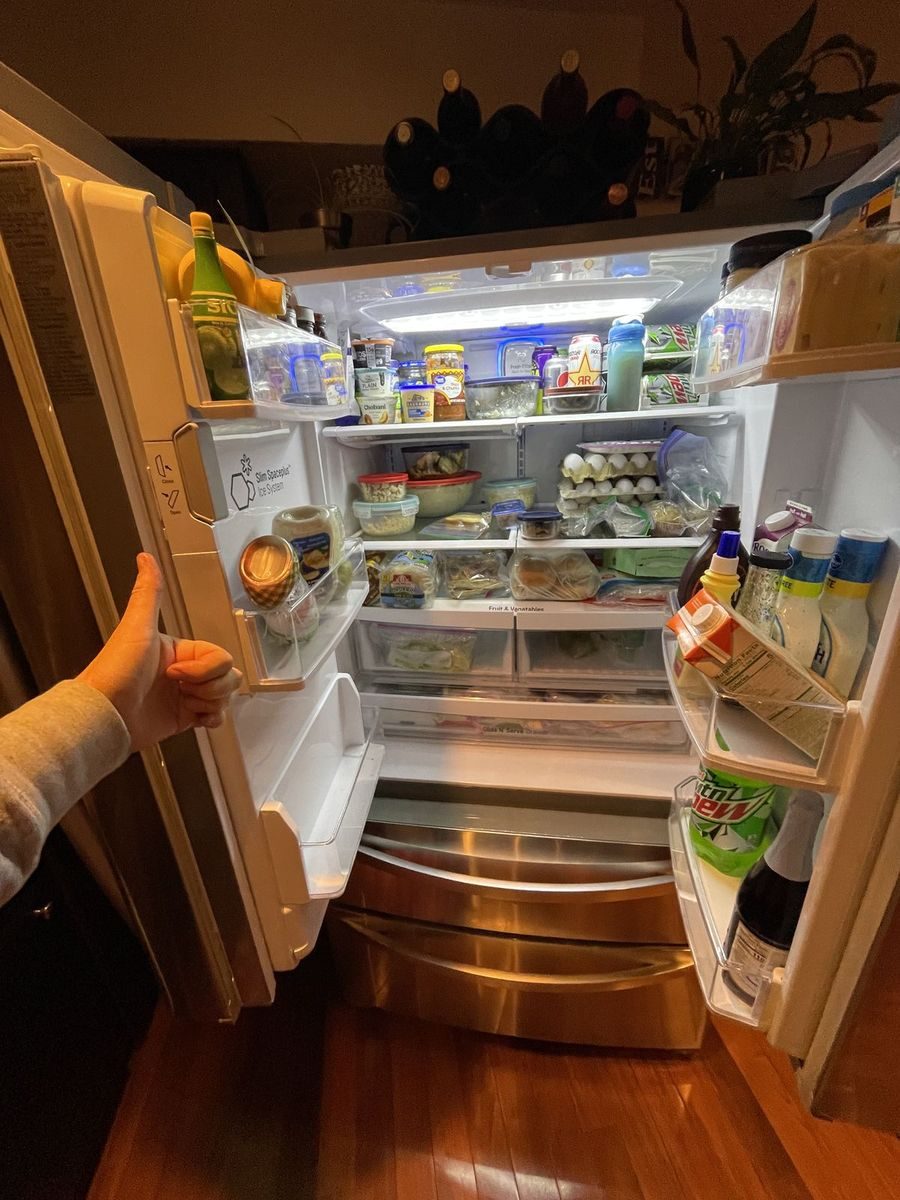
Tab 12 of 12
After a windstorm outage the fill tube often freezes solid and the ice maker goes quiet, so we follow the water up from the inlet valve.
See the service pageProtection from salt on waterfront lots. Houses on Sinclair and Dyes Inlets, Liberty Bay, the harbor at Gig Harbor and along Hale Passage on Fox Island take salt spray that shortens coil and cabinet life. Many manufacturers offer coated or coastal-rated coils on certain models, and stainless or coated screws can stand in for standard fasteners. We go over which models carry those options and how they change the quote, and where the layout allows, we tuck the cabinet around a sheltered corner, out of direct spray.
Firm footing and planned trips. Kitsap ground stays wet much of the year, so a pad dropped straight onto dirt can sink or lean; a riser keeps the cabinet above standing water and lets defrost meltwater drain away, ideally clear of the worst fir needle drop. Line sets in older Bremerton homes often travel through damp crawlspaces, so we strap and insulate them well. On Fox Island, deliveries and arrival times are planned around the single bridge across Hale Passage from Artondale.
If the house has sound ductwork and a furnace or air handler, a ducted heat pump usually delivers the most here, because it heats efficiently through the long 35-to-50-degree winter and cools during the occasional heat wave, with the furnace or heat strips held in reserve. Central AC on its own fits a house whose gas furnace is still young and where only cooling is wanted. Homes heated by baseboard, or with no ducts at all, are often better served by a ductless system, covered on our mini-split page. We lay out the options that suit your house on paper, each priced as one all-in figure for equipment and installation, and you pick.
With a written quote, prepared after we measure the house, in which one number covers the equipment and putting it in. That number reflects the size the load calculation calls for, the efficiency level you choose, any duct changes, the line set length and coastal coil options. Model numbers are listed so you can compare, and we order nothing before your signature.
They are outdoor coils with a protective coating or corrosion-resistant build, offered on some models for homes near salt water. If the unit will sit near the inlets, Liberty Bay, the harbor or Hale Passage, they deserve serious thought, along with stainless hardware. Upland homes away from the shore usually do well with a standard coil and periodic rinsing.
Yes. Lows near 35°F and long runs of days in the 40s are close to ideal heat pump conditions, and the equipment works efficiently there. Frequent defrost in the damp air is normal. For the occasional hard cold snap, backup heat strips or your existing furnace cover the gap, and we set the thermostat so backup steps in only when the heat pump needs help.
Sometimes. A heat pump replacing an air conditioner can often use the existing supply, but a first-time system or a larger unit may need more. We check during the measuring visit and tell you before the quote if work outside our license scope is involved, so that piece can be lined up with an electrician who does service work, and the install date can allow for it.
Sometimes. A line set in good shape, sized right for the new unit and compatible with its refrigerant, can be flushed and reused after a pressure test. Sealed, well-sized ducts can stay, with fresh connections at the equipment. Undersized, crushed or leaky runs show up in our static pressure readings, and we say plainly what should change.
Yes. Plenty of Kitsap houses were built that way, heated by baseboard or a lone furnace. Where ducts exist, a heat pump paired with its matching air handler or coil can use them once we confirm sizing and static pressure. If there are none, a ductless system usually fits better. Either way, the quote prices the whole job as one number.
Talk to a person
For a measuring visit, claim a date on the website and attach an arrival window, or ring us; the office picks up 8 AM–7 PM daily. Expect a short call from us to lock in the appointment.
Schedule online
Tell us what needs attention, the day that works and the window you prefer. A scheduler calls to make it firm, and the technician rings again before pulling up.
Washington Labor & Industries keeps these records public. Each number can be searched on L&I Verify; scope details sit on a separate page.
Scope of each license