Tab 1 of 12
HVAC tune-ups
A seasonal visit near the water means a coil rinse, a look at the fasteners for salt rust and a base pan that drains. Those three buy waterfront equipment years.
See the service page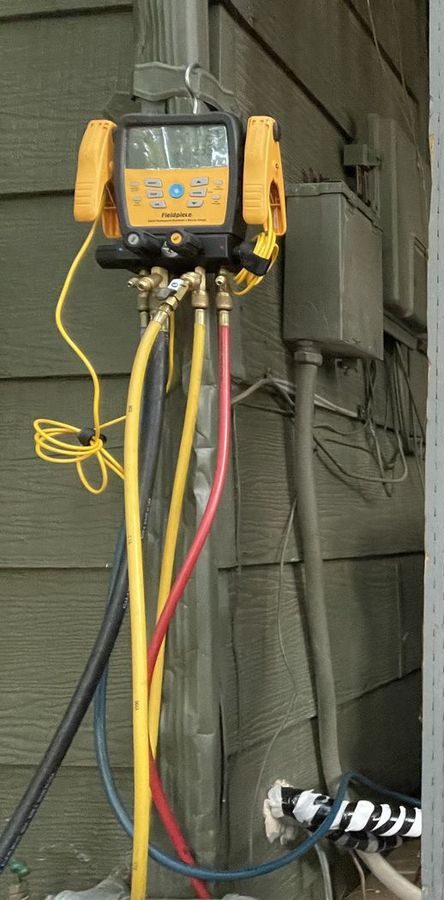
Seasonal heating and cooling tune-ups
On the peninsula a heat pump runs for most of the year, an air conditioner hardly runs at all, and both share the yard with salt air, moss and fir needles. Our tune-ups clear away what the weather leaves and write down the readings that reveal which parts are wearing.
Straight to it
A Larch tune-up cleans the outdoor coil, clears needles and moss, rinses salt off waterfront coils, and records measured values: capacitor microfarads, contactor condition, refrigerant superheat or subcooling, the supply-to-return temperature split, static pressure and, on gas furnaces, flame-sensor microamps. Condensate drains get flushed and heat pumps are forced through a defrost. You receive the numbers in writing, plus a price for any repair before it happens.
Because they work through two very different seasons. From fall into spring a heat pump runs nearly every day in damp weather between 35 and 50 degrees, defrosting over and over, while gas and electric furnaces pile up long run hours. Summer is usually gentle, with Bremerton's July and August highs near 77 to 78°F, until a spell like the June 2021 heat dome drives the peninsula past 105. A fall visit readies the heating side; a spring visit readies cooling.
The climate also leaves debris behind. Moss and fir needles mat on coils, alder catkins drift into base pans each spring, condensate drains grow algae, and salt air near the water chews at terminals and fins. None of it looks dramatic, but it slowly chokes airflow, pushes pressures up and wears parts until one gives out on the coldest or hottest day of the year.
Our tune-ups are performed under the 06A HVAC/Refrigeration specialty Larch holds, by technicians carrying the EPA 608 Universal credential, so anything touching refrigerant is done by the book. We look after heat pumps, ductless mini-splits, air handlers, central AC, and furnaces fired by gas or run on electricity. Booking in April or October keeps you a step ahead of each season.
Spring visits prepare the cooling side. With power shut off, the technician clears needles and moss, cleans the outdoor coil and, on waterfront units, rinses salt from the fins and cabinet. Once power is back on, capacitors are read in microfarads, the contactor is inspected, fan and compressor amps are measured, superheat and subcooling are checked, temperature split and static pressure are recorded, and the condensate drain is flushed. Heat pumps get all of that plus a look at the reversing valve and defrost controls.
Fall visits turn to heating. Heat pumps are forced through a defrost from the board's test pins, and the backup strips, sequencers and limits are tested. Gas and propane furnaces get a flame-sensor microamp reading, an igniter and burner check, pressure switch and inducer tests, a venting inspection and a temperature rise measurement. Electric furnaces get element amperage and sequencer checks. You leave with the readings in writing, and if a part needs replacing, that price is written down too; nothing happens without your go-ahead. Warranty terms on any repair print on the invoice.
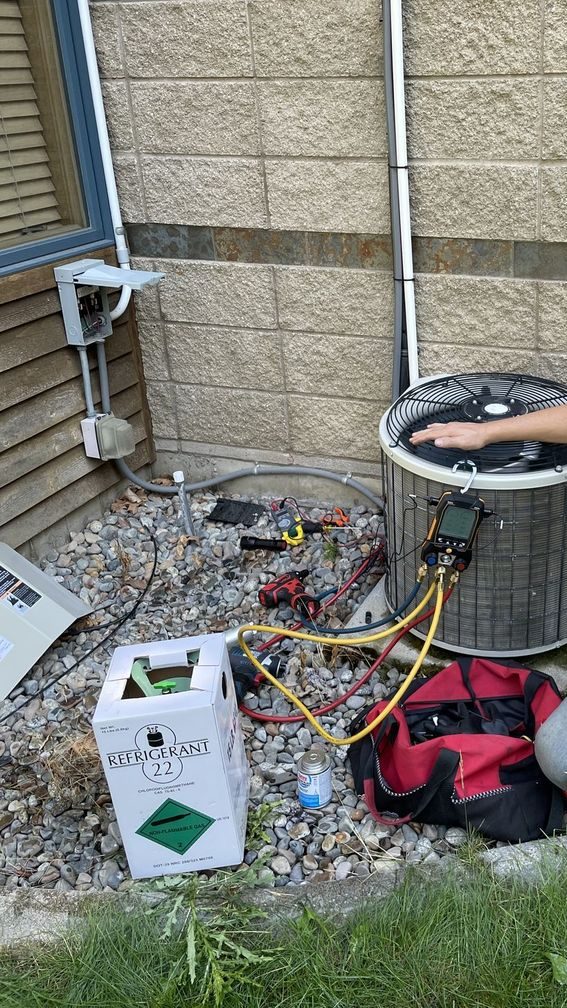
Each tab holds a photo from our service calls and a note on what we check first. Pick any tab; left alone, they turn every few seconds.
Tab 1 of 12
A seasonal visit near the water means a coil rinse, a look at the fasteners for salt rust and a base pan that drains. Those three buy waterfront equipment years.
See the service page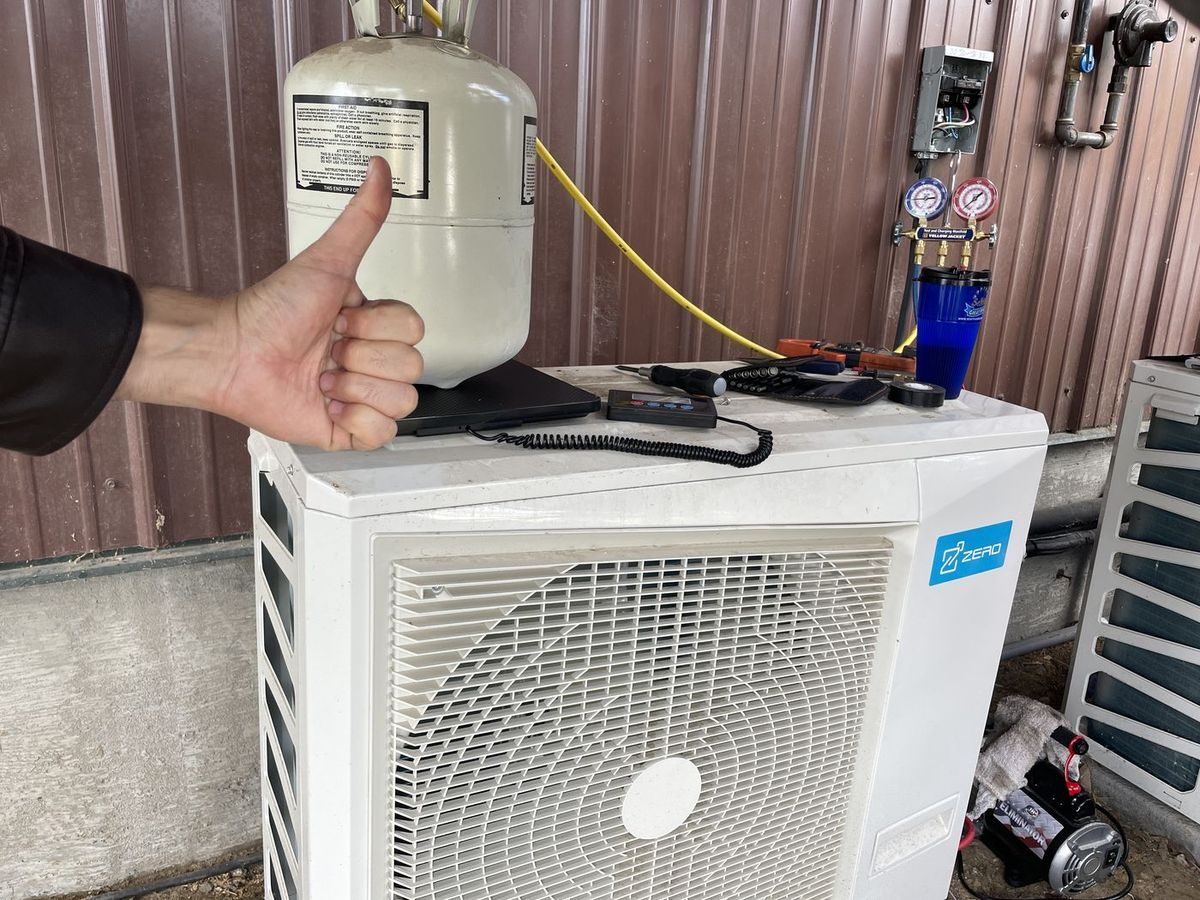
Tab 2 of 12
Through the gray months we watch the defrost cycle closely, because a coil that never clears is the classic Kitsap winter call. Capacitors and the reversing valve come next.
See the service page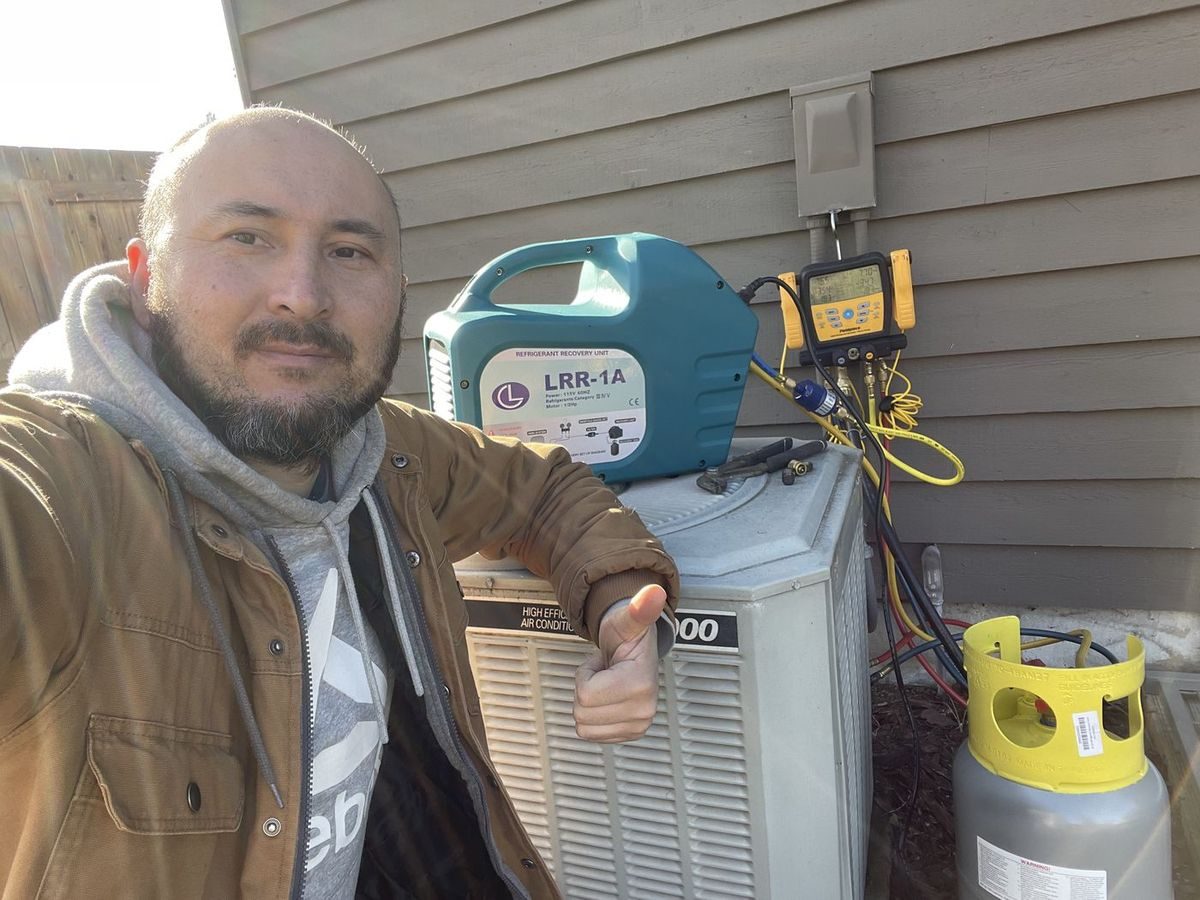
Tab 3 of 12
More Kitsap homes have cooling since the 2021 heat dome. When a system falls behind on a hot afternoon, we start with airflow, the capacitor and the refrigerant charge.
See the service page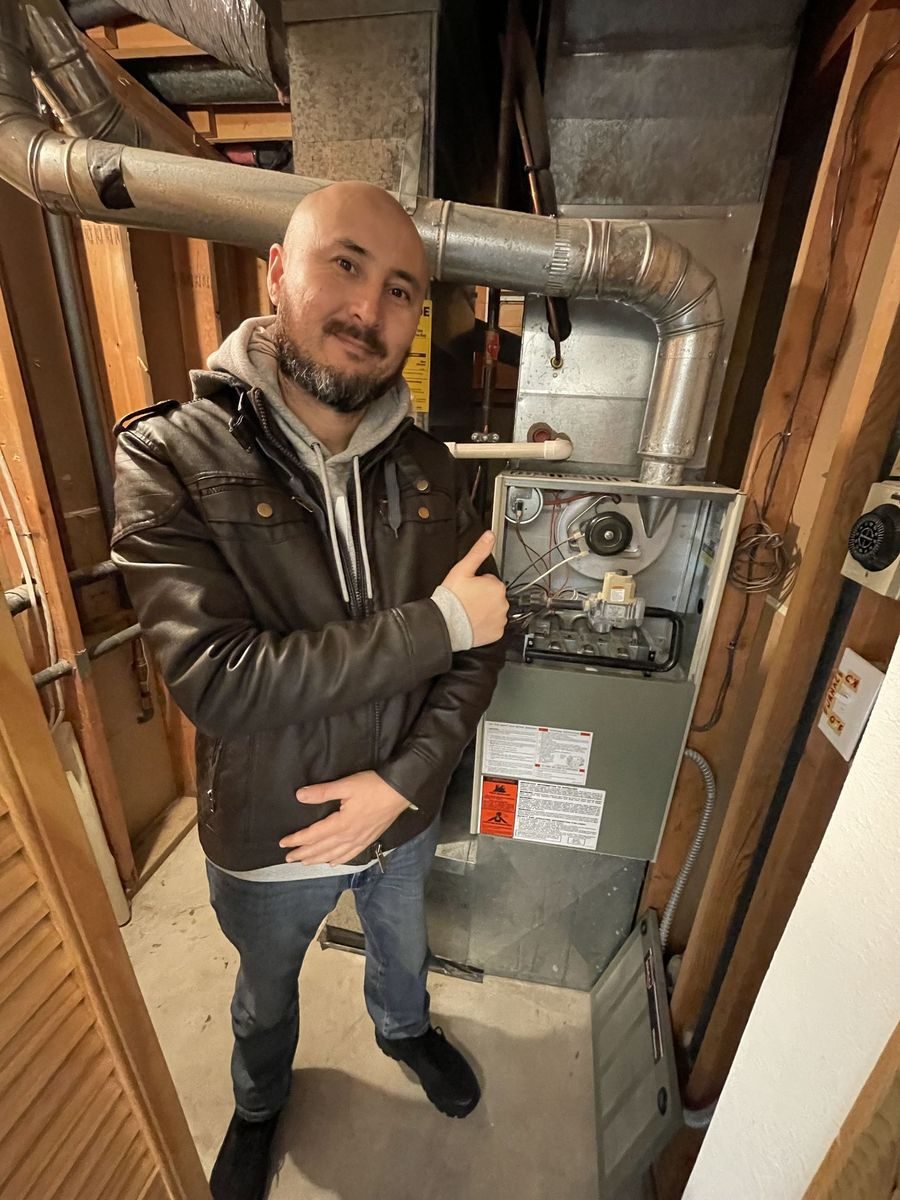
Tab 4 of 12
Many older Bremerton and Manette houses keep the furnace in a closet or under the floor. Filter, inducer, flame sensor and limit switch all get checked in that tight space.
See the service page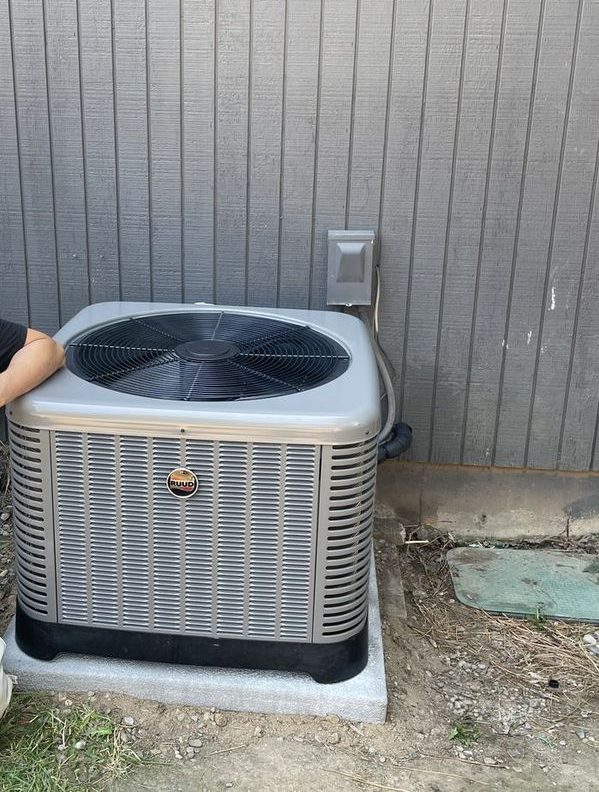
Tab 5 of 12
Placement matters on the peninsula: a raised pad clear of wet ground, back from salt spray where the lot allows, and out from under the needle drop.
See the service page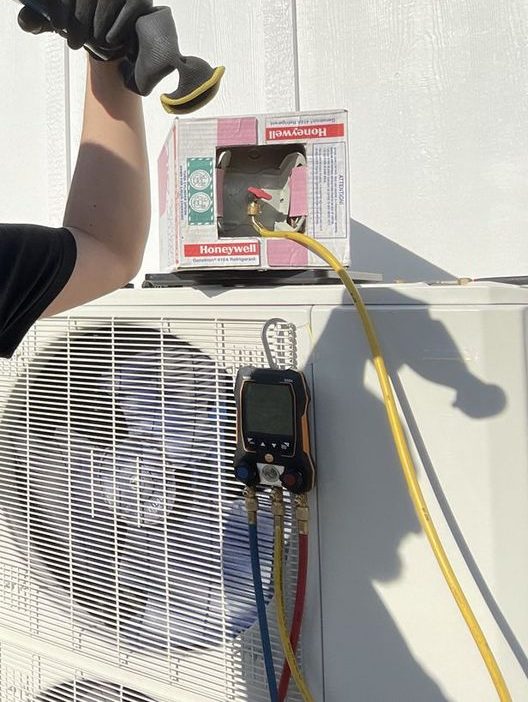
Tab 6 of 12
Mini-splits fit older homes with no room for ducts. Their line sets need sound insulation where they cross a damp crawlspace, and the outdoor unit needs a clear drain path.
See the service page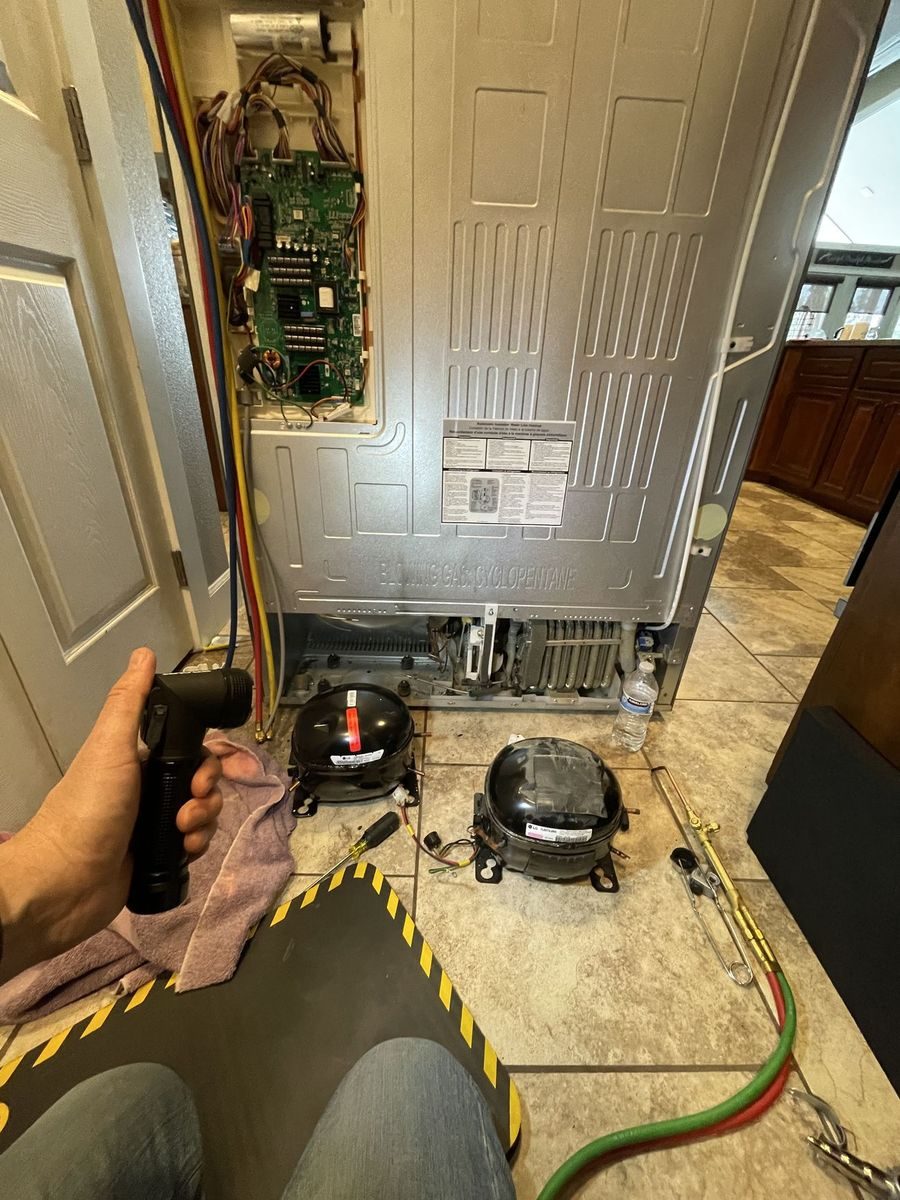
Tab 7 of 12
Sealed-system work, from leak search to recharge, happens right in the kitchen under EPA 608 Universal credentials, so the fridge stays where it stands.
See the service page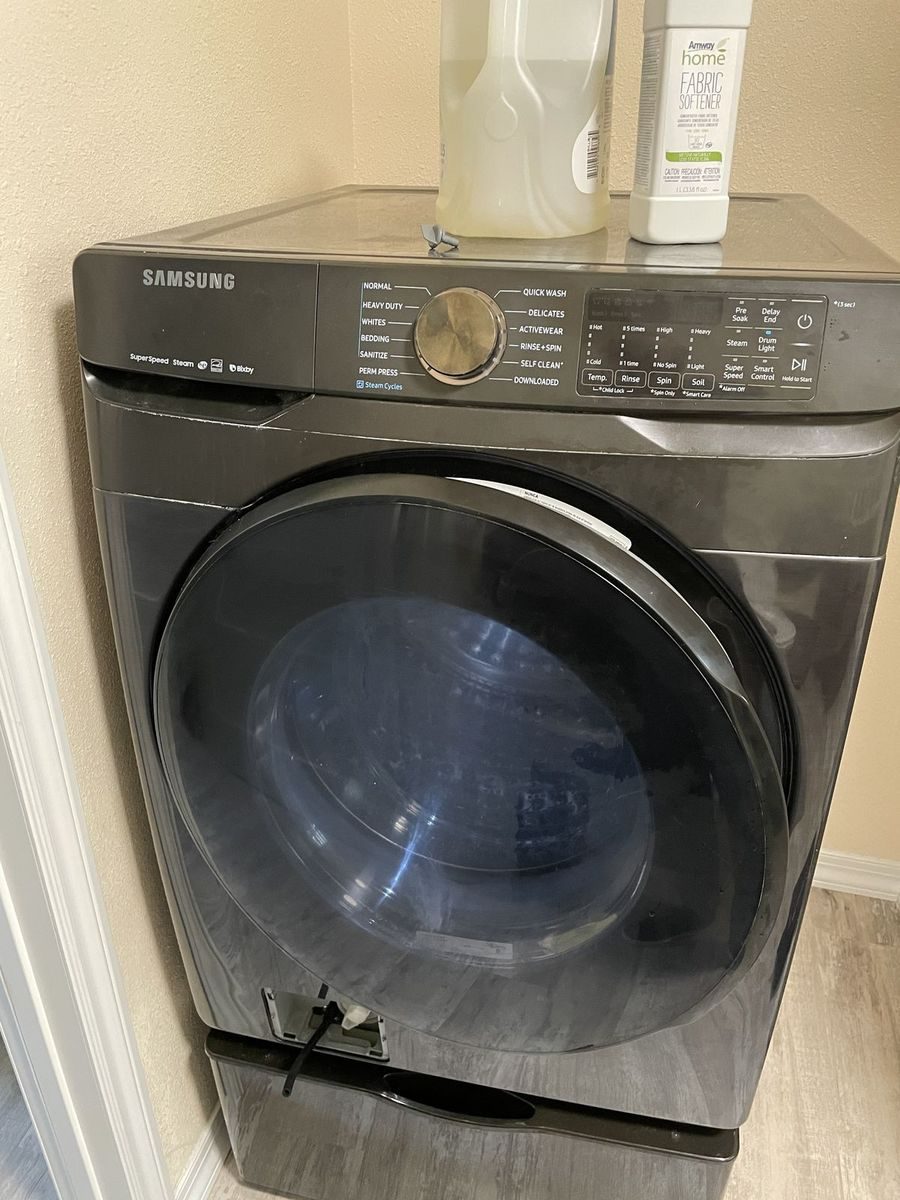
Tab 8 of 12
Damp Kitsap laundry rooms are hard on door boots, so mildew, torn folds and a clogged pump filter are the first things we look at on a front-loader.
See the service page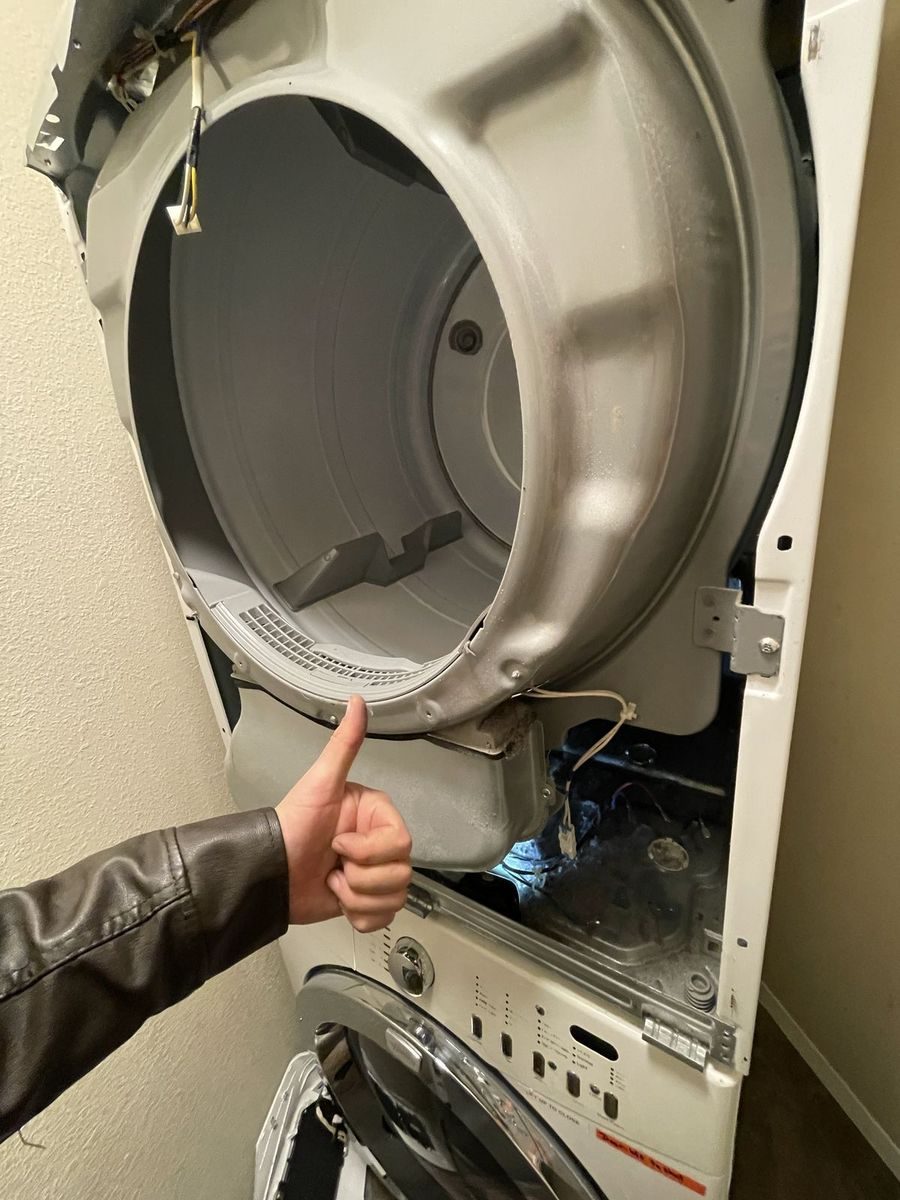
Tab 9 of 12
Long vent runs through damp walls fill with lint quickly, so the vent gets tested along with the heating side: element or burner, thermal fuse and thermostats.
See the service page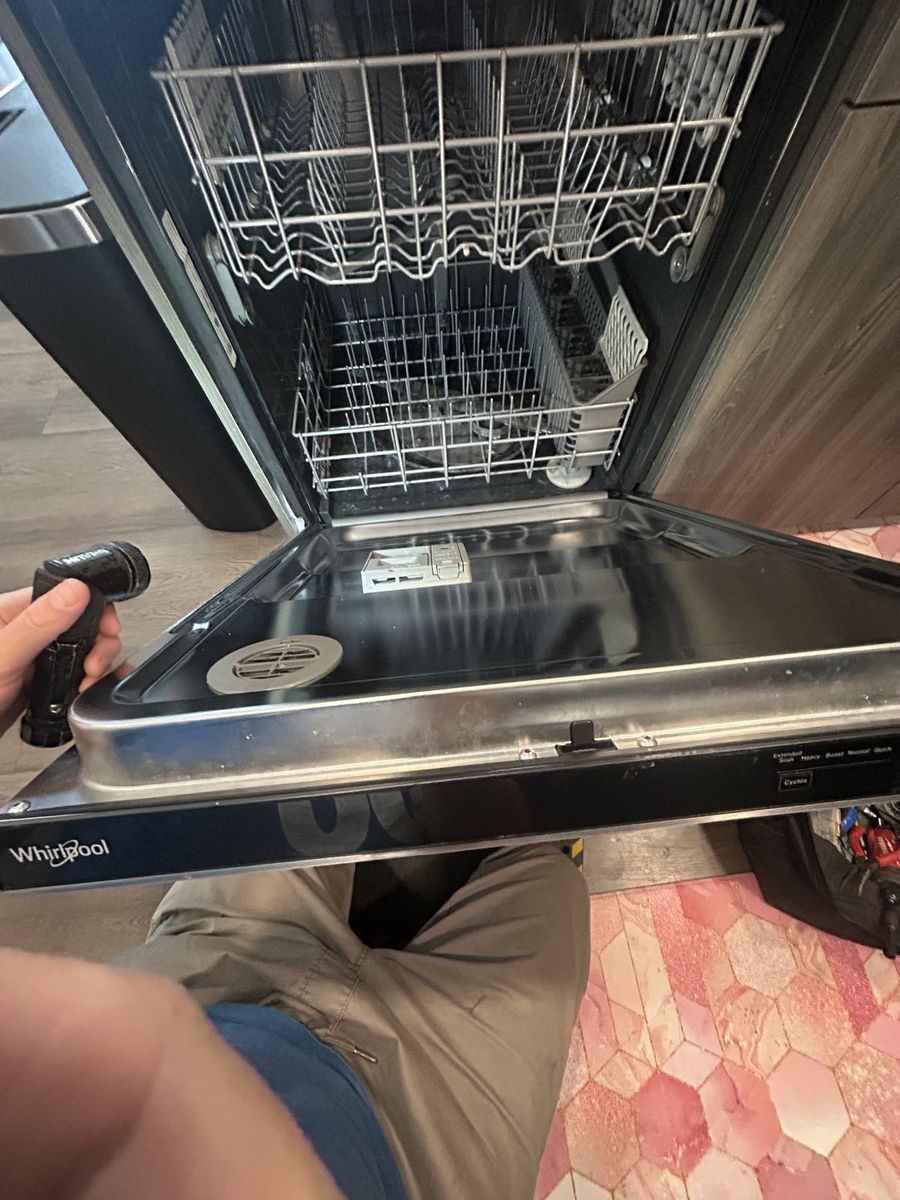
Tab 10 of 12
Well water leaves minerals on the spray arms and the inlet screen, two early stops when dishes come out dull or the tub fills slowly.
See the service page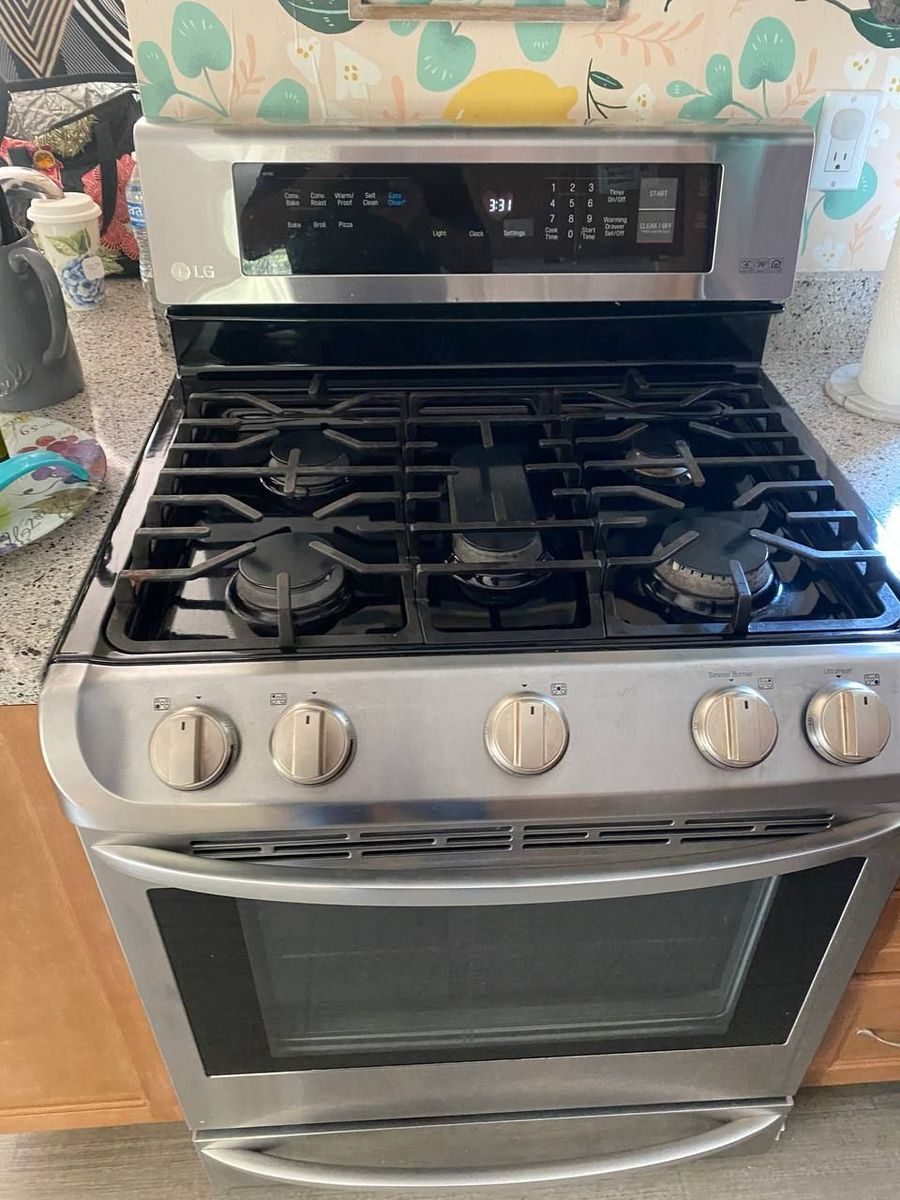
Tab 11 of 12
Natural gas and propane ranges both get igniter, valve and flame checks. The tank and its lines stay with your propane supplier.
See the service page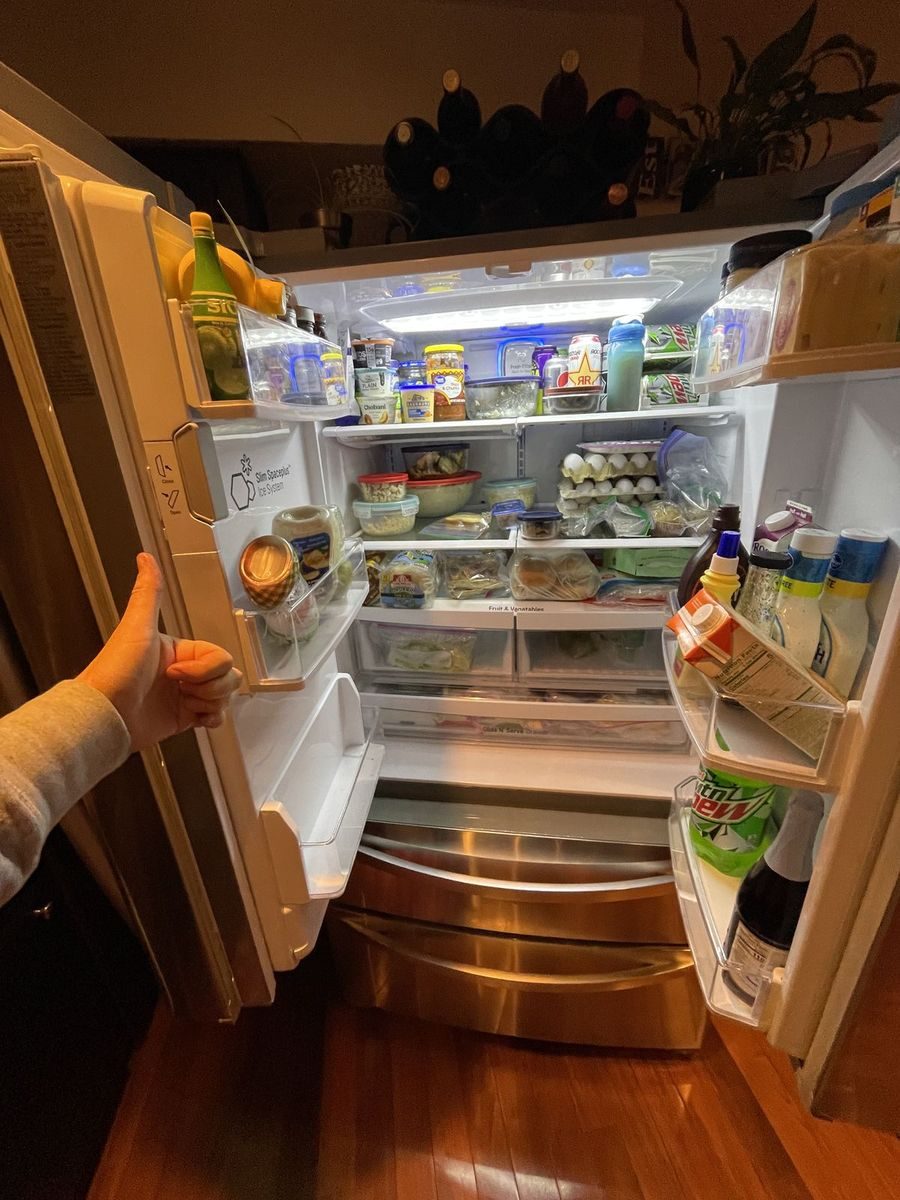
Tab 12 of 12
After a windstorm outage the fill tube often freezes solid and the ice maker goes quiet, so we follow the water up from the inlet valve.
See the service pageWaterfront systems need a rinse as much as an inspection. Along Sinclair and Dyes Inlets, Liberty Bay, the harbor at Gig Harbor and Hale Passage, salt settles on outdoor coils all year and holds moisture against the aluminum. A gentle fresh-water rinse at each tune-up, working from inside the cabinet outward where the design allows, washes it off before it pits the fins. We also look closely at cabinet screws, the contactor and capacitor terminals, and the wire lugs, where salt crust adds resistance and heat.
Inland, trees cause most of the trouble. Douglas firs and cedars shed needles all year, moss grows on anything shaded and damp, and alder catkins fall in spring, so coils and base pans clog and drain holes plug. A fall tune-up ahead of windstorm season is also the moment to check the control board, capacitor and contactor, because a surge when power returns after an outage often finishes off a part that was already weak. The November 2024 bomb cyclone showed how widespread those outages can get. Households who just moved in often inherit a system with no service history, and a first tune-up sets a baseline.
For most Kitsap homes a tune-up pays off, because the climate works on equipment slowly and steadily. A heat pump running most of the year, a crawlspace furnace breathing damp air and a condenser beside the water all lose ground each season, and a weak capacitor or fouled flame sensor is much easier to replace on a calm April or October afternoon than on a January night or during a 105-degree afternoon. Heat pumps benefit from both spring and fall visits, while a furnace or AC on its own usually needs one. Tune-ups do not include duct cleaning, which is not a service we offer, though we do check the static pressure and filters that govern airflow.
Plan on spring, around April or May, for cooling, and fall, around September or October, for heating, before the rains settle in and the heat pump starts its long defrost season. A heat pump gets both visits because it heats and cools. A furnace or an air conditioner on its own is usually fine with a single visit each year.
No. We do not offer duct cleaning. Our tune-ups clean the outdoor coil, inspect the indoor coil and blower, flush the condensate drain and check or replace the filter, and our static pressure reading shows whether the ducts and filter are holding back airflow. If the numbers point to a duct problem at the equipment, we let you know.
It is a gentle fresh-water wash of the outdoor coil and cabinet that removes salt settling on homes near the water. If your house sits close to the inlets, Liberty Bay, the harbor or Hale Passage, it is worth doing at every tune-up, and a quick hose rinse between visits helps too. Inland homes usually just need needles and moss cleared.
You get what our technician wrote down: each capacitor's reading next to its rating, amp draw on the compressor and fan, refrigerant superheat or subcooling, static pressure, the split between return and supply temperatures, and on gas furnaces, flame-sensor microamps and temperature rise. Heat pumps add a defrost test result. Comparing visits shows how the system is aging.
It can catch damage that has not caused a breakdown yet. A surge when power returns can weaken a capacitor, scorch contactor points or stress a control board without stopping the system right away. If your heat pump or furnace has acted oddly since an outage, mention it when booking so our technician checks those parts first.
It is a sensible first step. New arrivals often move into a house or rental whose heating history is unknown. A tune-up shows the filter size, the condition of the capacitor, contactor and coils, and whether the heat pump defrosts properly, so you start the first Kitsap winter knowing where things stand.
Talk to a person
Choose a spring or fall date on the website plus an arrival window, or ring us; the office answers from 8 AM until the 7 PM close, every day. A short confirming call locks the slot.
Schedule online
Tell us what needs attention, the day that works and the window you prefer. A scheduler calls to make it firm, and the technician rings again before pulling up.
Washington Labor & Industries keeps these records public. Each number can be searched on L&I Verify; scope details sit on a separate page.
Scope of each license