Tab 1 of 12
Heat pump repair
Through the gray months we watch the defrost cycle closely, because a coil that never clears is the classic Kitsap winter call. Capacitors and the reversing valve come next.
See the service page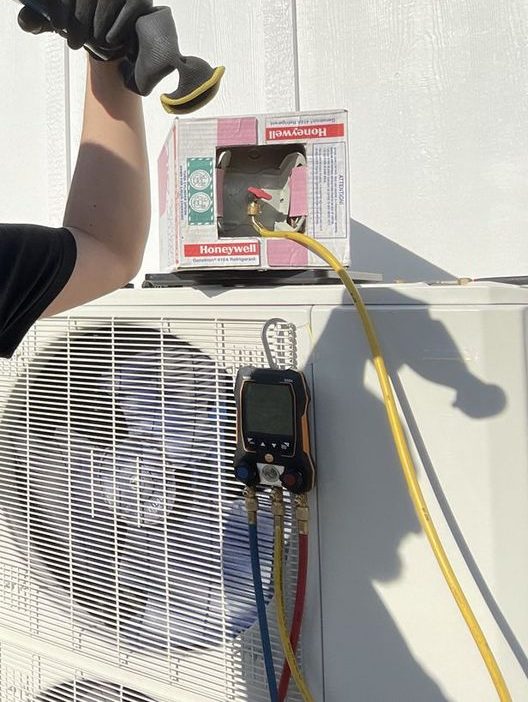
Heat pump repair on the Kitsap Peninsula and around Gig Harbor
West of the Sound, a heat pump carries the house from October deep into spring, frosting and thawing its coil through weeks of cold drizzle. Near the inlets it breathes salt, too. Our technicians separate that normal rhythm from a failing defrost control, a corroded contactor or a slow leak.
Straight to it
Most Kitsap heat pump trouble falls into five buckets. The defrost board or its coil thermistor misreads frost. The reversing valve hangs up mid-shift. Constant starts, or salt crust, wear down the capacitor and contactor. Fir needles and moss blanket the coil. Or refrigerant weeps out at a joint. Each suspect gets tested, the cost goes on paper, and the wrenches stay in the bag until you agree.
Because winter here is long, mild and soaked. Bremerton collects about 57 inches of precipitation a year, more than the city across the Sound, which sits in the rain shadow of the Olympics. Winter lows hover near 35°F, and most gray days land between 35 and 50. That band is efficient heat pump weather, yet air that wet frosts an outdoor coil quickly, so defrost cycles stack up from breakfast until bedtime.
Each defrost flips the reversing valve, parks the outdoor fan and brings on the backup heat strips to temper the supply air. Over a season, the solenoid, the contactor and the run capacitor log far more cycles than the same parts would see in drier country. When a coil sensor drifts or the board loses its timing, either the coil ices over or it defrosts so often that the rooms stay chilly while the AUX strips quietly pick up the slack.
The paperwork behind the work matters. Larch is licensed in Washington as an electrical contractor, and the specialty endorsement covering this trade is 06A, HVAC/Refrigeration. Anyone who opens the sealed side of your system holds an EPA 608 Universal credential. Daikin, Mitsubishi, Trane, Carrier, Lennox, Goodman: ducted or ductless, we see them all. If the vents have blown cool longer than a defrost ought to take, book a visit.
Our technician starts at the wall: is it calling for heat, is the O/B terminal set for this brand, how are the auxiliary stages configured? Indoors come the filter, the temperature rise across the air handler, and the heat strip sequencers or relays with their limits. Outside, power is confirmed at the unit, the dual run capacitor is read in microfarads against its label, and contactor faces are inspected for pitting and corrosion. Jumping the defrost board's test pins forces a complete cycle so we can see the valve change over, the fan stop, the coil shed its frost and heat resume. Gauges, superheat and subcooling come out only when the numbers point toward charge.
You decide with a written number in hand. Expect one fee for the diagnosis, named by the office before a van rolls. Once a repair wins your approval, that sum gets counted into the repair's total. Turn the work down and paying the fee settles everything. Our trucks stock capacitors, contactors, fan motors and the usual valves, so a proven failure is frequently handled on the spot once you sign off. Boards or valves specific to one model get priced before we order them, and the written warranty rides along on your invoice.
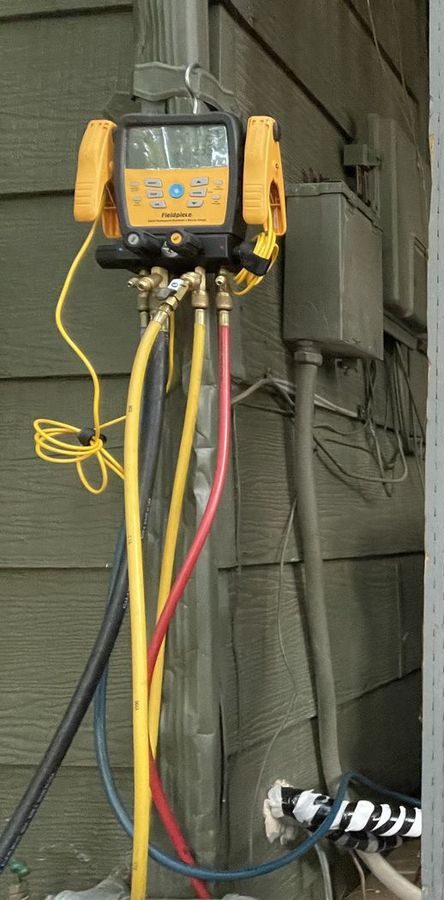
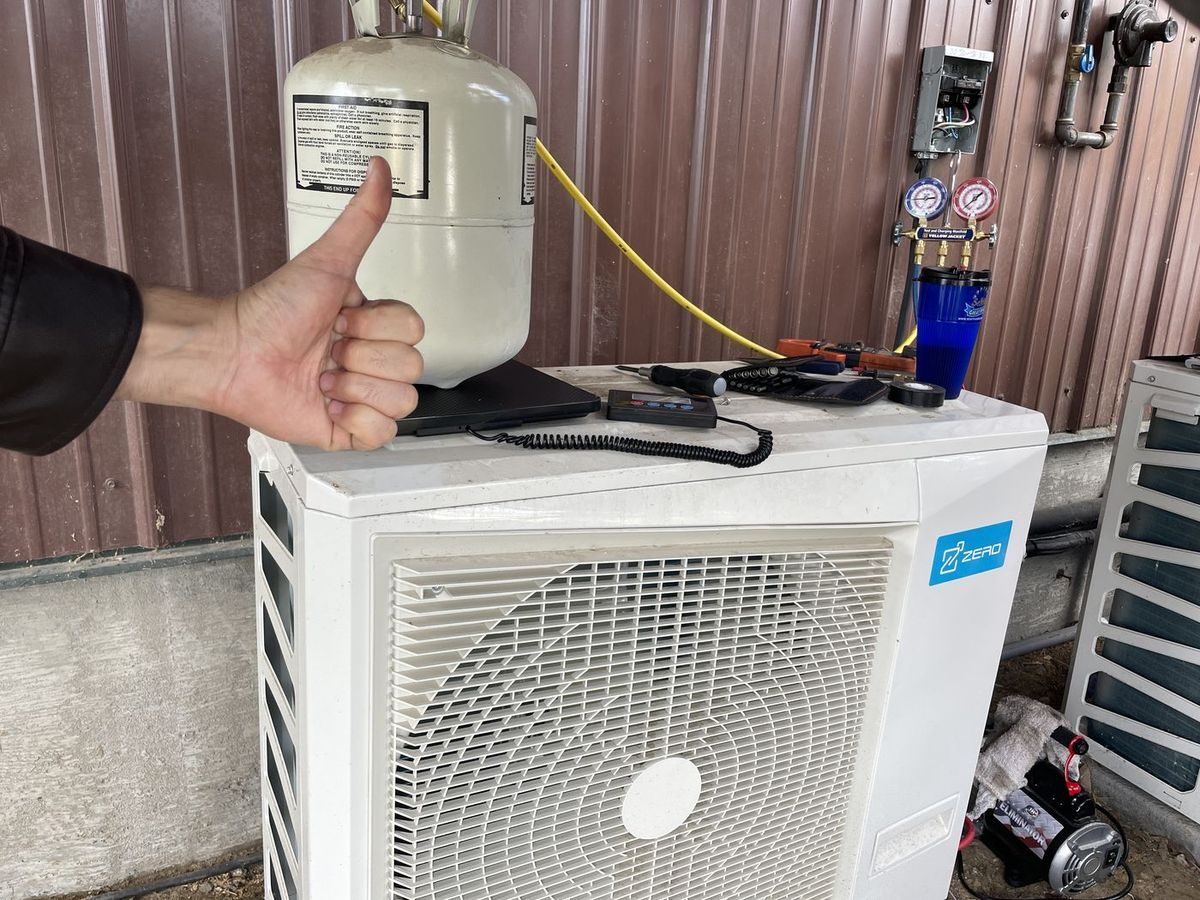
Each tab holds a photo from our service calls and a note on what we check first. Pick any tab; left alone, they turn every few seconds.
Tab 1 of 12
Through the gray months we watch the defrost cycle closely, because a coil that never clears is the classic Kitsap winter call. Capacitors and the reversing valve come next.
See the service page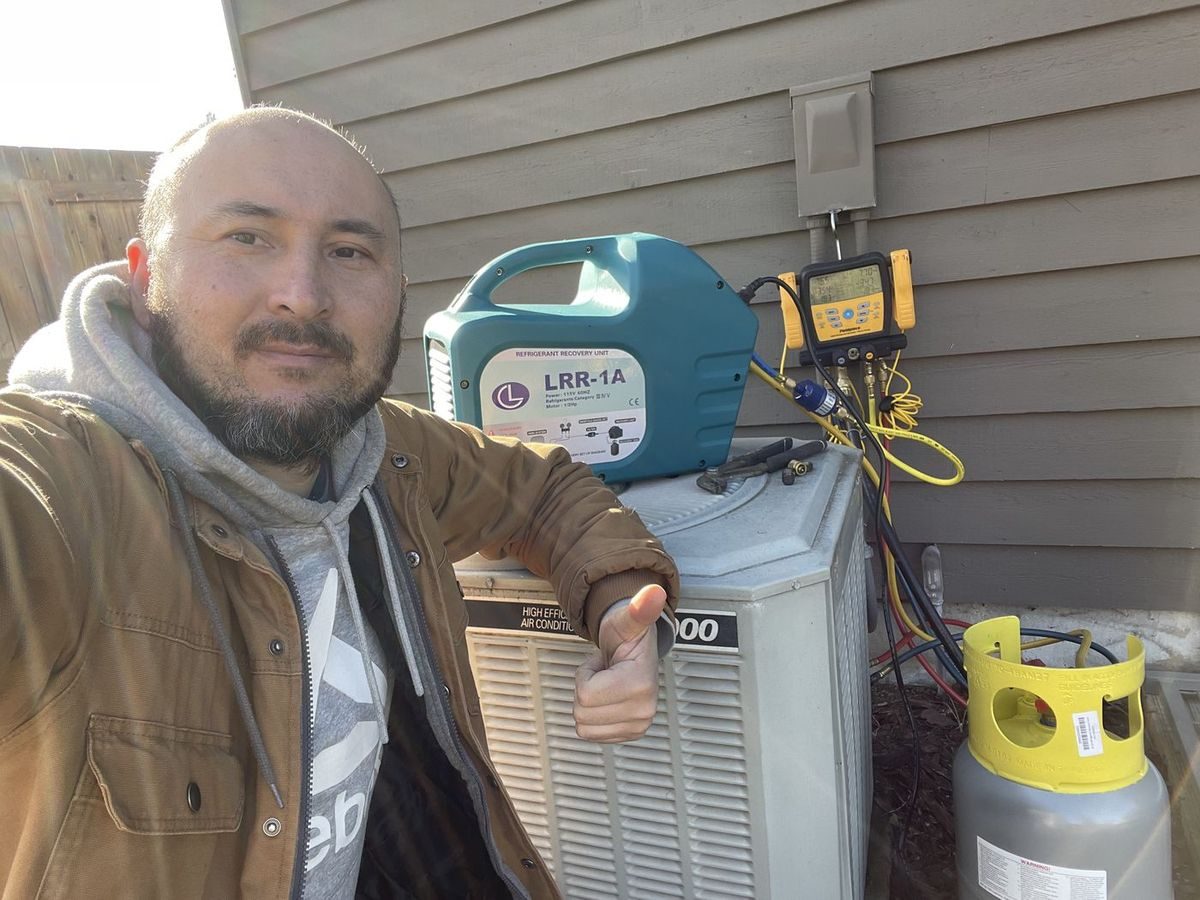
Tab 2 of 12
More Kitsap homes have cooling since the 2021 heat dome. When a system falls behind on a hot afternoon, we start with airflow, the capacitor and the refrigerant charge.
See the service page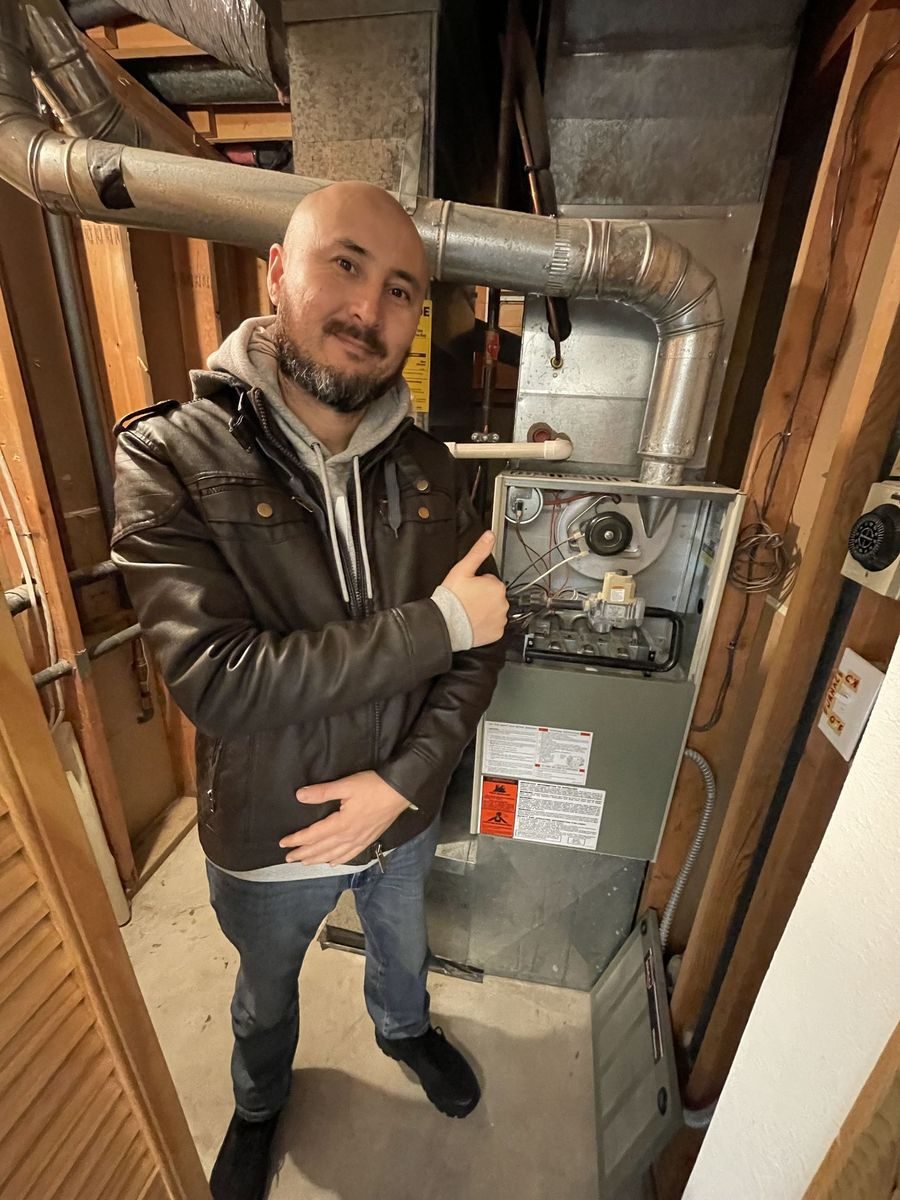
Tab 3 of 12
Many older Bremerton and Manette houses keep the furnace in a closet or under the floor. Filter, inducer, flame sensor and limit switch all get checked in that tight space.
See the service page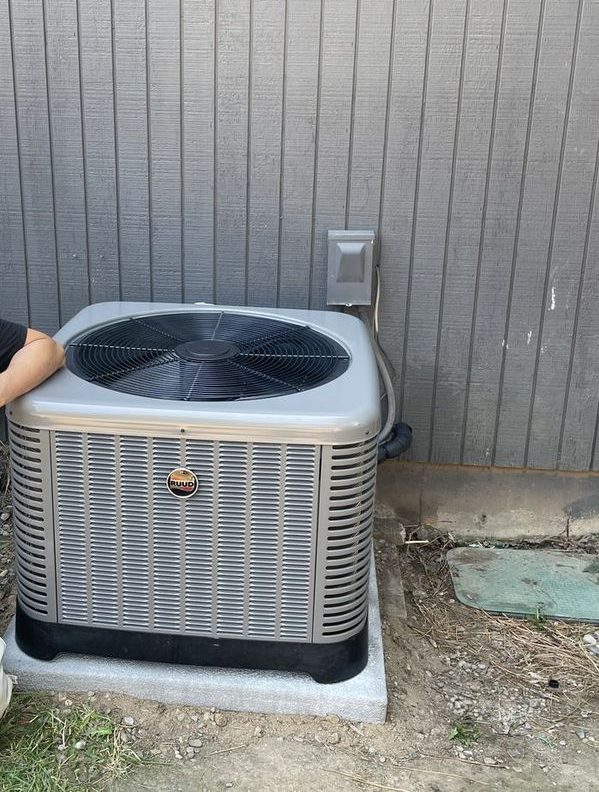
Tab 4 of 12
Placement matters on the peninsula: a raised pad clear of wet ground, back from salt spray where the lot allows, and out from under the needle drop.
See the service pageTab 5 of 12
Mini-splits fit older homes with no room for ducts. Their line sets need sound insulation where they cross a damp crawlspace, and the outdoor unit needs a clear drain path.
See the service page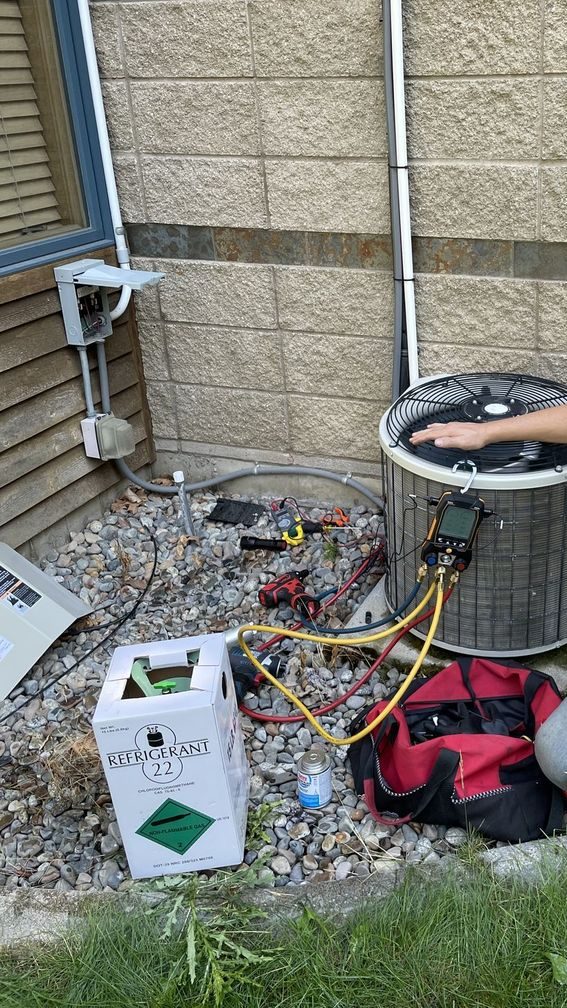
Tab 6 of 12
A seasonal visit near the water means a coil rinse, a look at the fasteners for salt rust and a base pan that drains. Those three buy waterfront equipment years.
See the service page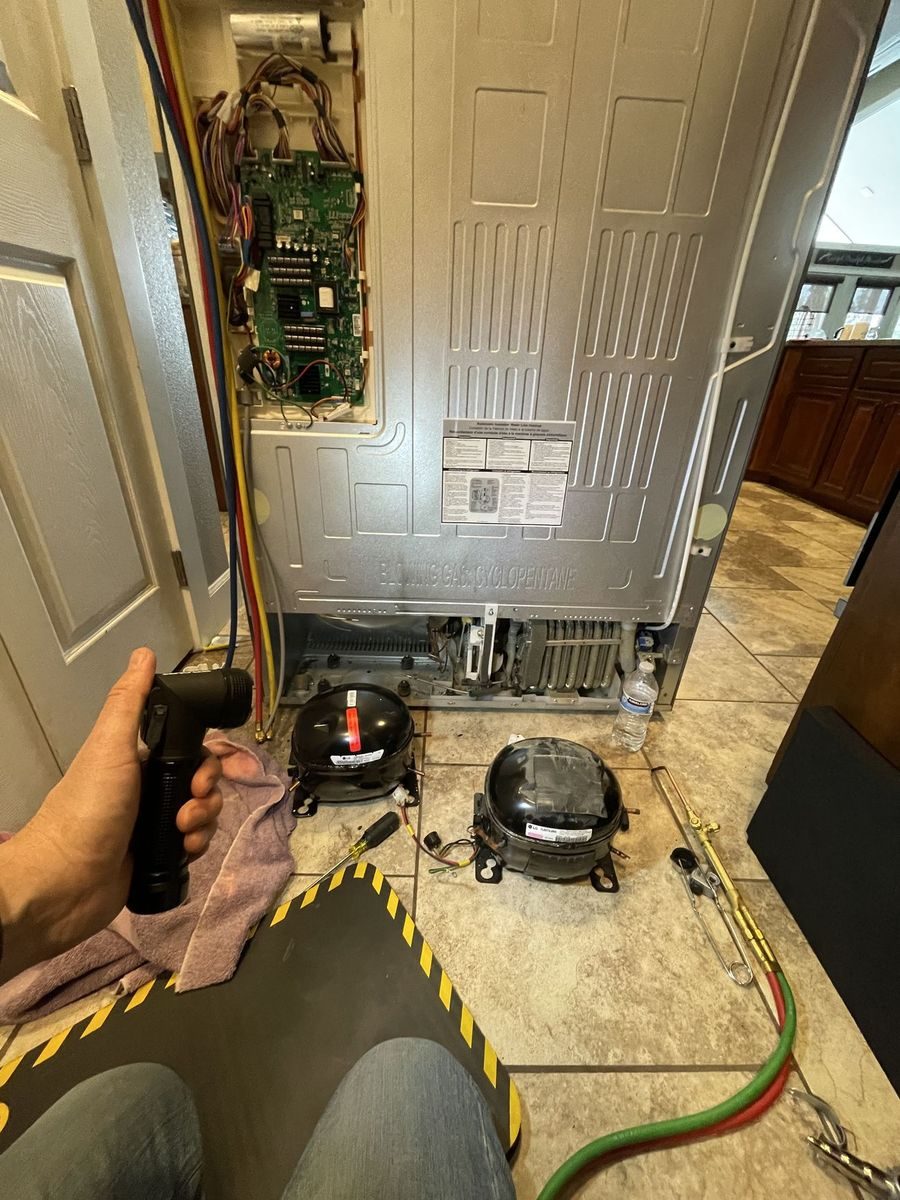
Tab 7 of 12
Sealed-system work, from leak search to recharge, happens right in the kitchen under EPA 608 Universal credentials, so the fridge stays where it stands.
See the service page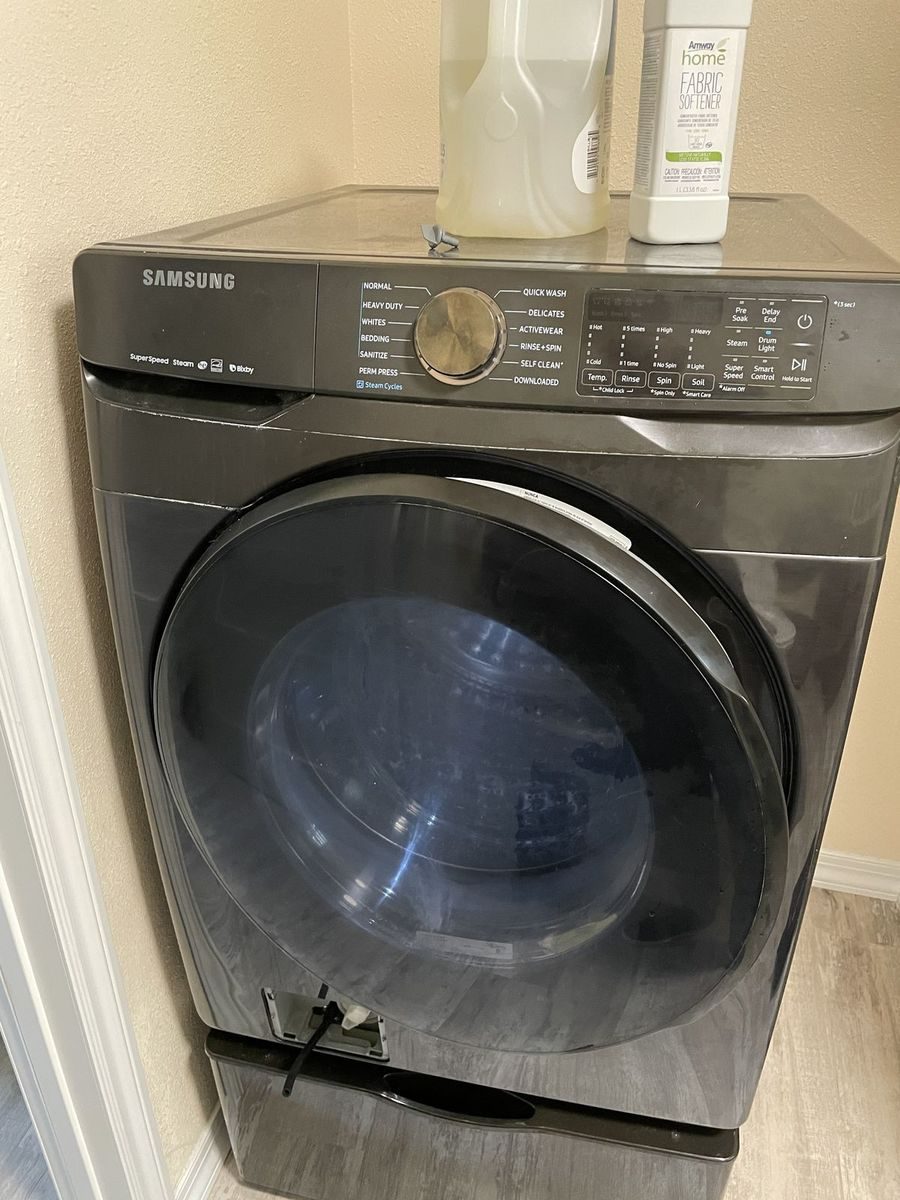
Tab 8 of 12
Damp Kitsap laundry rooms are hard on door boots, so mildew, torn folds and a clogged pump filter are the first things we look at on a front-loader.
See the service page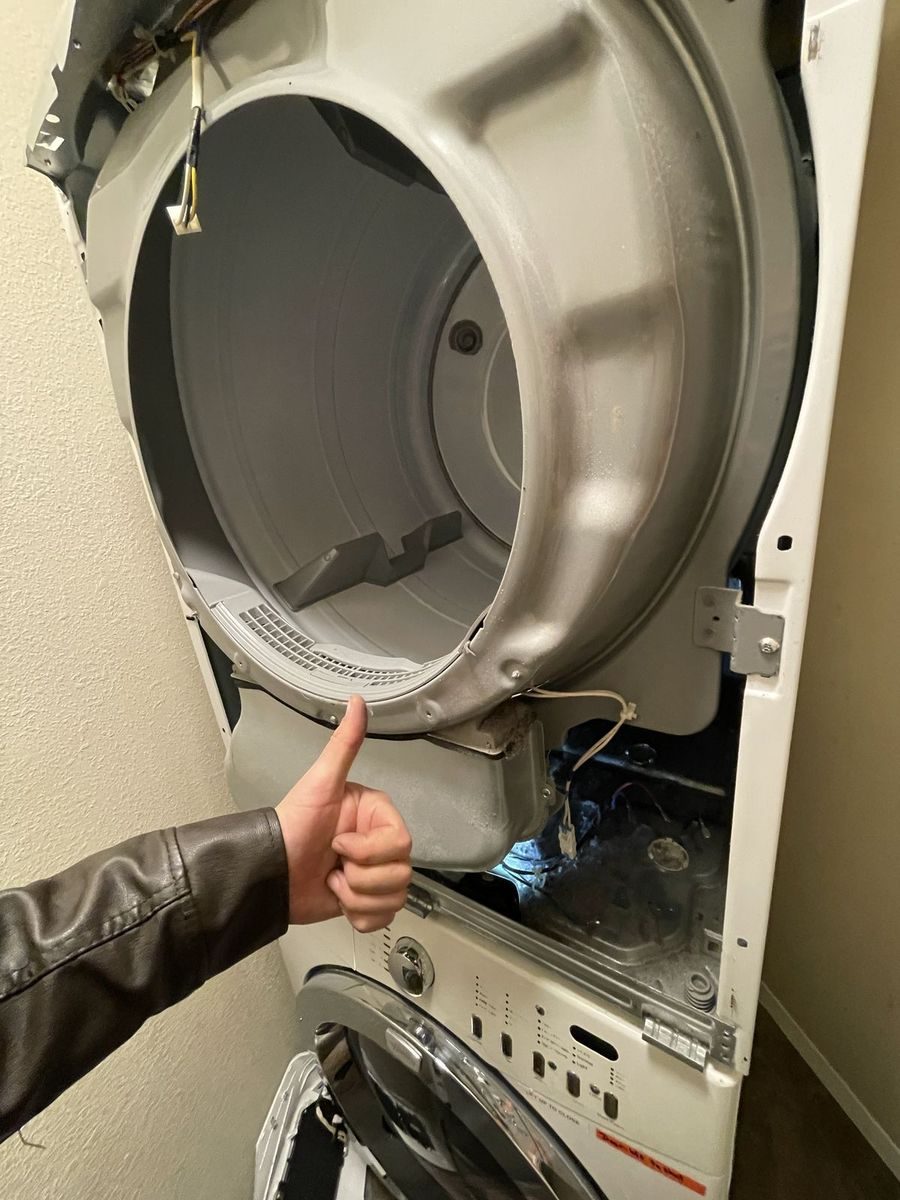
Tab 9 of 12
Long vent runs through damp walls fill with lint quickly, so the vent gets tested along with the heating side: element or burner, thermal fuse and thermostats.
See the service page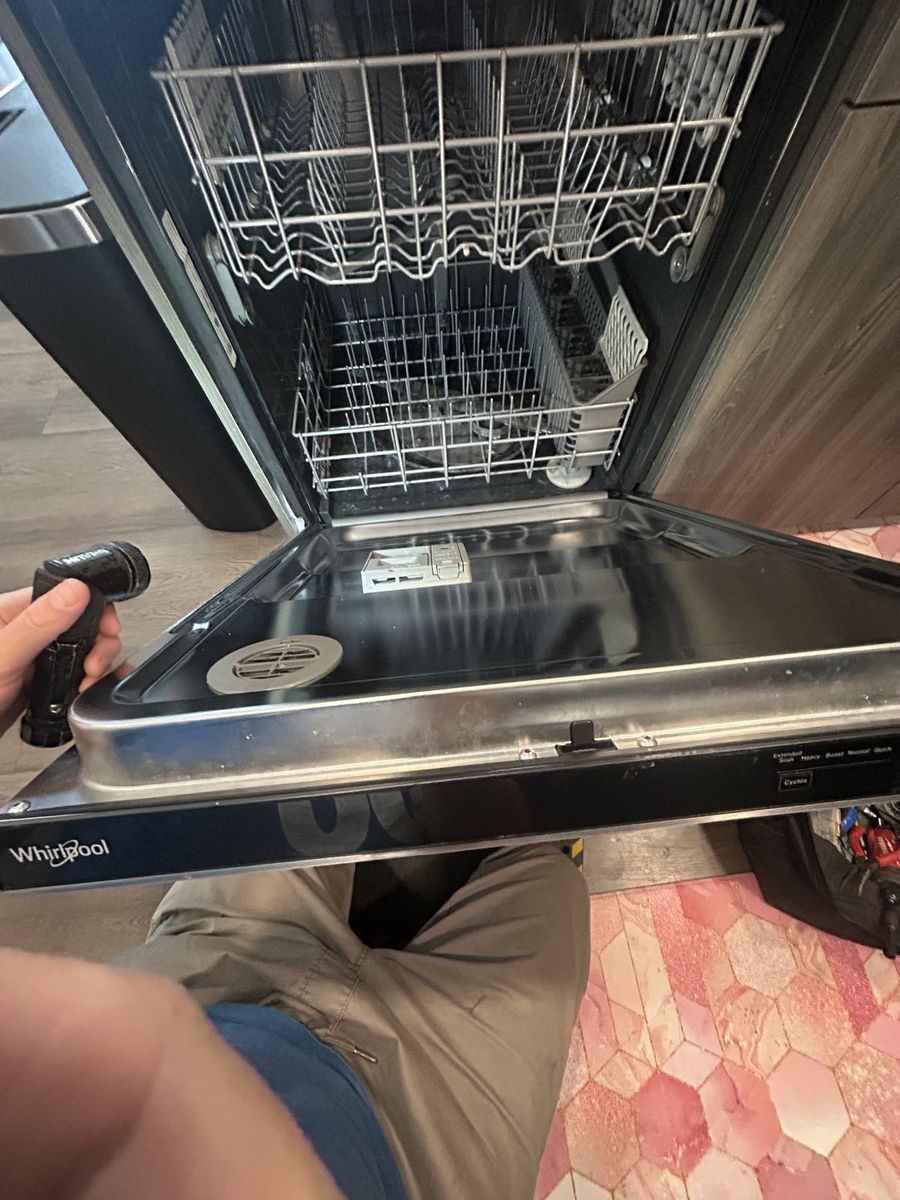
Tab 10 of 12
Well water leaves minerals on the spray arms and the inlet screen, two early stops when dishes come out dull or the tub fills slowly.
See the service page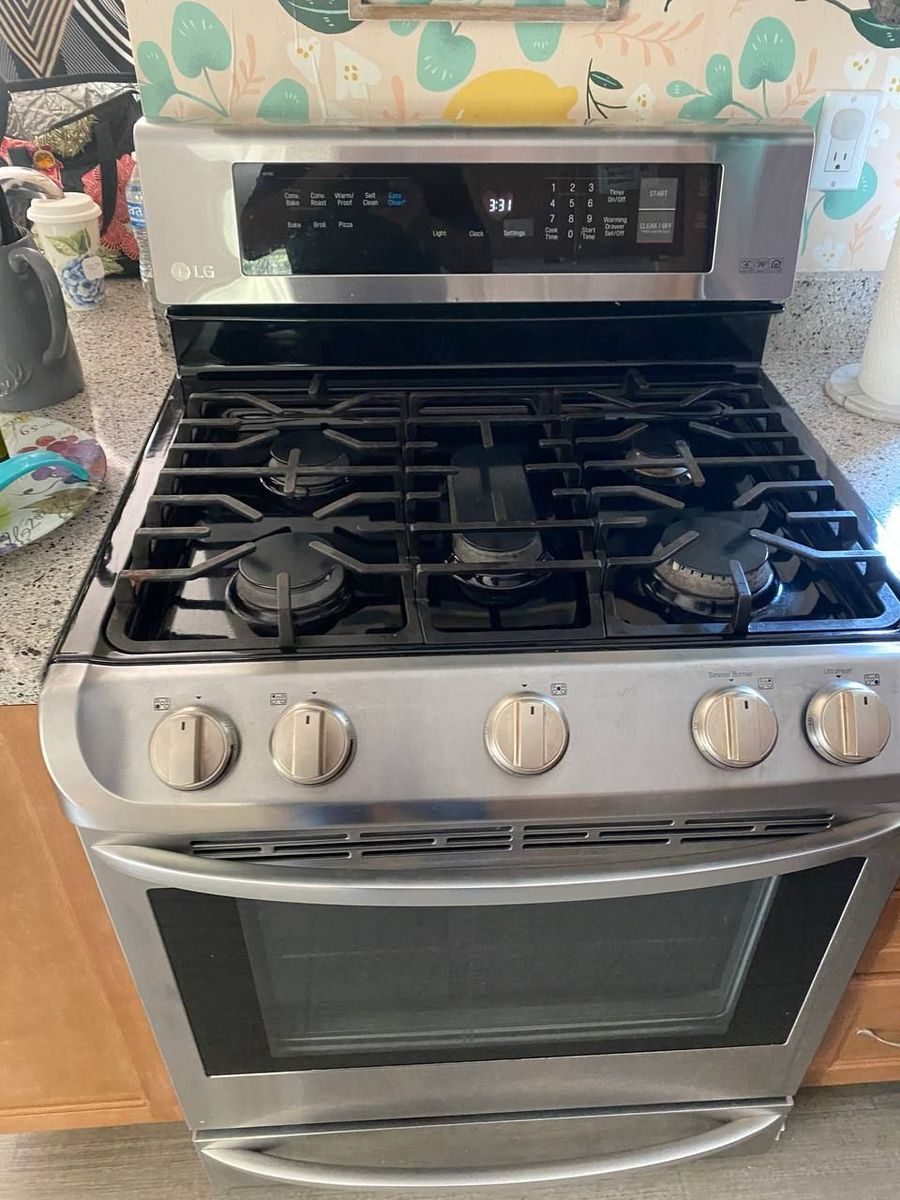
Tab 11 of 12
Natural gas and propane ranges both get igniter, valve and flame checks. The tank and its lines stay with your propane supplier.
See the service page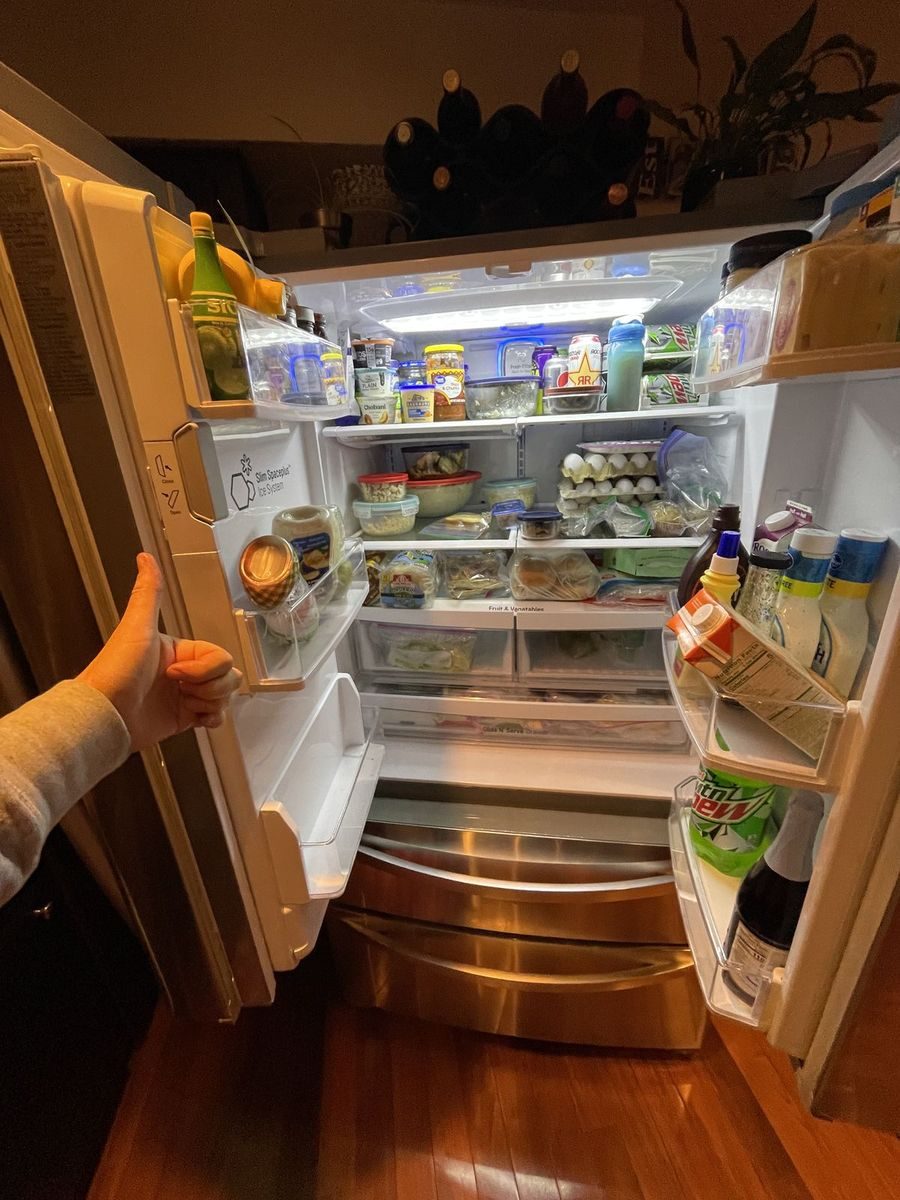
Tab 12 of 12
After a windstorm outage the fill tube often freezes solid and the ice maker goes quiet, so we follow the water up from the inlet valve.
See the service pageSalt is the slow threat. Homes on Sinclair and Dyes Inlets, along Liberty Bay, around the water in Gig Harbor and on the Hale Passage shore of Fox Island take spray and salty fog for months at a time. It pits aluminum fins until they flake, rusts cabinet screws until panels seize, and grows a powdery crust on contactor terminals and wire lugs that adds resistance and heat. Under the tall Douglas firs and cedars that shade so many Kitsap lots, needles and moss mat across the coil face and choke the base pan, and alder catkins join them each spring.
Wind is the sudden threat. Storms drop fir and alder limbs across power lines; the November 19 to 20, 2024 bomb cyclone cut power to homes throughout the region and closed 22 Kitsap County roads to fallen trees or lines. When power flickers back, the jolt can fry a control board, a capacitor or a contactor coil. A house that cooled for hours also calls for every stage at once, so all the AUX strips pull together. Many manufacturers advise keeping the outdoor unit energized for a while before running heat after a long outage, giving the crankcase heater time to drive refrigerant out of the compressor oil.
Fixing it pays off when the failure lives in a part that unbolts, such as a capacitor, contactor, defrost board, coil thermistor, fan motor or even the reversing valve, and the compressor and coils behind it are healthy. The math changes once the compressor itself is dead, once salt has opened leaks in several places along the coil, or once you are recharging an older unit that still holds R-22, which manufacturers stopped making and which now comes only from recovered supplies. Waterfront units often hit that wall earlier than inland ones. When it is close, you get two papers from us: the cost of the repair, and a replacement quote whose one figure covers both the hardware and the install. You choose; we wait.
Because Kitsap winters are cold, wet and near saturation, which is exactly the air that frosts an outdoor coil fastest. A 36-degree drizzle can coat a coil sooner than a dry, colder night. Frequent defrost on gray days is normal. A coil still frosted after the cycle ends, or ice climbing up from the base, is the point to call.
It deserves attention. Salt spray near the inlets and passages corrodes fins, cabinet screws and electrical terminals much sooner than air farther inland does. Rinsing the coil gently with a hose a few times a year, power off, helps a great deal, and a seasonal check catches crusted contactor terminals before they overheat. Coated coils are worth weighing when the unit is eventually replaced.
Give the power some time to settle, then look at the thermostat mode and check the breakers once. Many units also hold the compressor off for a few minutes after power returns. If it still hums, clicks or sits silent past that delay, the surge may have damaged a board, capacitor or contactor, and our technician can test power at the unit and pin down the failed part.
Not when it comes on briefly. The backup heat strips run during defrost so the vents do not blow cold, and plenty of thermostats call them in whenever someone cranks the setting up several degrees. If AUX stays on all afternoon when it is 45 out, though, the heat pump is coming up short and the strips are doing expensive work in its place.
Yes. Ductless systems from LG, Daikin, Fujitsu and Mitsubishi are common in Kitsap homes, often added to houses that relied on baseboard. We read indoor and outdoor error codes, replace failed boards and fan motors, clear blocked condensate lines, and find leaks at flare fittings, each repair priced in writing before we start. Our ductless page goes into more detail.
They can play a big part. Needles, moss and alder catkins mat on the coil and fill the base pan, so the coil frosts faster and meltwater has nowhere to go. Ice then climbs until it bends fins or catches the fan blade. A fall cleanout of the top grille and base, power off, prevents most of it.
Talk to a person
Book on the site by selecting a date plus a window for the technician's arrival, or dial the office, open to callers daily, 8 AM through 7 PM. Expect a confirming call, and later a ring from the technician en route.
Schedule online
Tell us what needs attention, the day that works and the window you prefer. A scheduler calls to make it firm, and the technician rings again before pulling up.
Washington Labor & Industries keeps these records public. Each number can be searched on L&I Verify; scope details sit on a separate page.
Scope of each license