Tab 1 of 12
Heat pump repair
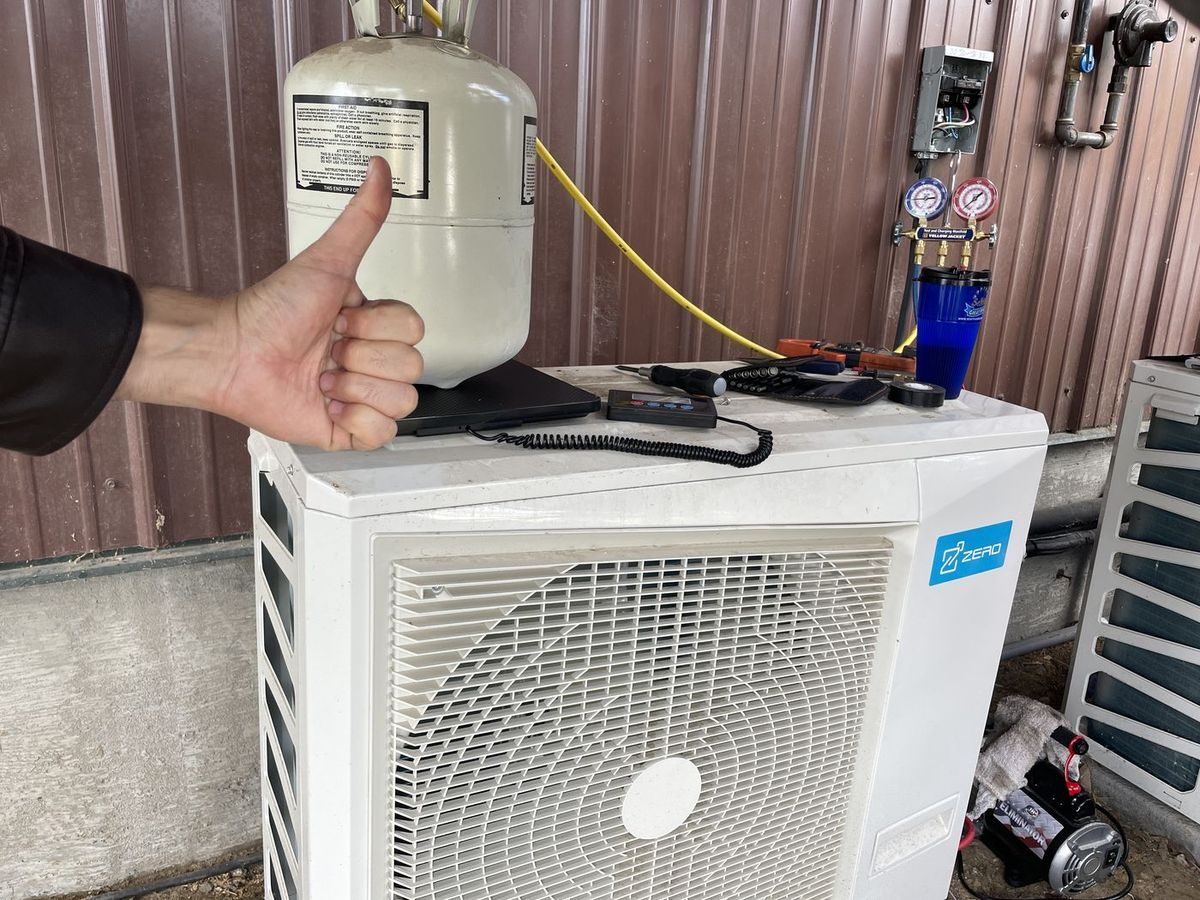
Through the gray months we watch the defrost cycle closely, because a coil that never clears is the classic Kitsap winter call. Capacitors and the reversing valve come next.
See the service page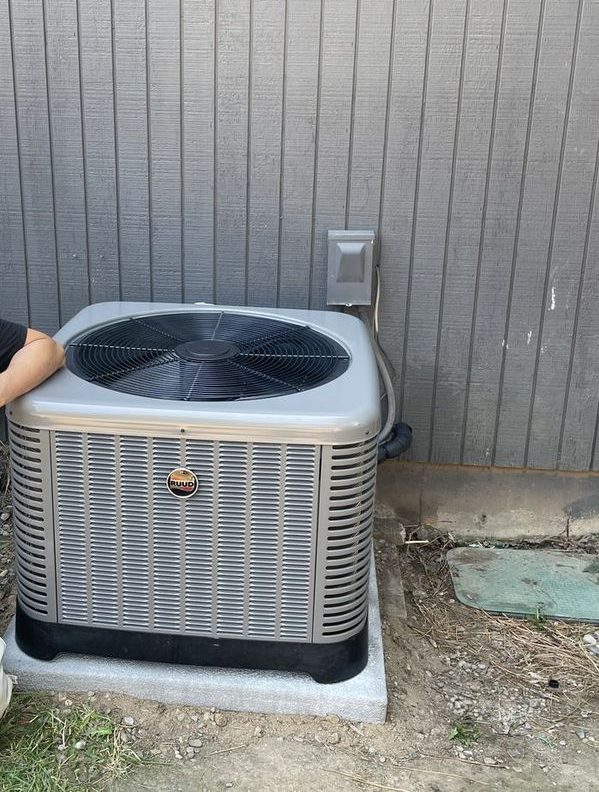
Silverdale, WA · Kitsap County · 98383 · 98315
Silverdale wraps around the north tip of Dyes Inlet, with Old Town and the port on the water, shopping along SR 3 and SR 303, and newer houses and apartments climbing the hills. Many households here move in and out on short notice, and plans can change overnight.
Straight to it
Larch HVAC & Appliance covers Silverdale's 98383 and 98315 ZIP codes: repairs on mini-splits, heat pumps, central air and furnaces, new HVAC installs, and fixes for refrigerators, washers, dryers, dishwashers and ranges. Online, a Silverdale booking is a chosen day plus an arrival window; by phone, the office picks up 8 AM–7 PM daily. Approve the repair and the diagnostic fee is credited toward it; pass, and you owe that fee by itself.
First, that Silverdale is not a city. It is an unincorporated census-designated place of about 20,700 people as of 2020, and voters have turned down incorporation more than once. Groundwater wells run by small local water systems supply most taps, and when you book, the office places your visit by ZIP code rather than by a city line. None of that changes how a furnace gets fixed, but it explains why we talk about 98383 and 98315 instead of city limits.
Second, turnover sets much of the local rhythm. Plenty of Silverdale households arrive, leave for months and transfer on short notice. That brings rentals that sit empty between tenants, appliances fresh off a moving van, and heat pumps run by people who have never lived with one. The questions follow a pattern: why the AUX light keeps glowing, why the outdoor unit steams on a cold morning, and why the upstairs bedrooms run warm in July.
Third, much of the housing is newer than in older Kitsap towns. Old Town Silverdale and the port sit right on Dyes Inlet, while newer subdivisions and apartment complexes spread up the hills and around the shopping district along SR 3 and SR 303. The heat pumps, furnaces and builder appliance sets that came with those homes are now old enough for run capacitors, hot-surface igniters, drain pumps and control boards to wear out.
Winter brings defrost and backup heat questions. Long gray stretches between 35°F and 50°F are efficient heat pump weather, yet the damp air frosts the outdoor coil often, so the unit flips into defrost again and again, now and then hissing and throwing off a plume of steam. That much is expected. Trouble looks different: ice that never melts off the coil, an AUX indicator glowing hour after hour, or an outdoor unit humming with a motionless fan blade. Our technicians test the defrost board, the coil sensor, the reversing valve solenoid and the outdoor fan capacitor's microfarads, then check superheat and subcooling to see whether the TXV and charge are right. Any refrigerant handling stays under our EPA 608 Universal credential.
Summer stress shows up all at once. The June 2021 heat dome pushed highs to 105–110°F across the Kitsap Peninsula, and two-story Silverdale houses can trap heat upstairs even on milder days. When a second floor runs several degrees warm, we measure static pressure, check the temperature split at the registers, and look at return sizing and blower speed before anyone mentions a bigger system. Windstorms add a third fault. During the November 2024 bomb cyclone, outages spread across the region and 22 Kitsap County roads closed under fallen trees or lines; when the grid comes back, the jolt can fry a furnace or heat pump control board. If the system sits silent right after power returns, give it several minutes, because many outdoor units count down a built-in restart delay.
Laundry trouble and moving damage top the list. Apartment and townhouse laundry often sits in an interior closet, so the dryer exhausts through a long duct that gathers lint and moisture; dry times stretch, the cabinet runs hot, and sooner or later the one-time thermal fuse blows. We check exhaust airflow, the heating element, the operating and hi-limit thermostats and that fuse. Front-load washers squeezed into those closets breed odor and leaks at the door boot, and a drain pump jammed with a coin or a sock stops the spin cycle cold.
Refrigerators pay for the move. Shoved back against the wall after delivery, a water line can kink and starve the ice maker, and a unit hauled lying down may need some upright hours before it cools well. In newer kitchens, dishwasher calls trace to clogged filters or tired drain pumps, and range calls turn out to be a bake element or a weak oven igniter. Our 07D Appliance Repair specialty reaches GE, Whirlpool, LG, Frigidaire, Maytag, KitchenAid and Bosch, and on the Samsung side, washers, dryers, ranges and dishwashers. No Silverdale kitchen loses a part before you've seen the written figure and said go.
Each tab holds a photo from our service calls and a note on what we check first. Pick any tab; left alone, they turn every few seconds.
Tab 1 of 12
Through the gray months we watch the defrost cycle closely, because a coil that never clears is the classic Kitsap winter call. Capacitors and the reversing valve come next.
See the service page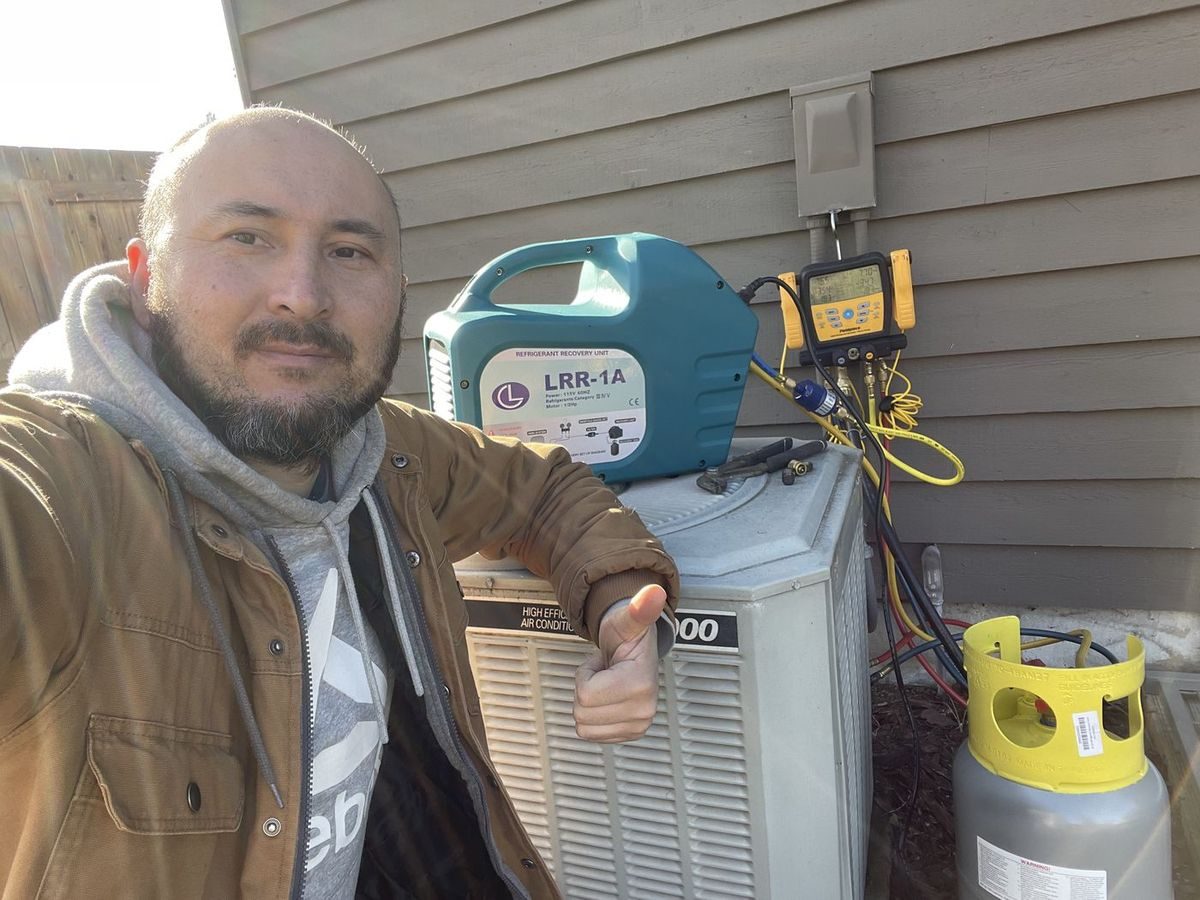
Tab 2 of 12
More Kitsap homes have cooling since the 2021 heat dome. When a system falls behind on a hot afternoon, we start with airflow, the capacitor and the refrigerant charge.
See the service page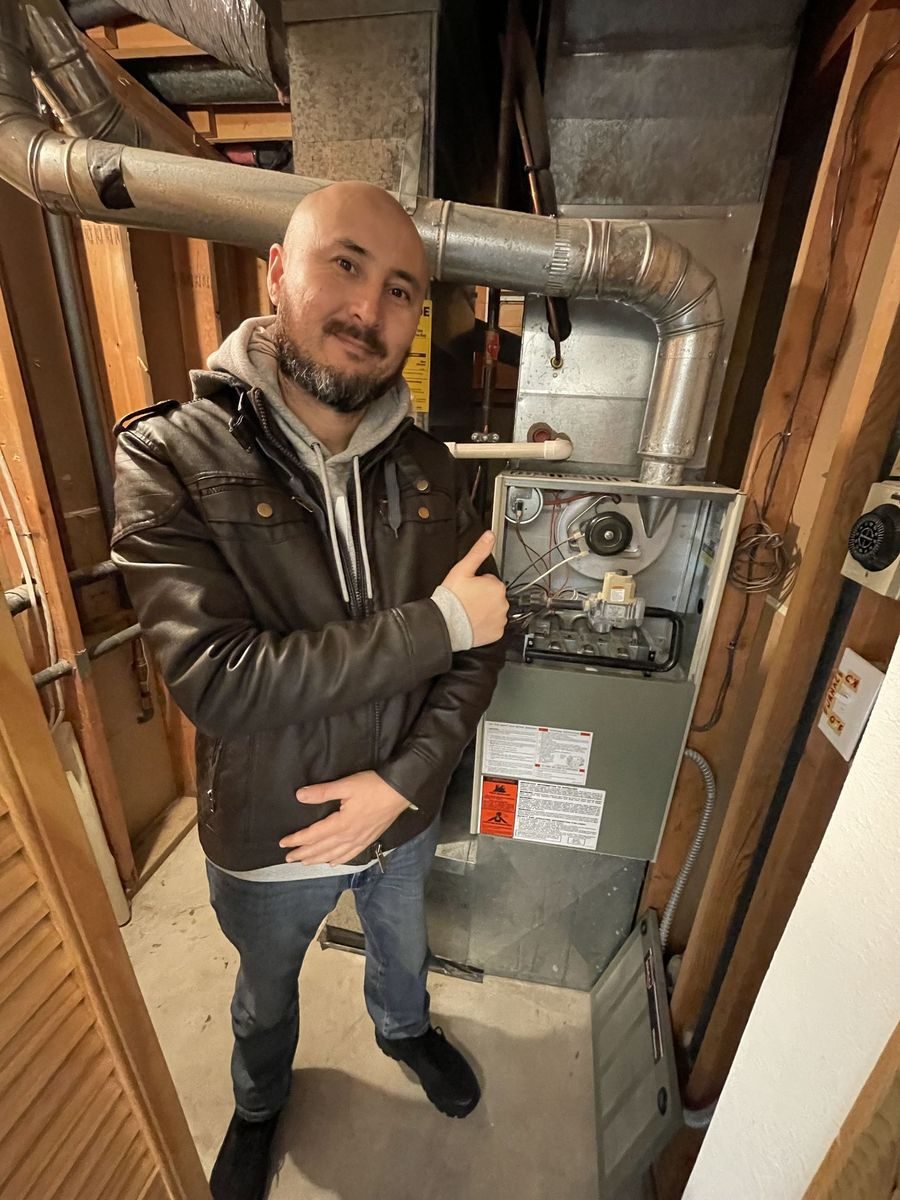
Tab 3 of 12
Many older Bremerton and Manette houses keep the furnace in a closet or under the floor. Filter, inducer, flame sensor and limit switch all get checked in that tight space.
See the service page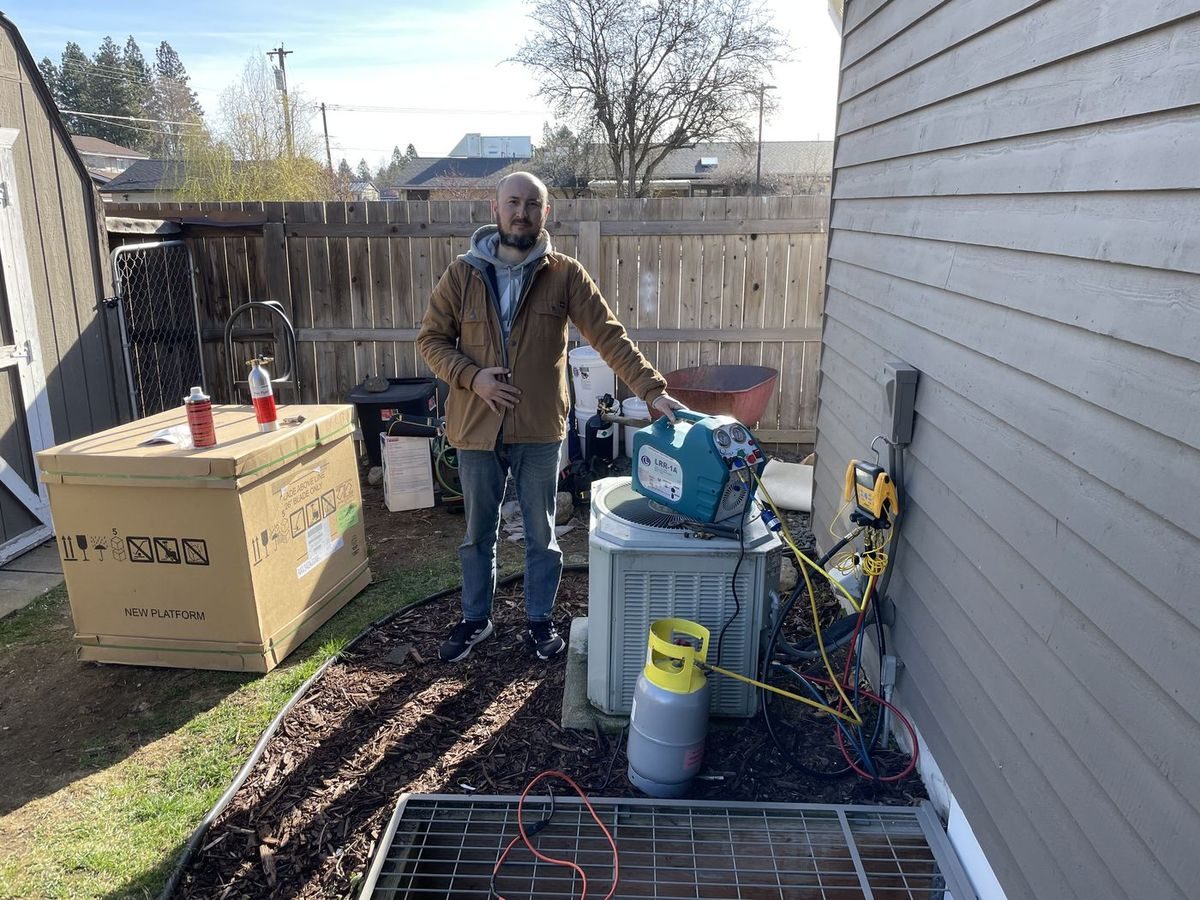
Tab 4 of 12
Placement matters on the peninsula: a raised pad clear of wet ground, back from salt spray where the lot allows, and out from under the needle drop.
See the service page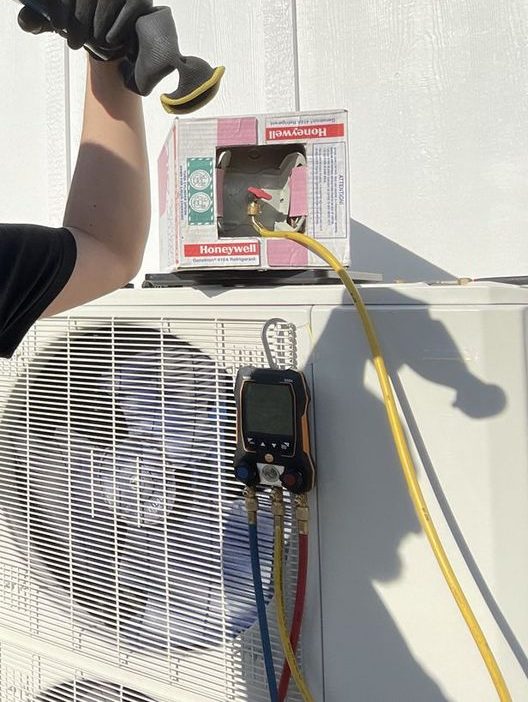
Tab 5 of 12
Mini-splits fit older homes with no room for ducts. Their line sets need sound insulation where they cross a damp crawlspace, and the outdoor unit needs a clear drain path.
See the service page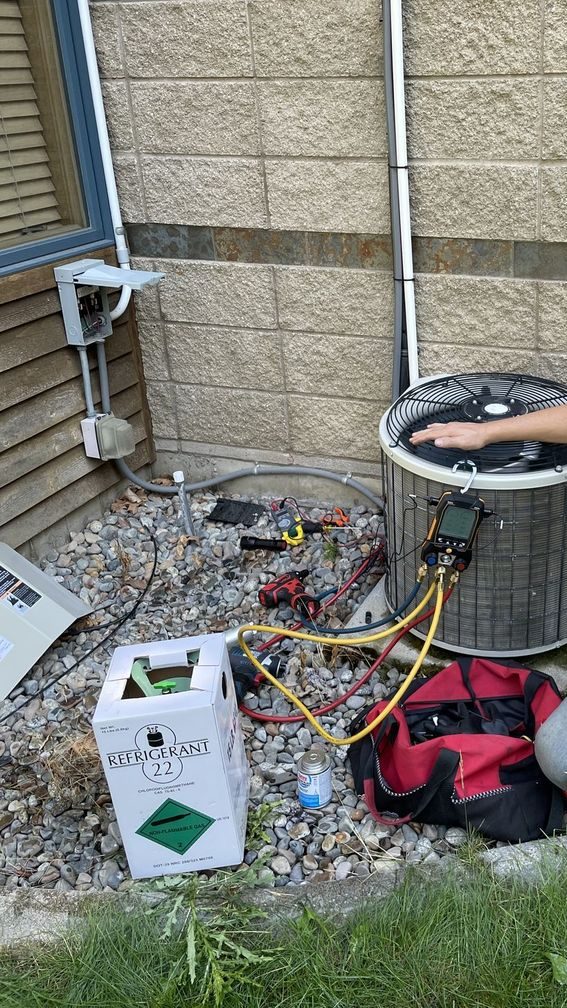
Tab 6 of 12
A seasonal visit near the water means a coil rinse, a look at the fasteners for salt rust and a base pan that drains. Those three buy waterfront equipment years.
See the service page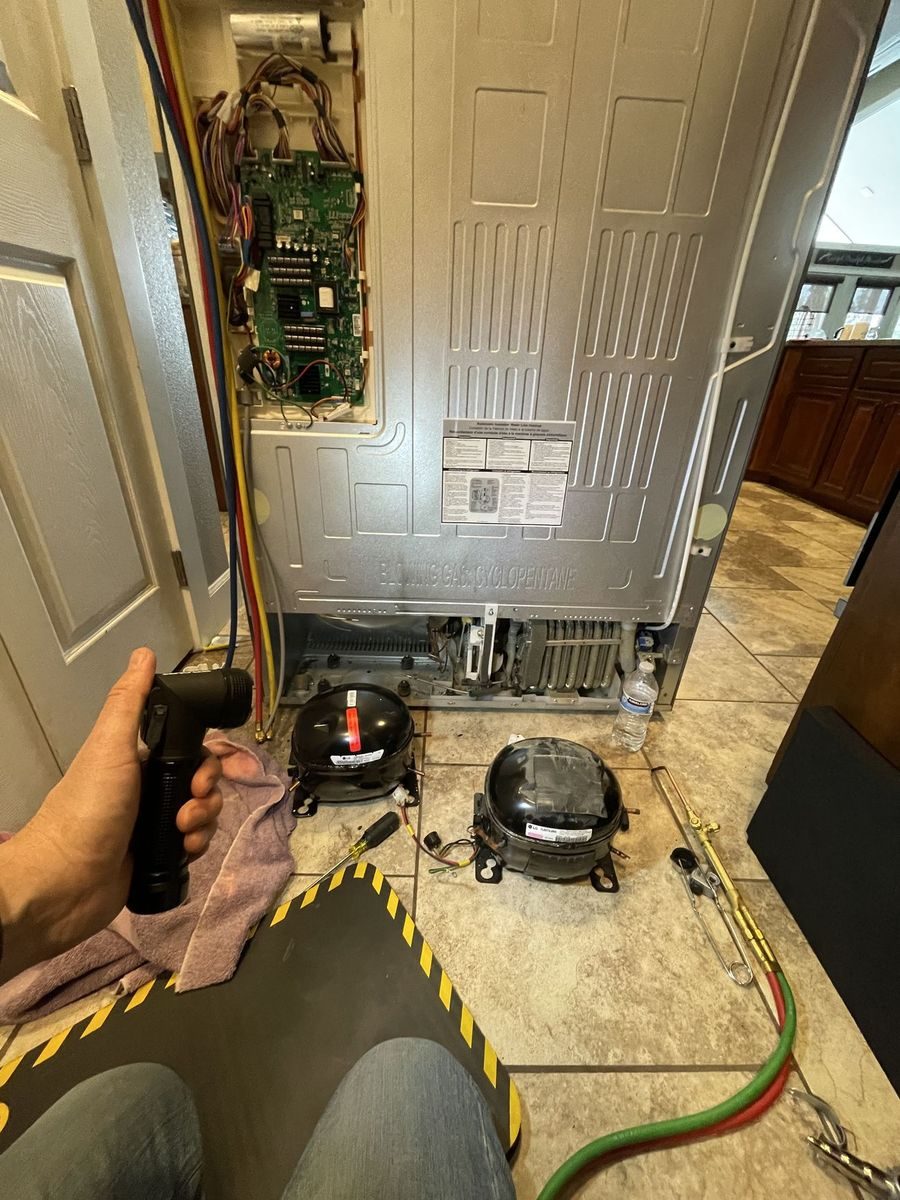
Tab 7 of 12
Sealed-system work, from leak search to recharge, happens right in the kitchen under EPA 608 Universal credentials, so the fridge stays where it stands.
See the service pageTab 8 of 12
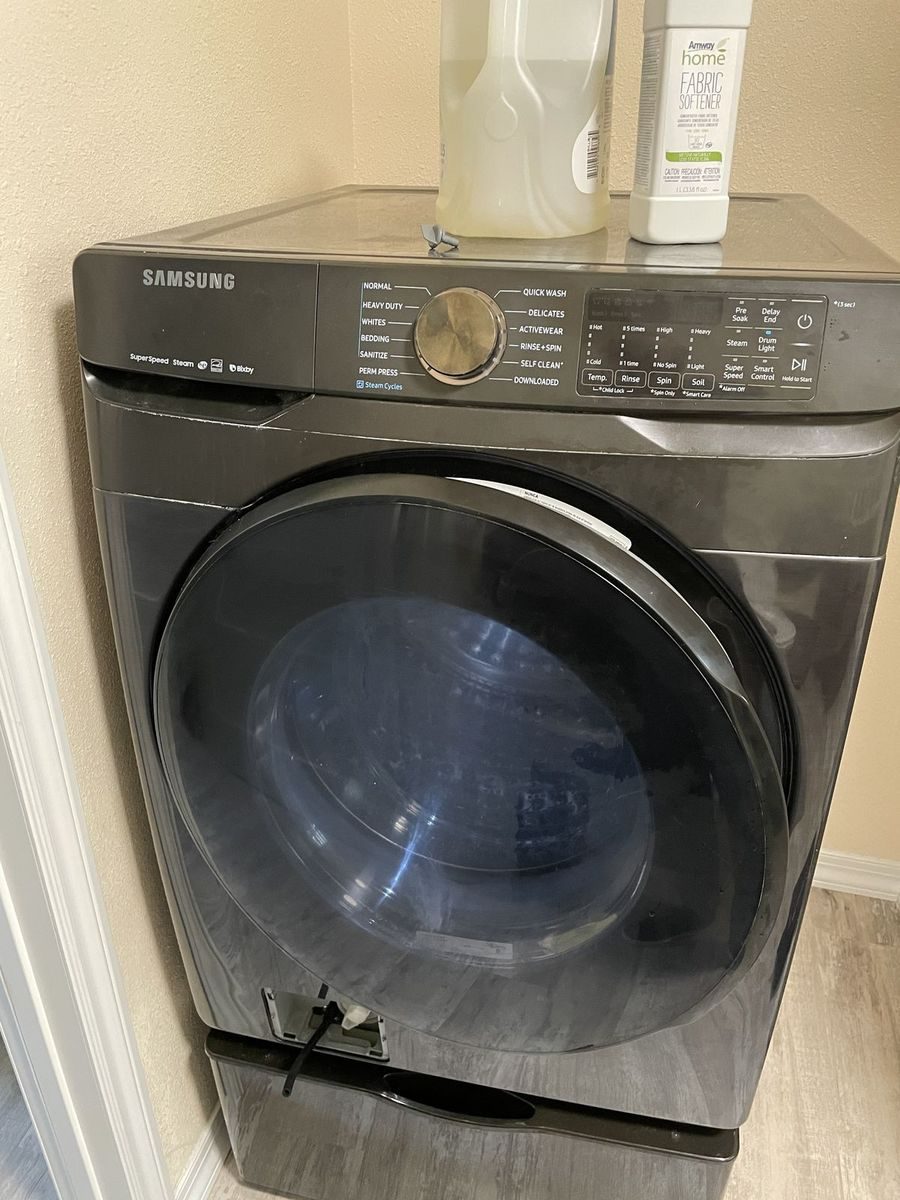
Damp Kitsap laundry rooms are hard on door boots, so mildew, torn folds and a clogged pump filter are the first things we look at on a front-loader.
See the service page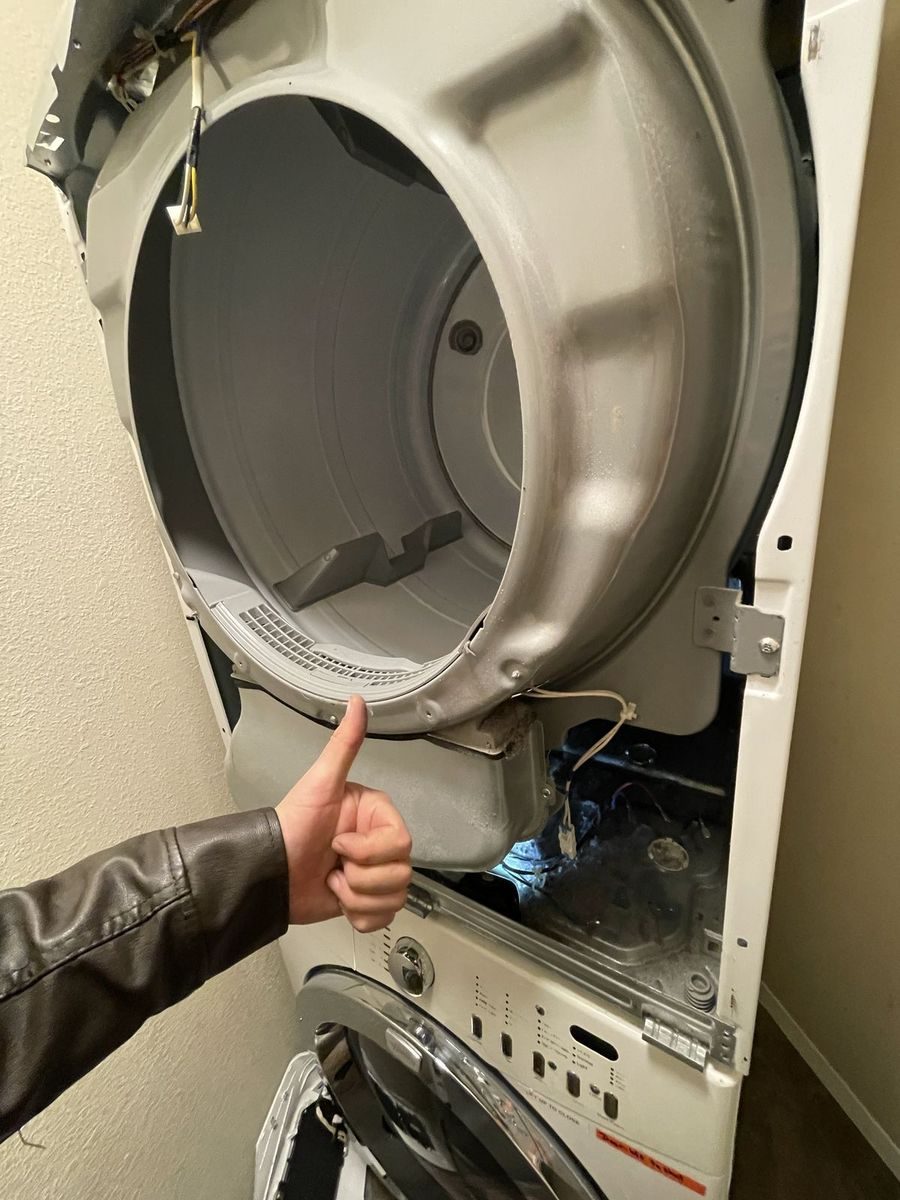
Tab 9 of 12
Long vent runs through damp walls fill with lint quickly, so the vent gets tested along with the heating side: element or burner, thermal fuse and thermostats.
See the service page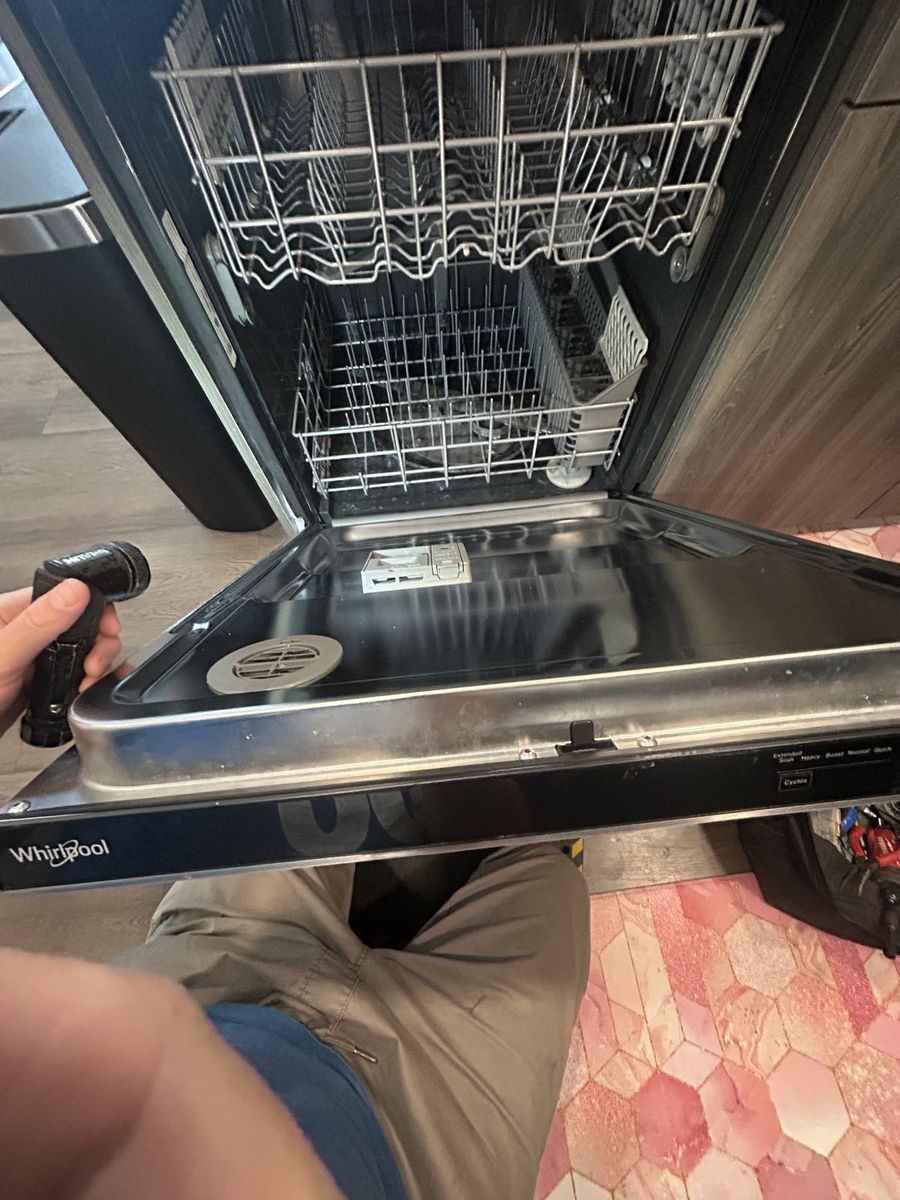
Tab 10 of 12
Well water leaves minerals on the spray arms and the inlet screen, two early stops when dishes come out dull or the tub fills slowly.
See the service page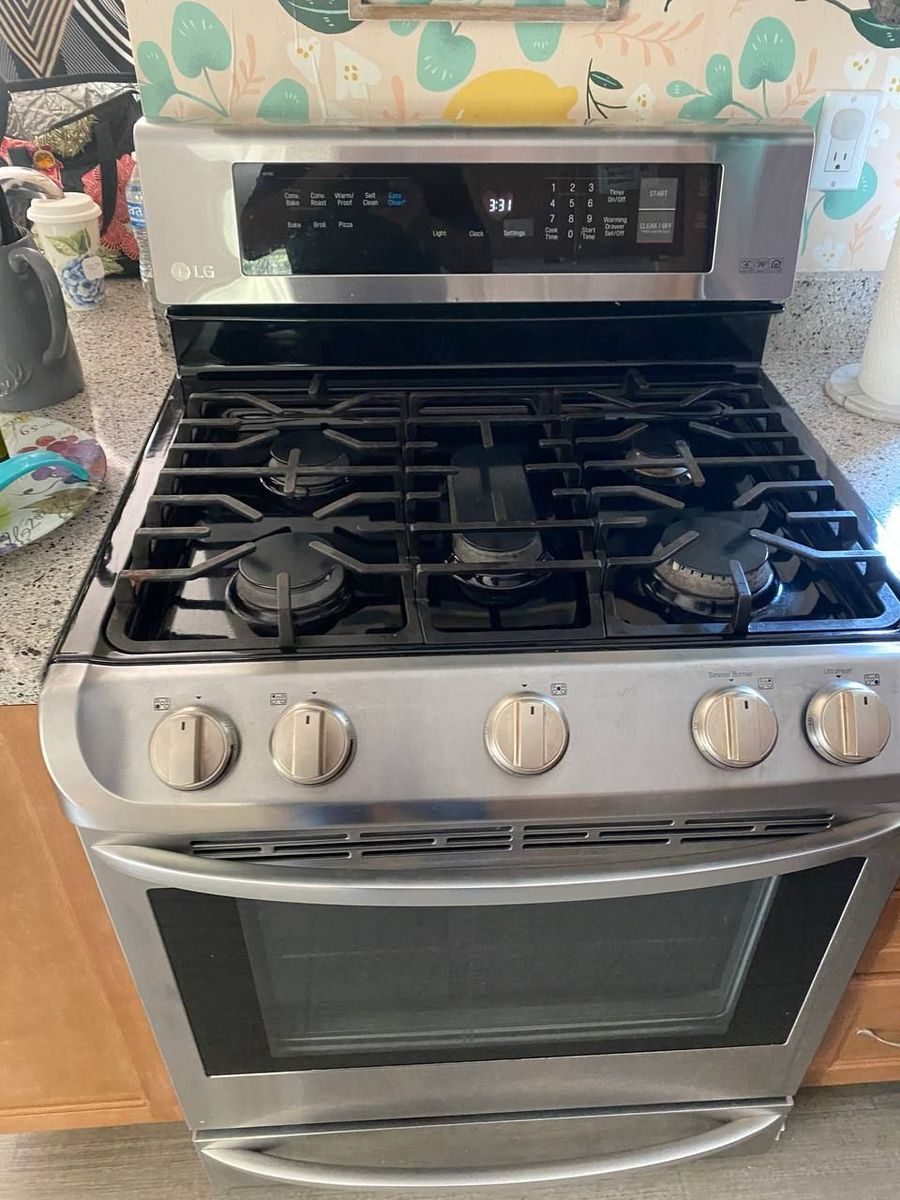
Tab 11 of 12
Natural gas and propane ranges both get igniter, valve and flame checks. The tank and its lines stay with your propane supplier.
See the service page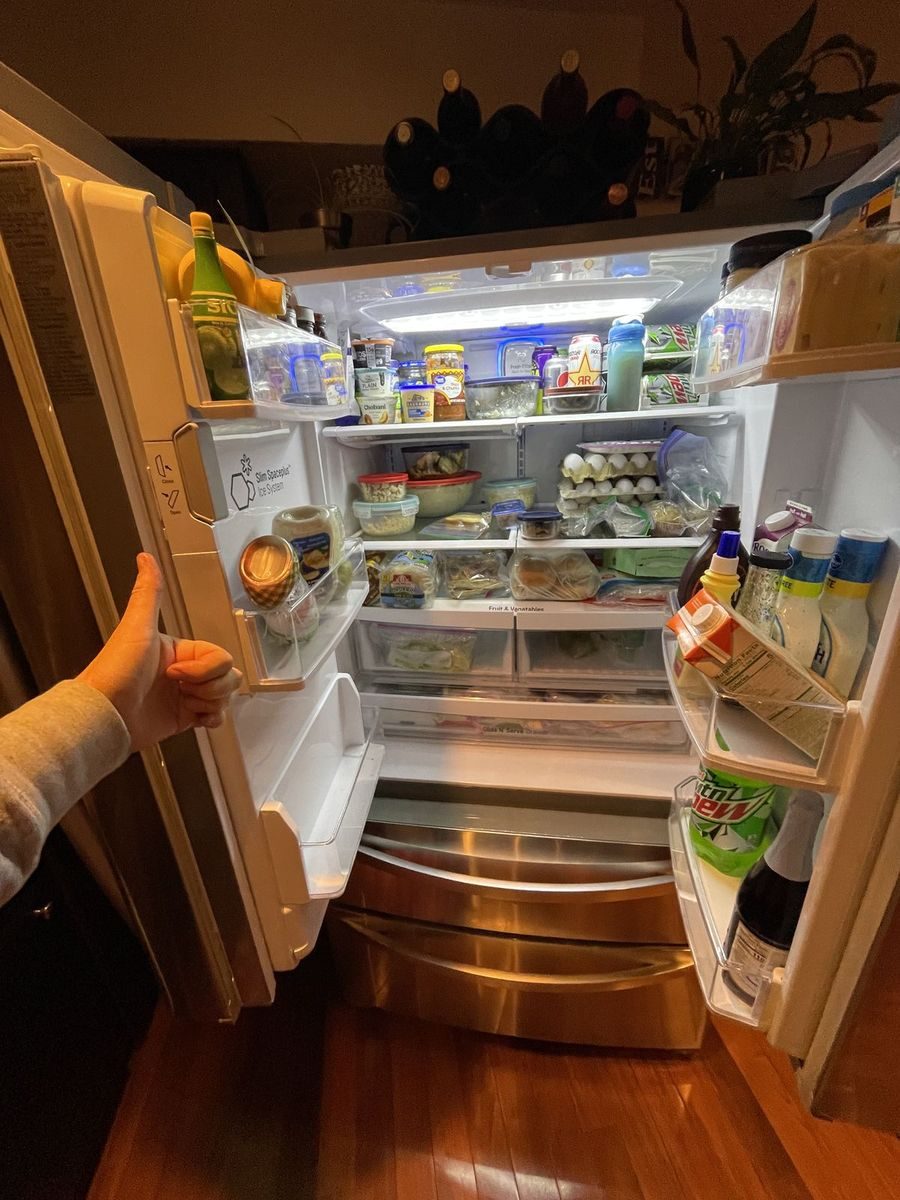
Tab 12 of 12
After a windstorm outage the fill tube often freezes solid and the ice maker goes quiet, so we follow the water up from the inlet valve.
See the service pageOld Town and the port sit on Dyes Inlet, closer to salt water than most of Silverdale. Salt air there works on outdoor coil fins, cabinet screws and electrical terminals. During tune-ups we tighten and clean contactor lugs, check capacitor terminals for green crust, and rinse the coil gently so salt residue stops chewing at the aluminum.
Near the commercial hub along SR 3 and SR 303, homes and apartments often tuck an air handler or furnace into a closet and hang a ductless head in the living room. Closet installs tend to starve the return, so we check filter fit, blower wheel buildup and static pressure, and flush mini-split condensate lines before they overflow.
Shoreline houses around the inlet take wind-driven rain and salt from the water side. Outdoor units facing the inlet usually corrode first at the base pan, fasteners and fan motor mounts. We clear blocked drain holes, check for crumbling coil fins, and when replacement comes up, talk through placing new equipment on the sheltered side of the house.
Two-story homes on the hills often run a heat pump backed by gas furnace heat or electric strips. Equipment from the same building boom tends to fail the same way, with a swollen capacitor, a cracked igniter or a fouled flame sensor. Upstairs comfort complaints get an airflow check before any talk of new equipment.
Along the roads north of town, apartments house many shift workers who need repairs to fit around long days and stretches away from home. Picking an arrival window, plus a note about building access or a gate code, keeps the visit on track. If you rent, add your property manager's name to the booking so approvals do not stall.
Yes. We serve Silverdale by ZIP code, 98383 and 98315, since there are no city limits to go by. That includes Old Town, homes around Dyes Inlet, the SR 3 and SR 303 corridor and the hillside subdivisions. Live near the edge of those codes? Ask the office before booking; whoever answers can say whether your street fits that day's route.
Not necessarily. AUX means the backup heat strips are helping, which is normal during defrost and when the thermostat jumps several degrees at once. When it glows for hours during mild weather, the heat pump may not be pulling its weight because of a failed capacitor, a defrost fault or a low charge. Keep setbacks small, and book a visit if the pattern continues.
Give it about ten minutes, since many systems wait out a restart delay. Then make sure the thermostat display is awake and its schedule survived. You can flip the breaker off and on one time; should it snap off again, stop there. Still nothing? A power spike may have taken out the control board or the low-voltage transformer, and our technician checks voltage at the equipment before replacing either.
Heat rises, and two-story layouts can short the upper floor on airflow. Undersized upstairs returns, a dirty filter or a blower set to a low speed make it worse. We measure static pressure and the temperature split, check the refrigerant charge, and explain which balancing or equipment changes would help before you commit to anything.
No, it counts toward the repair. The office tells you the fee as you schedule, the technician tracks down the cause, and the fix arrives priced on paper. Approve that figure and the diagnostic charge already sits inside it. Decline it, and the fee stands alone as your bill. Our written warranty terms are printed on the Silverdale invoice.
Talk to a person
Silverdale households can claim a day, then an arrival slot, through the online booker, or phone the office, where someone answers from 8 AM through 7 PM. Confirmation comes by phone, and the technician dials ahead from the truck shortly before arrival.
Schedule online
Tell us what needs attention, the day that works and the window you prefer. A scheduler calls to make it firm, and the technician rings again before pulling up.
Washington Labor & Industries keeps these records public. Each number can be searched on L&I Verify; scope details sit on a separate page.
Scope of each license