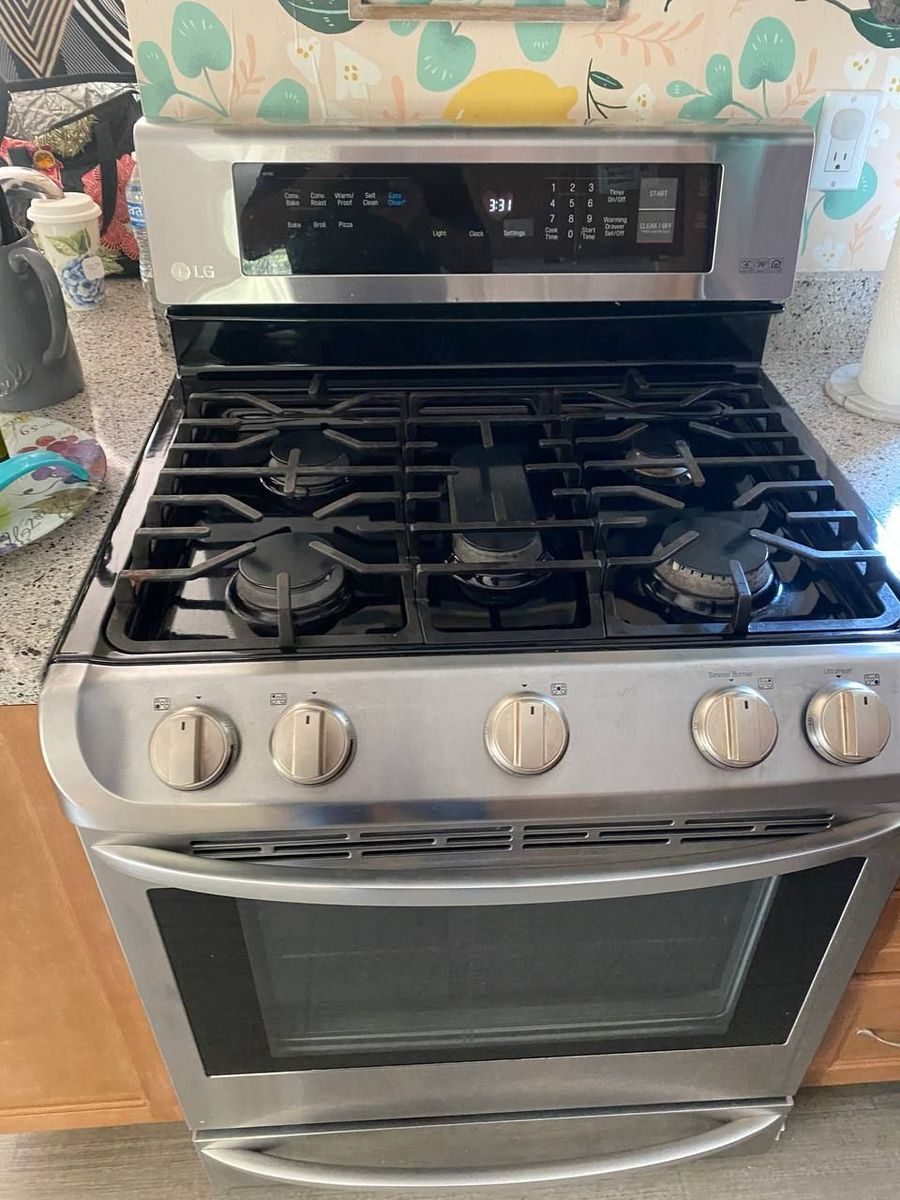
Tab 1 of 12
Oven & range repair
Natural gas and propane ranges both get igniter, valve and flame checks. The tank and its lines stay with your propane supplier.
See the service pageOven, range and cooktop repair · Kitsap
An oven that dawdles toward 350°F, a burner that ticks and ticks without catching, a door that stays bolted long after self-clean: each traces back to a short list of parts. Our technicians meter igniters, elements, sensors and locks, name the culprit, and write a price before touching it.
Straight to it
A gas oven that stays cold while its igniter glows usually has an igniter that has grown too feeble to coax open its safety valve. An electric oven with no bake heat usually has an element burned through. Temperatures that wander implicate the oven sensor or control, and a cooktop burner clicking without flame points to a fouled or cracked electrode. Each suspect gets tested, and you see a written figure first.
Because the oven and the cooktop light in two unrelated ways. Inside most gas and propane ovens sits a hot surface igniter, a gray or white bar that glows orange, sharing one circuit with the oven's safety valve. That valve stays shut until current through the igniter reaches the rating stamped on the valve body, a few amps. Igniters lose strength with age, so they keep glowing while drawing too little, the valve never opens, and the oven sits cold. Cooktop burners use a different system: turning any knob closes a switch, a spark module fires every electrode, and the burner lights from its own gas.
Electric ranges heat by resistance. A bake element along the floor and a broil element across the ceiling answer to the oven board, which reads a platinum temperature sensor on the back wall, which on many models reads near 1,100 ohms in a 70-degree kitchen. A blister or break in the bake element, a sensor drifting out of calibration, or a board relay that welds closed or refuses to close shows up as no heat, sluggish heat, or an oven that overshoots and scorches the edges. Coil and smooth-top cooktops cycle each element through an infinite switch, and those contacts pit and wear like any other.
Ranges, ovens and cooktops fall under the 07D appliance specialty on our electrical contractor license. On gas and propane models we repair burners, igniters, spark modules, oven valves and controls inside the appliance; fuel conversions, gas line work and new gas connections are outside our scope.
We light everything and watch before measuring anything. On gas and propane ranges, the technician clamps a meter on the oven igniter circuit, studies flame color and shape at each burner, and sniffs for gas at fittings inside the range. On electric ranges it is resistance at the elements and sensor, voltage at the terminal block, and the board's output during preheat. For a stuck self-clean lock, we first confirm the cavity has cooled, since that lock exists to keep the door shut during a cycle hot enough to turn spills to ash.
Once the fault is pinned down, the repair price is set in writing and work waits for your yes. During booking our office quotes the diagnostic fee; proceeding credits that fee toward the repair, while declining leaves it as the visit's only charge. Oven igniters often travel on the truck. Elements, sensors, boards and pro-style parts may be ordered, each priced before the order. Terms of our warranty are written on your invoice.
Each tab holds a photo from our service calls and a note on what we check first. Pick any tab; left alone, they turn every few seconds.
Tab 1 of 12
Natural gas and propane ranges both get igniter, valve and flame checks. The tank and its lines stay with your propane supplier.
See the service page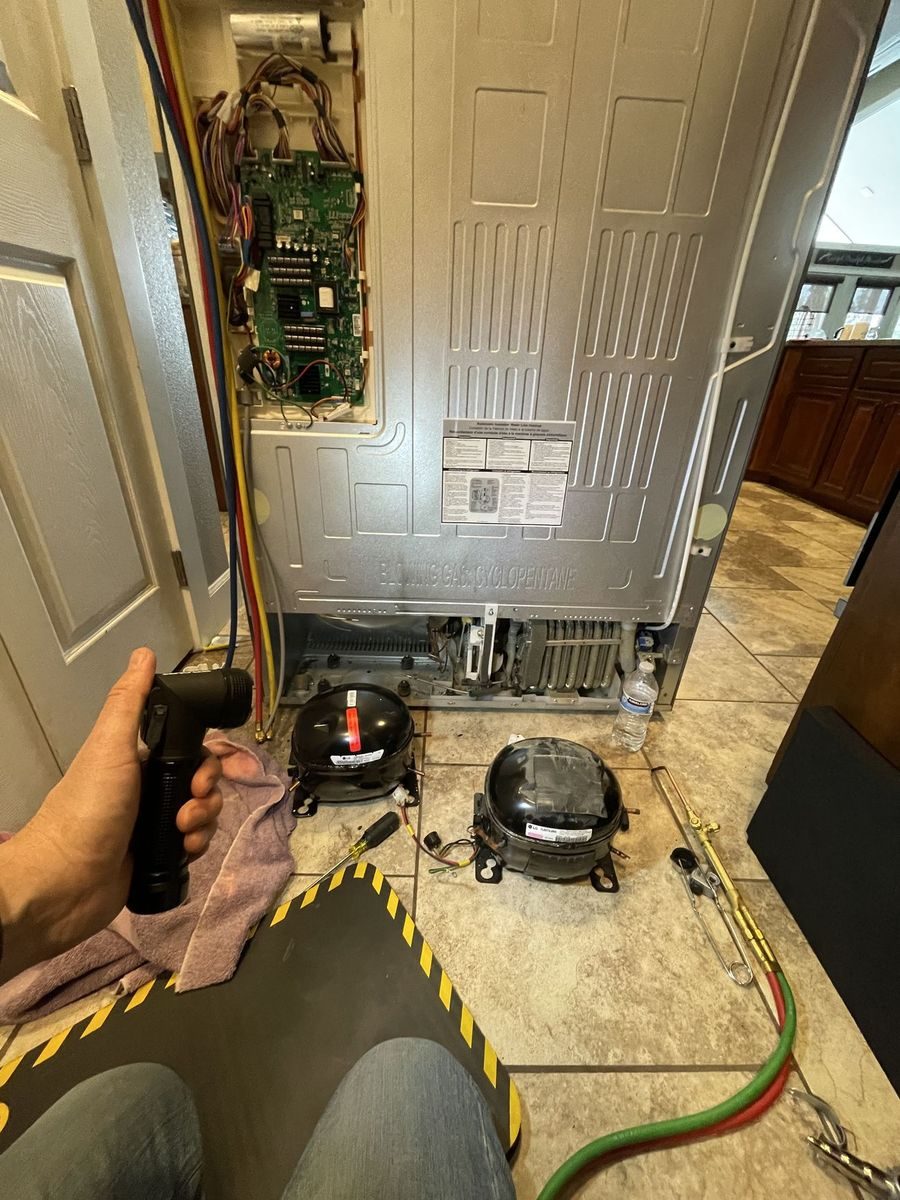
Tab 2 of 12
Sealed-system work, from leak search to recharge, happens right in the kitchen under EPA 608 Universal credentials, so the fridge stays where it stands.
See the service page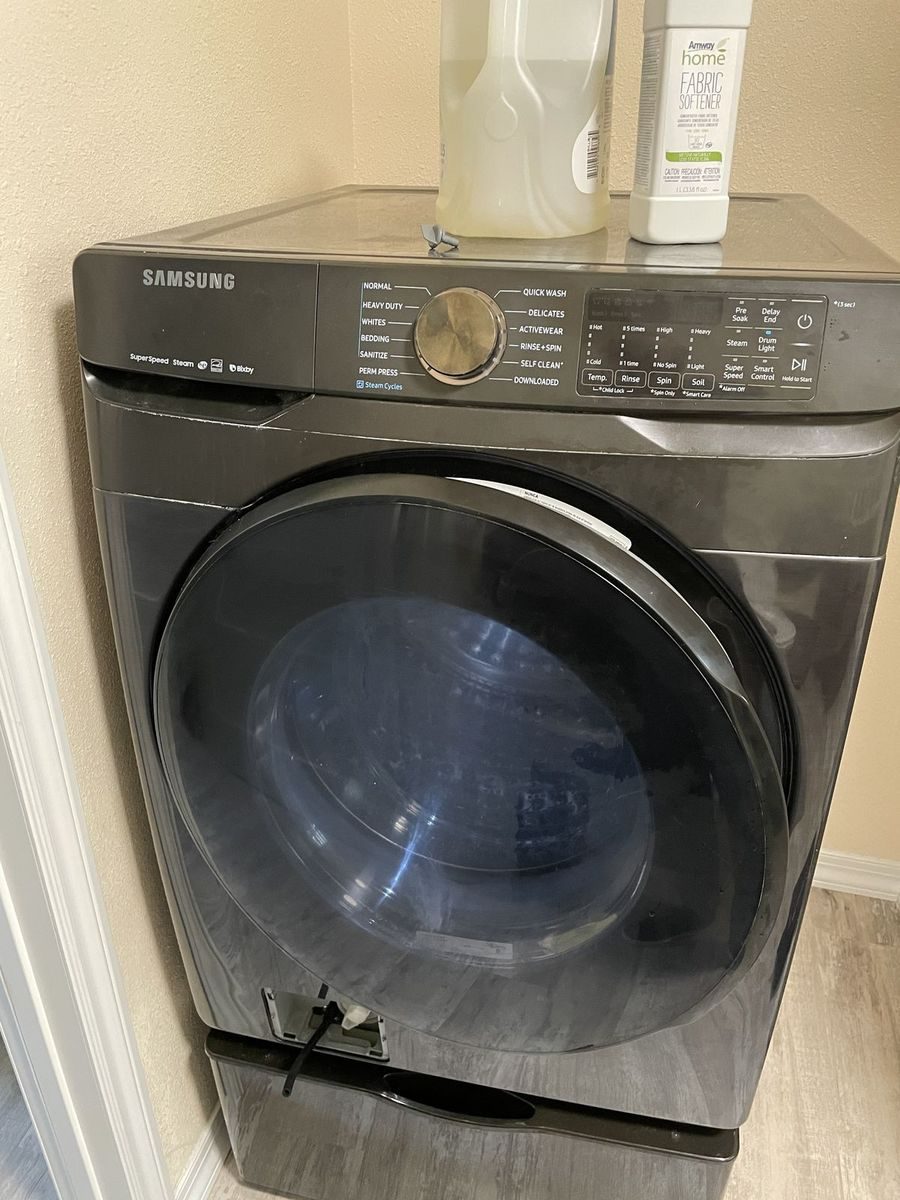
Tab 3 of 12
Damp Kitsap laundry rooms are hard on door boots, so mildew, torn folds and a clogged pump filter are the first things we look at on a front-loader.
See the service page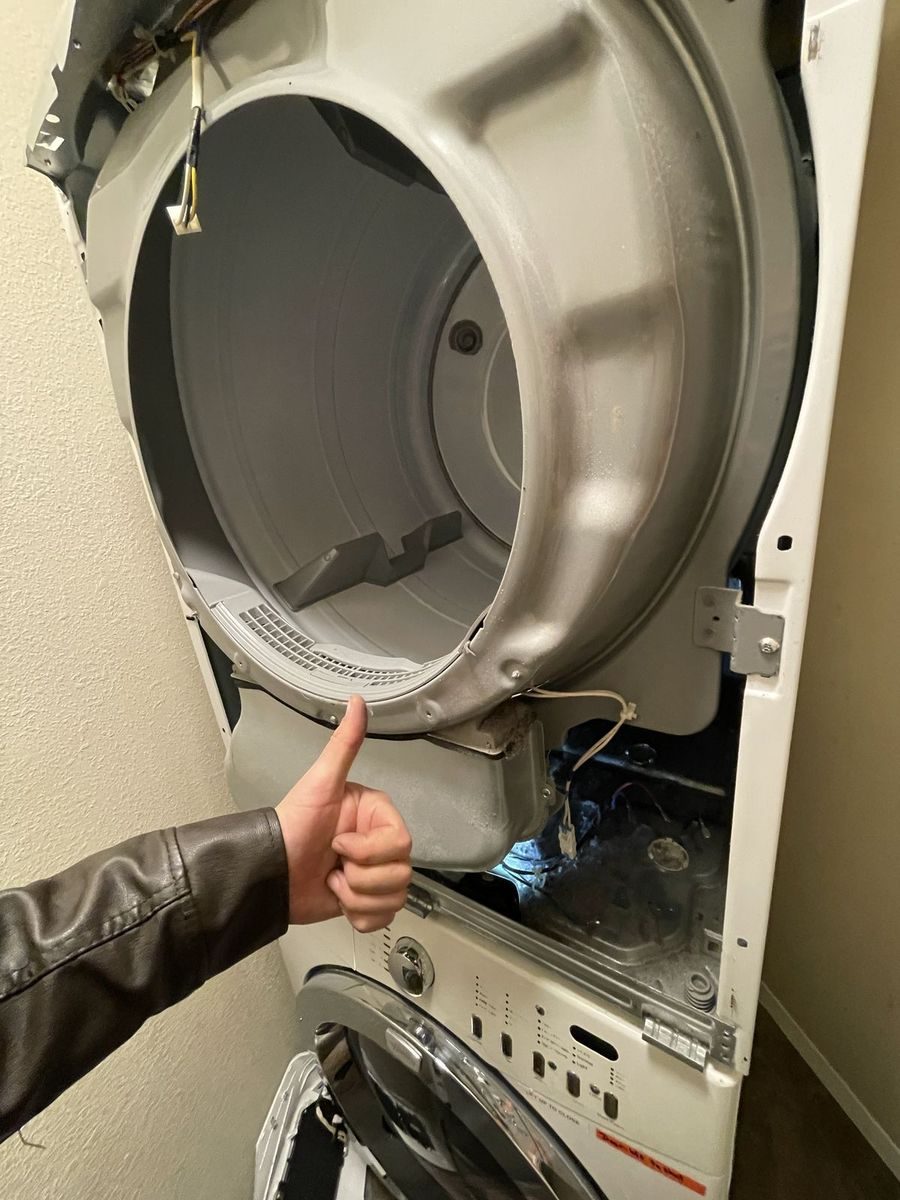
Tab 4 of 12
Long vent runs through damp walls fill with lint quickly, so the vent gets tested along with the heating side: element or burner, thermal fuse and thermostats.
See the service page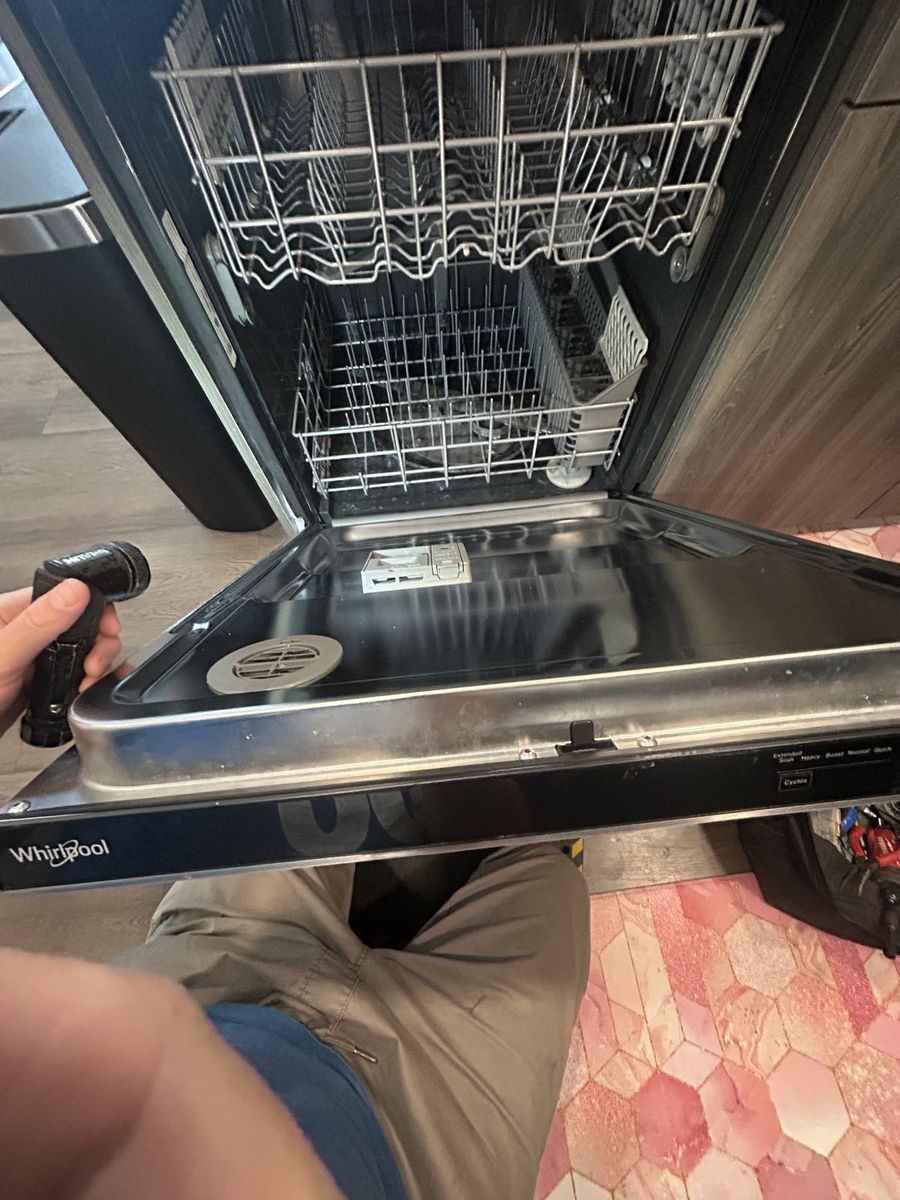
Tab 5 of 12
Well water leaves minerals on the spray arms and the inlet screen, two early stops when dishes come out dull or the tub fills slowly.
See the service page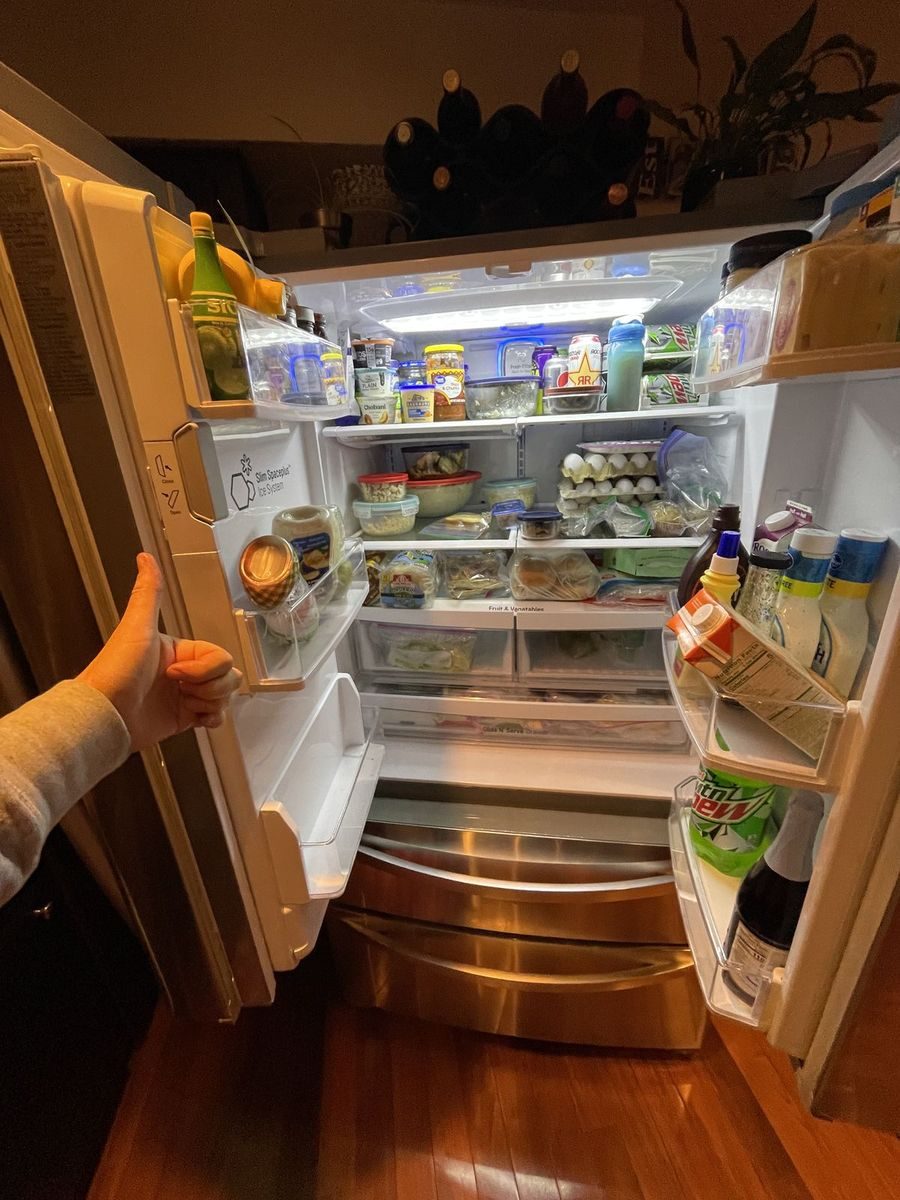
Tab 6 of 12
After a windstorm outage the fill tube often freezes solid and the ice maker goes quiet, so we follow the water up from the inlet valve.
See the service page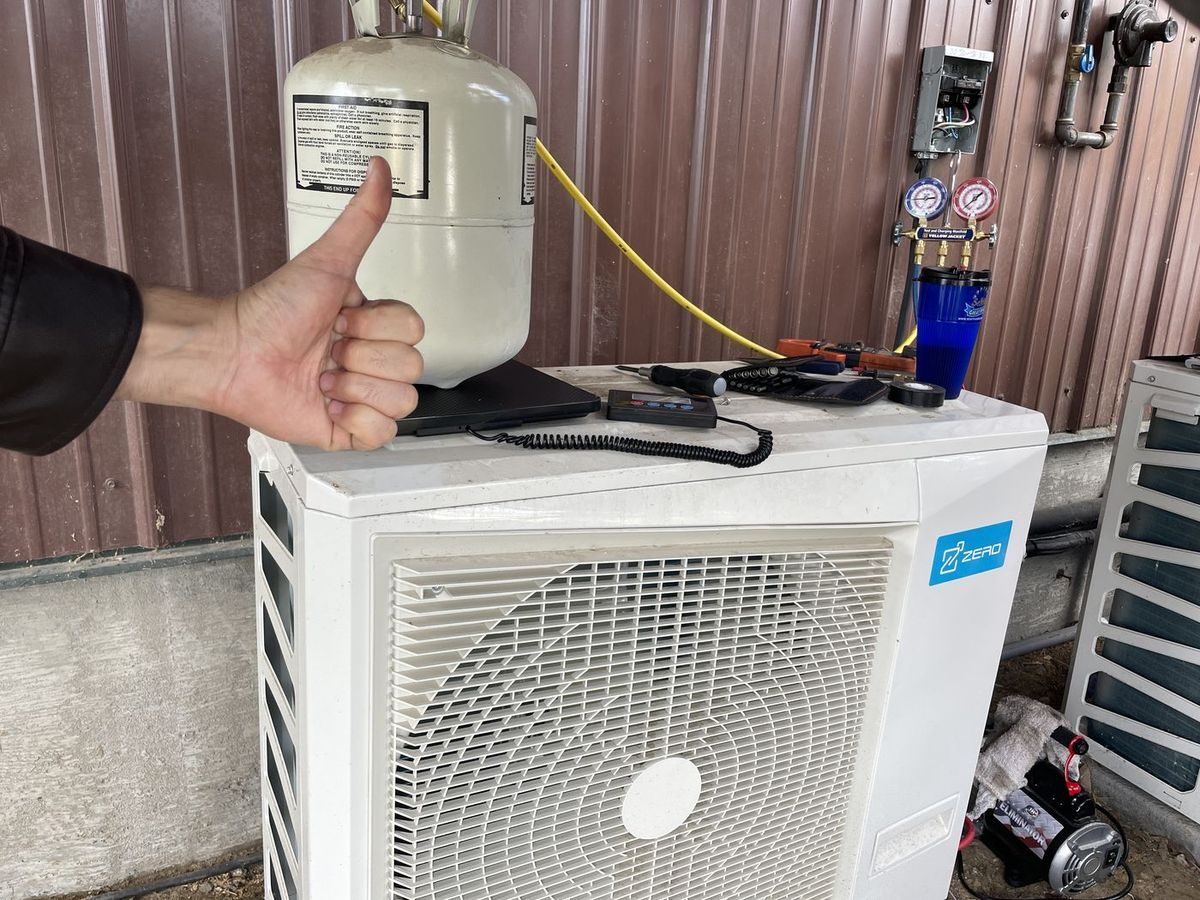
Tab 7 of 12
Through the gray months we watch the defrost cycle closely, because a coil that never clears is the classic Kitsap winter call. Capacitors and the reversing valve come next.
See the service page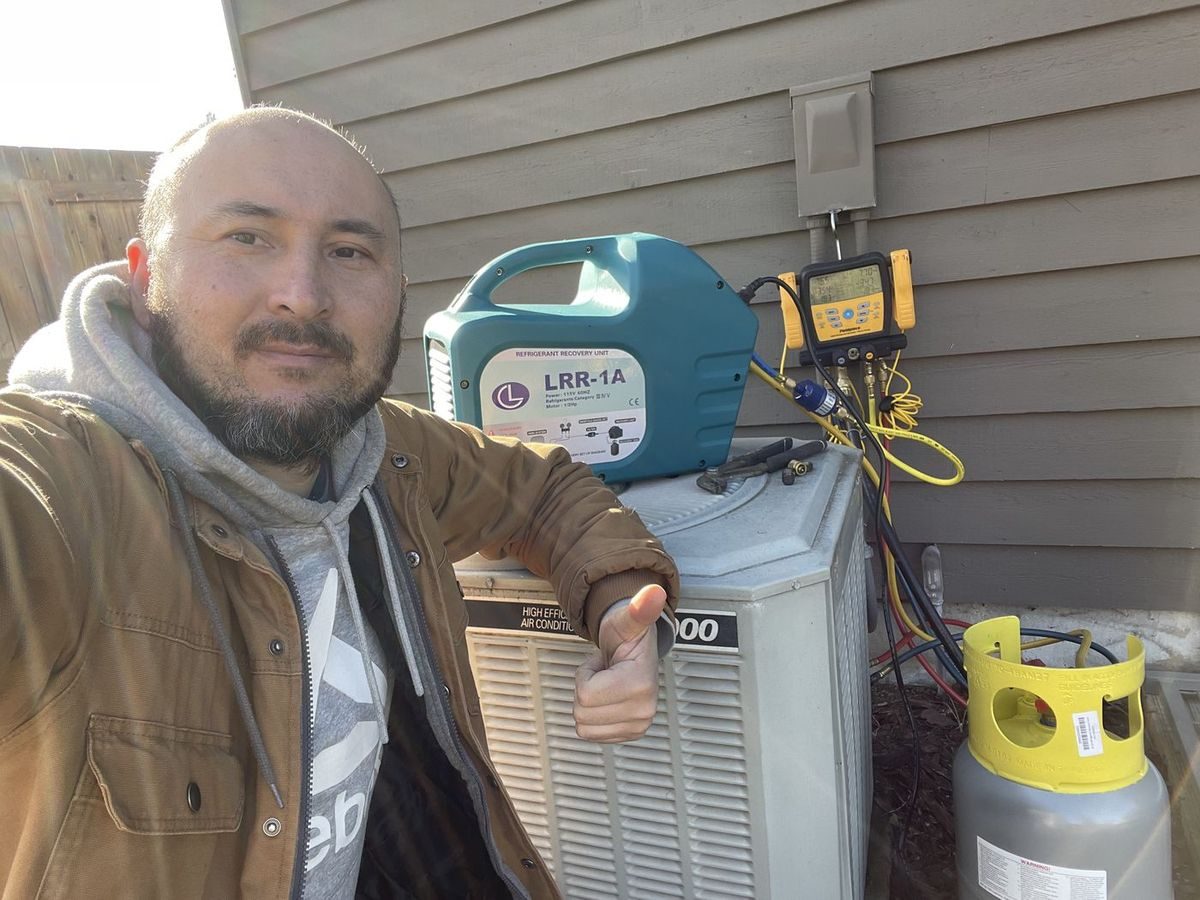
Tab 8 of 12
More Kitsap homes have cooling since the 2021 heat dome. When a system falls behind on a hot afternoon, we start with airflow, the capacitor and the refrigerant charge.
See the service page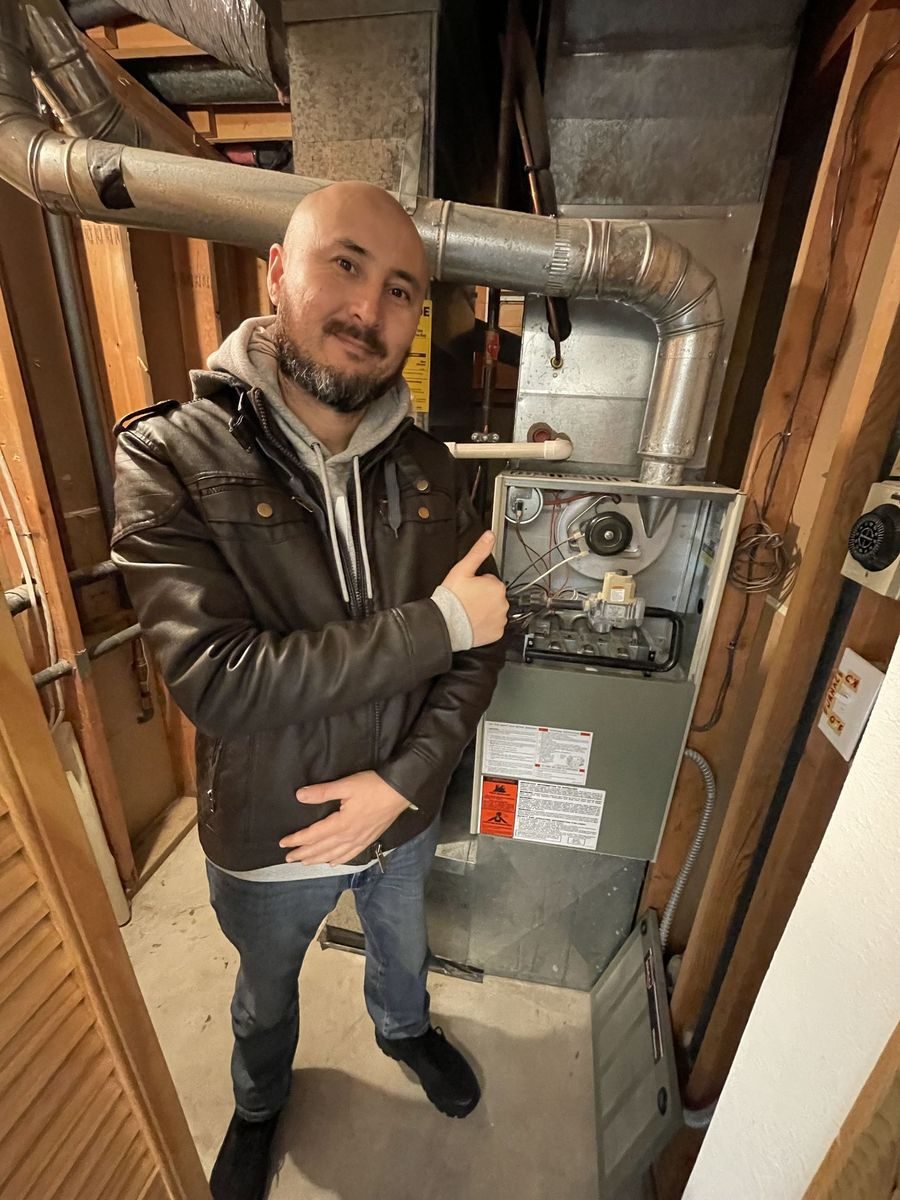
Tab 9 of 12
Many older Bremerton and Manette houses keep the furnace in a closet or under the floor. Filter, inducer, flame sensor and limit switch all get checked in that tight space.
See the service page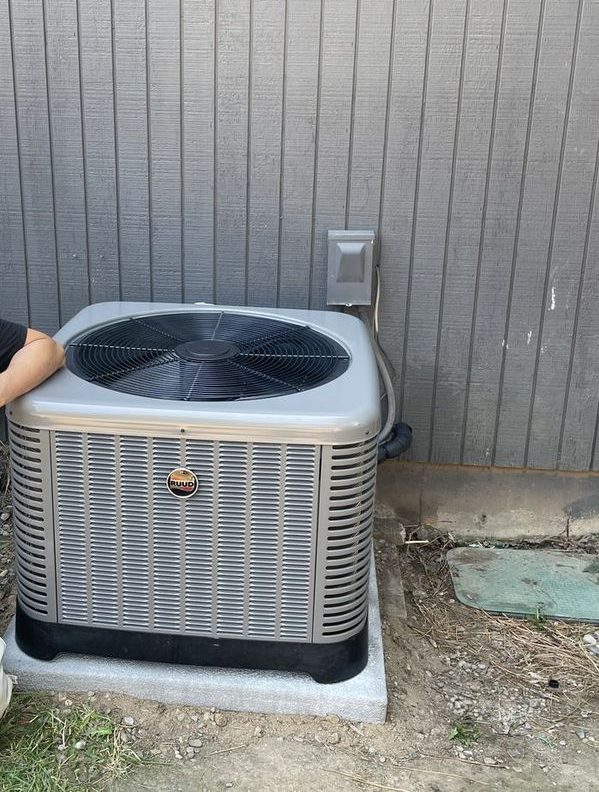
Tab 10 of 12
Placement matters on the peninsula: a raised pad clear of wet ground, back from salt spray where the lot allows, and out from under the needle drop.
See the service page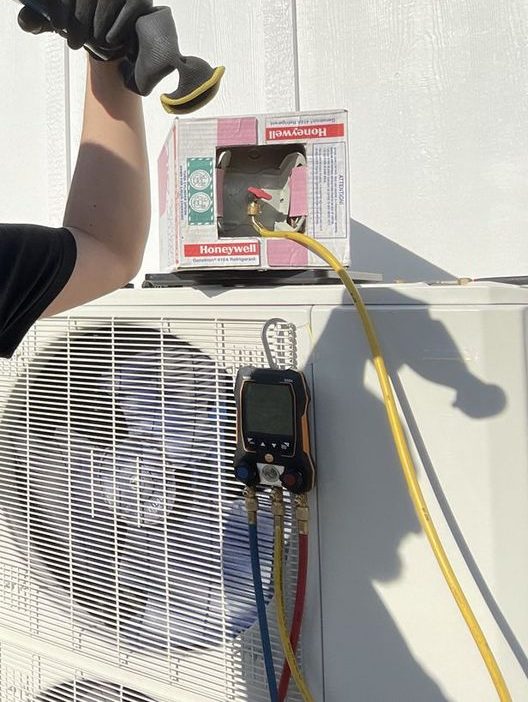
Tab 11 of 12
Mini-splits fit older homes with no room for ducts. Their line sets need sound insulation where they cross a damp crawlspace, and the outdoor unit needs a clear drain path.
See the service page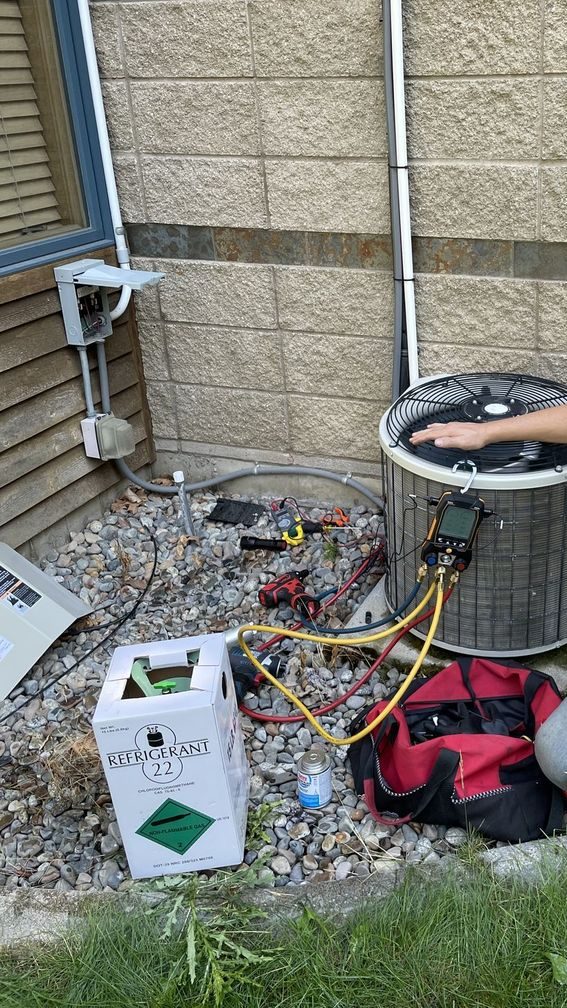
Tab 12 of 12
A seasonal visit near the water means a coil rinse, a look at the fasteners for salt rust and a base pan that drains. Those three buy waterfront equipment years.
See the service pageThree fuels share the peninsula. Natural gas reaches some neighborhoods, a great many homes cook on electric, and rural houses around Poulsbo, Gig Harbor and Fox Island sometimes run propane. A propane range uses the same kinds of igniters, spark electrodes and valves as a natural gas model, set up for a different gas, so repairs look alike, but we work only on the range itself. The tank, regulator, supply line and any fuel conversion stay with your propane company or a gas fitter. If you smell gas, natural or propane, evacuate everyone, and only from the sidewalk or a neighbor's porch phone 911 or the gas supplier.
View homes bring pro-style equipment. Larger houses in the Gig Harbor uplands, around Canterwood and along Fox Island's waterfront often have Wolf or Thermador ranges and rangetops: dual-fuel ovens, sealed burners with several igniters each, and more modules behind the knobs. The principles match, but parts are often ordered, so we ask for model and serial numbers before the visit. Storms are the other local factor. Windstorms drop fir and alder onto lines across the peninsula, and power failed throughout the region during the November 2024 bomb cyclone; the surge when service returns can kill electronic oven controls, clock boards and the relays that drive elements. Switching the range breaker off during an outage, then back on once power steadies, spares the board.
Most ranges are, when the trouble is an igniter, element, sensor, switch, lock or spark module, because the body, burners and oven cavity wear very slowly. The decision gets closer on a basic range whose discontinued main control would cost nearly as much as a new unit, or once the porcelain liner is rusted out. Pro-style Wolf and Thermador ranges sit at the other end: they are built to be serviced, and replacing one can mean altering cabinetry or a hood, so repair nearly always wins. You'll see the price in writing with our notes on burners, door hinges and gaskets, and the decision is yours.
Probably an igniter past its prime. It still glows, yet the current it draws now falls short of the bimetal safety valve's demand, so gas never reaches the burner. Our technician reads the current and compares it to the valve's rating. A new igniter usually fixes it; less often, the valve has failed. Catch a gas odor at any point? Walk outside before you phone anyone.
No. Fuel conversions and gas line work fall outside our scope, so a gas fitter or your propane supplier handles those. What we do is repair the range itself, on natural gas and propane models alike: burners, igniters, spark modules, oven valves, sensors, elements, locks and controls. If a range was recently converted and now burns poorly, we can check the appliance side and report what we find.
Yes. Pro-style ranges and rangetops from Wolf and Thermador are part of our appliance work, alongside ranges from Bosch, GE, KitchenAid, Whirlpool, Electrolux, Frigidaire, LG, Maytag and Samsung. Many pro-style parts are ordered, so share model and serial numbers when booking. The technician confirms the fault, quotes the part and repair, and the office schedules a second trip when the part lands.
Give it time; many locks hold until the cavity has cooled well below cleaning heat, which can take an hour or two. Still latched? Cut power at the range breaker for sixty seconds, then restore it, which resets some controls. If the door stays shut after that, suspect the lock motor or its switch; our technician can open the latch and fit a new assembly.
Often, though not always. A surge at restoration can damage the control or clock board, but sometimes it only blows a board fuse or upsets a relay. Our technician checks supply at the range and the board's outputs before quoting anything. Next time the lights go out, flip the range breaker off and wait several minutes after power returns before restoring it.
No, it goes into the repair itself. The office gives you the figure while booking, and it pays for troubleshooting plus a written repair price. Approving credits the fee toward the repair; stopping at the diagnosis leaves the fee as your sole charge. Either path, nothing is replaced before you've seen the number and agreed, and the invoice carries our warranty.
Talk to a person
Pick a date online and an arrival window to go with it, or ring us; phones are open daily, 8 AM–7 PM. Our office returns the call to confirm; later, your technician phones when rolling toward the driveway.
Schedule online
Tell us what needs attention, the day that works and the window you prefer. A scheduler calls to make it firm, and the technician rings again before pulling up.
Washington Labor & Industries keeps these records public. Each number can be searched on L&I Verify; scope details sit on a separate page.
Scope of each license