Tab 1 of 12
Washer repair
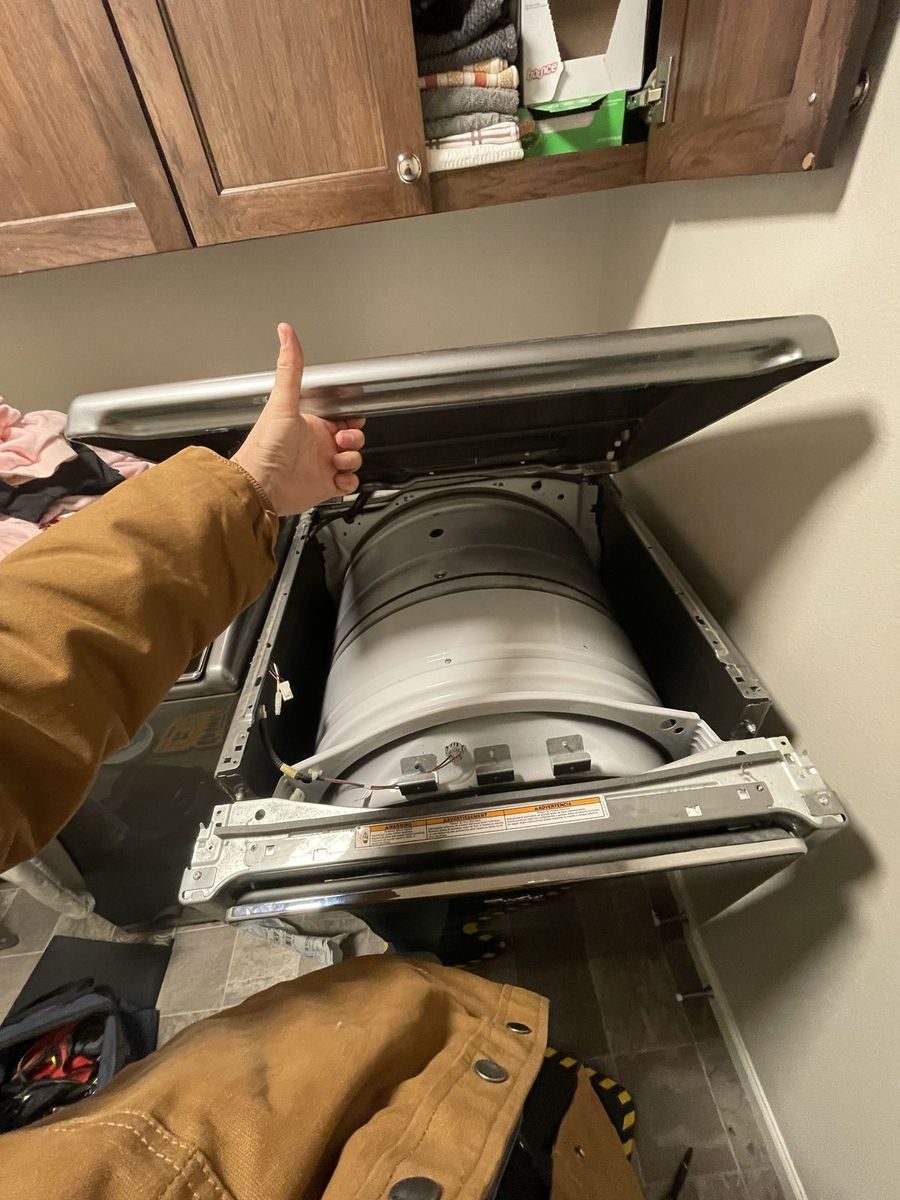
Damp Kitsap laundry rooms are hard on door boots, so mildew, torn folds and a clogged pump filter are the first things we look at on a front-loader.
See the service page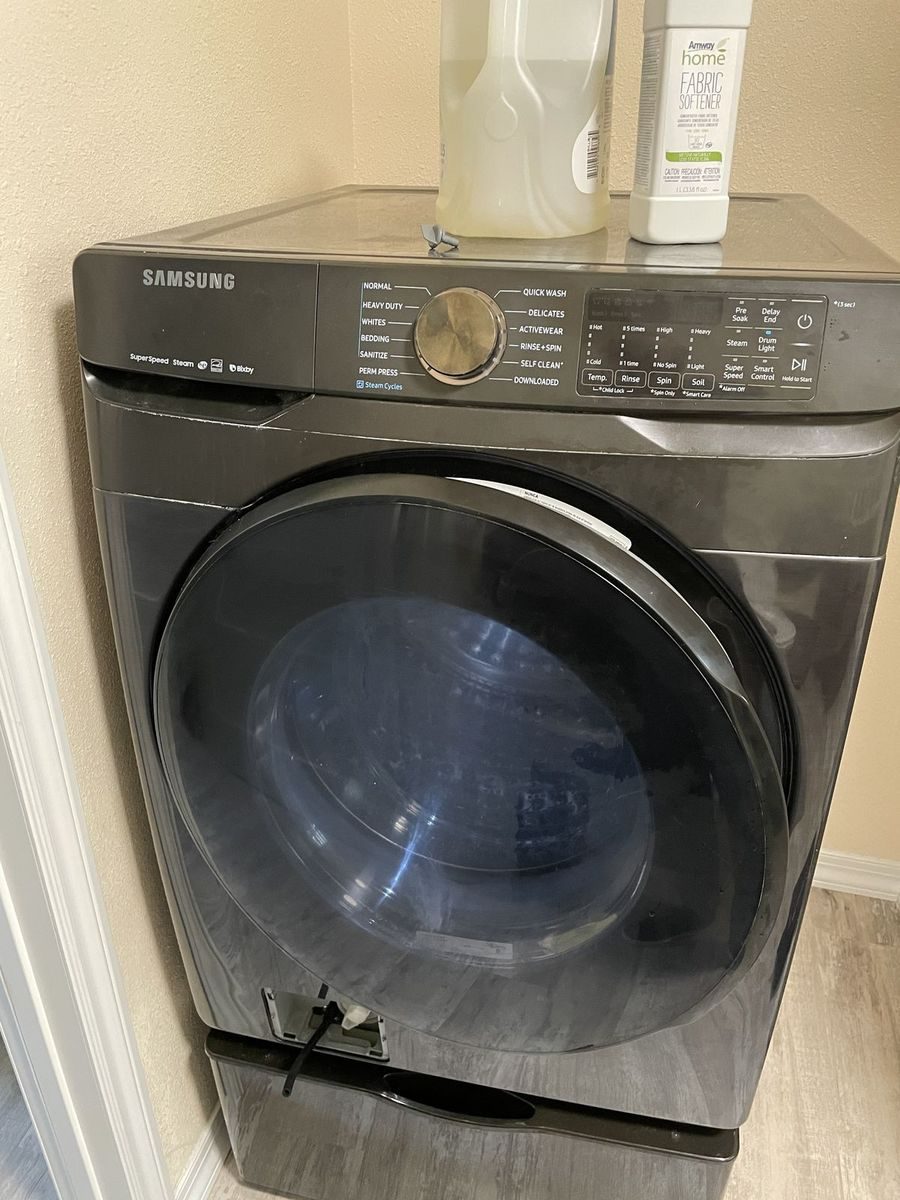
Washing machine repair · Kitsap and Gig Harbor
Washers on the peninsula face three local troublemakers: laundry rooms that stay clammy for months, wells that deliver grit and iron straight to the inlet valve, and moves that leave a tub bolted down or a cabinet tilted. We test pump, valve, lock and suspension, then write the price down.
Straight to it
A washer holding water after the cycle usually has a lint-choked pump filter or a dead drain pump. A fill that crawls points to clogged inlet screens or a tired valve solenoid, especially on well water. A sour front-loader is growing mildew in the door boot and sump. Violent shaking on spin after a move means shipping bolts or worn dampers. We meter the part, quote in writing, then repair.
Almost every washer complaint lands in one of three buckets: water getting in, water getting out, or the tub keeping its composure at speed. Incoming water passes a fine mesh screen at each hose port and then a pair of solenoids, one hot and one cold, which the control holds open until a pressure sensor or level switch reports enough. Outgoing water leaves through a drain pump, on front-loaders usually behind a small coin trap low on the cabinet. At speed, the tub hangs on springs and friction dampers, or on many top-loaders from four suspension rods. Lose any one of those and you get a symptom with a name: a long fill, a soggy load, a door that won't release, a cabinet that walks.
Front-loaders add a rubber door boot, the bellows that bridges cabinet and drum. Its folds hold a spoonful of water and a little lint after every load, and in a room that stays humid through the long wet season, that is exactly where mildew starts. Top-loaders bring their own weak spots: lid lock assemblies, drive couplings and agitator dogs on older Whirlpool, Maytag and Kenmore machines, plus balance rings and suspension rods on high-efficiency models.
Washers count as 07D appliance work, a specialty Washington's licensing records attach to our electrical contractor number. Machines we open regularly include top-load and front-load models from Speed Queen, LG, Whirlpool, GE, Maytag, Electrolux, Kenmore, Bosch, Frigidaire and Samsung.
The first few minutes are spent watching. Our technician runs a short cycle, or the machine's service mode where it has one, which steps through each inlet solenoid, the pump, the lock and the motor and lists stored error codes. Then the meter takes over: ohms across each solenoid and the pump winding, continuity through the lock switch, and a look at the small air hose feeding the pressure sensor, which tells the control how deep the water is. On a front-loader we also spin the drum by hand and listen at the rear, because a rumbling tub bearing or a weeping seal changes the whole conversation.
Nothing gets replaced before you have seen the repair price in writing and said yes. Our office quotes the diagnostic fee at booking. Go ahead, and that fee folds into what the repair costs overall; pass, and it alone covers the visit. Pumps, belts, door switches and inlet valves typically ride in the truck. Boots, lid locks and model-specific boards sometimes come by order, priced on paper beforehand. Warranty terms appear in writing on each invoice we leave.
Each tab holds a photo from our service calls and a note on what we check first. Pick any tab; left alone, they turn every few seconds.
Tab 1 of 12
Damp Kitsap laundry rooms are hard on door boots, so mildew, torn folds and a clogged pump filter are the first things we look at on a front-loader.
See the service page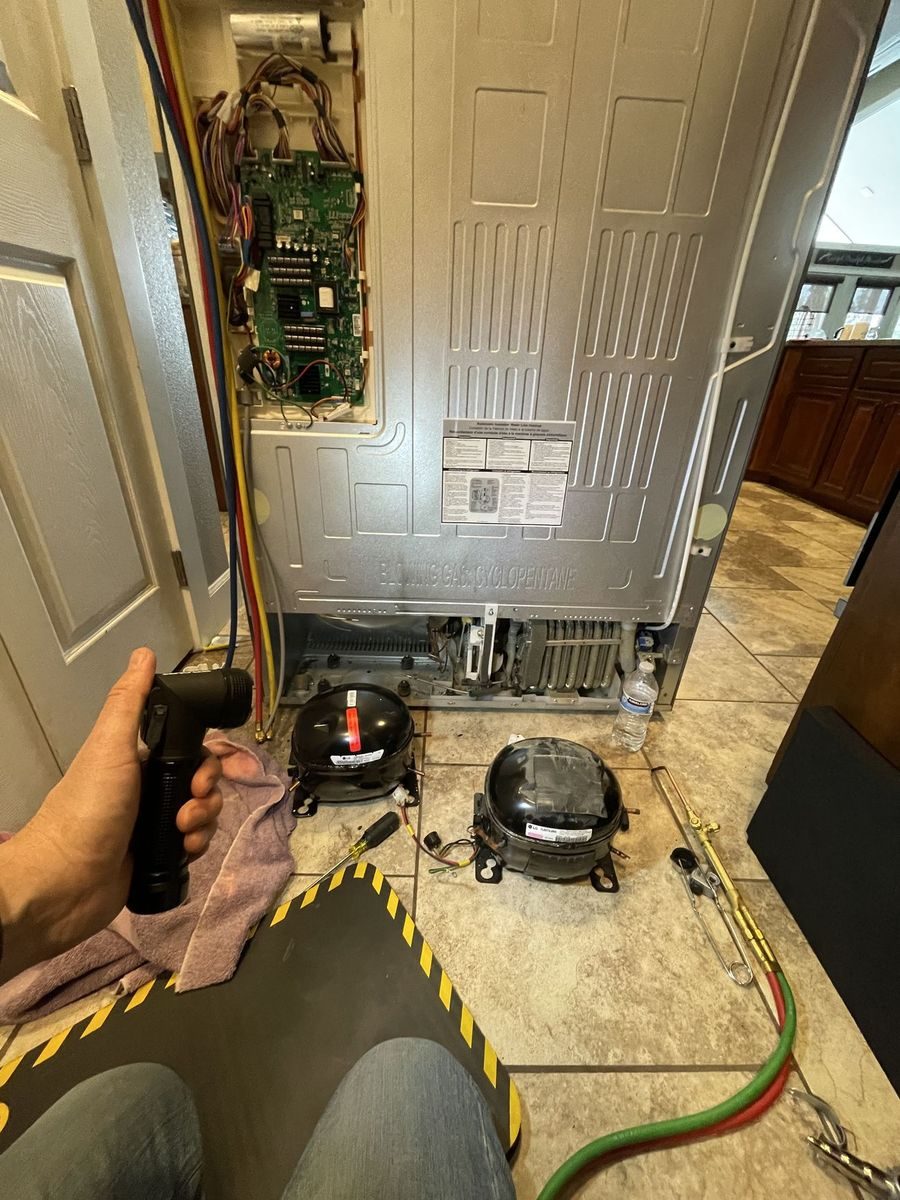
Tab 2 of 12
Sealed-system work, from leak search to recharge, happens right in the kitchen under EPA 608 Universal credentials, so the fridge stays where it stands.
See the service page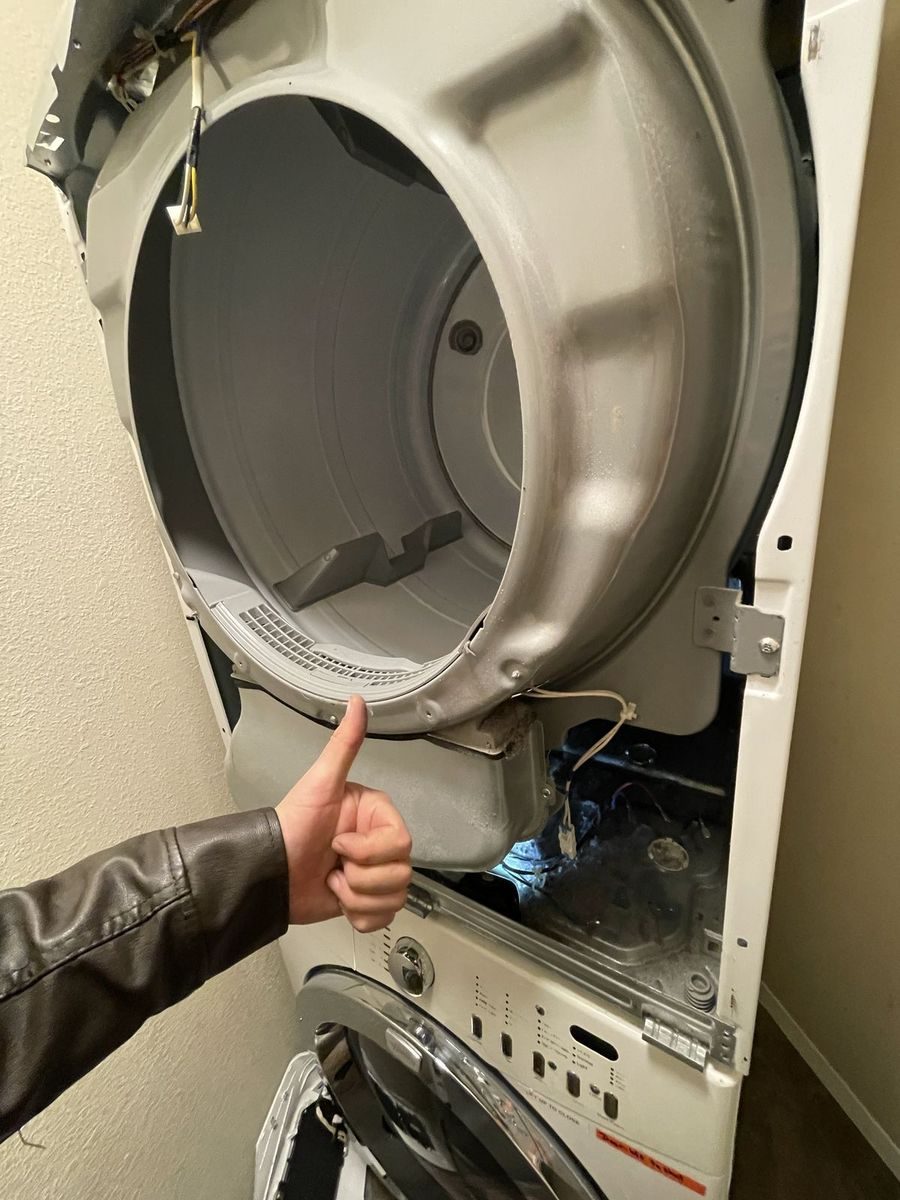
Tab 3 of 12
Long vent runs through damp walls fill with lint quickly, so the vent gets tested along with the heating side: element or burner, thermal fuse and thermostats.
See the service page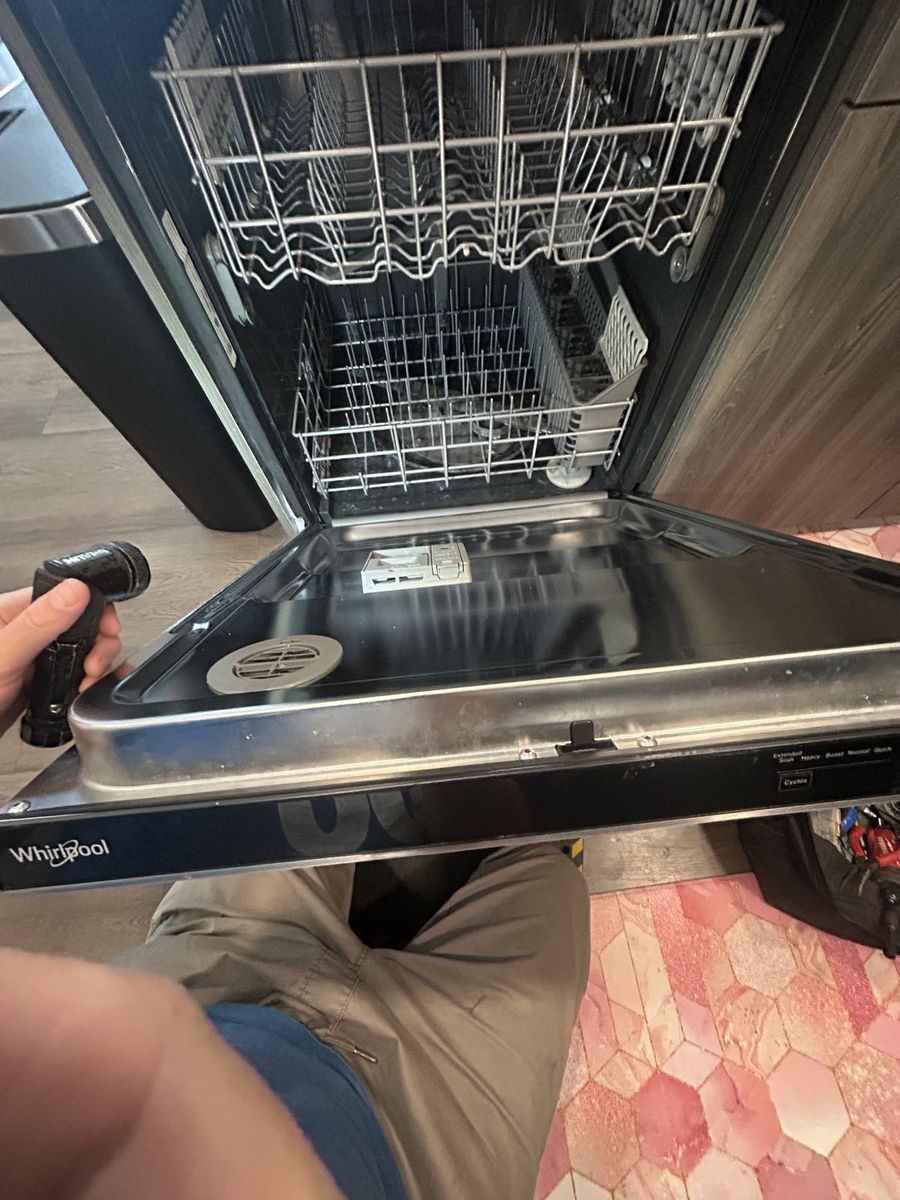
Tab 4 of 12
Well water leaves minerals on the spray arms and the inlet screen, two early stops when dishes come out dull or the tub fills slowly.
See the service page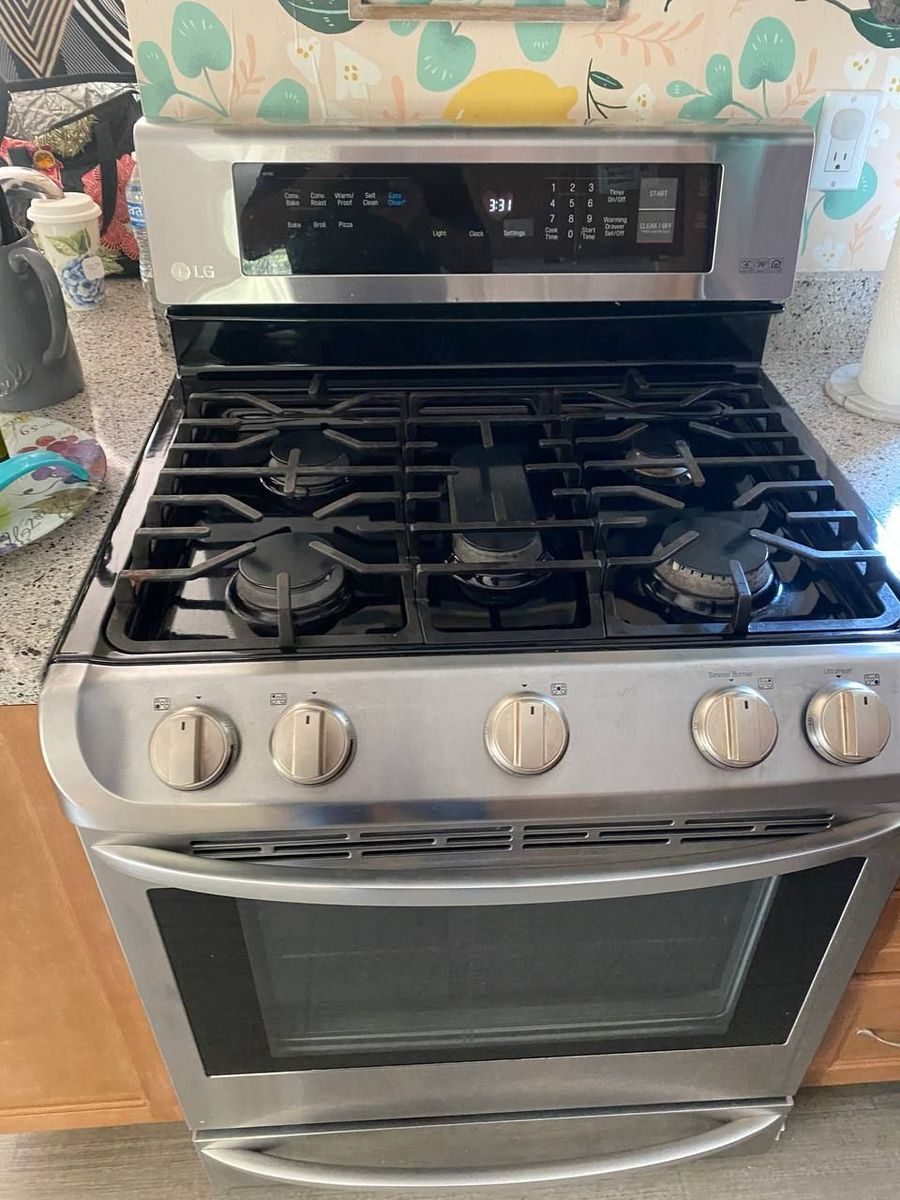
Tab 5 of 12
Natural gas and propane ranges both get igniter, valve and flame checks. The tank and its lines stay with your propane supplier.
See the service page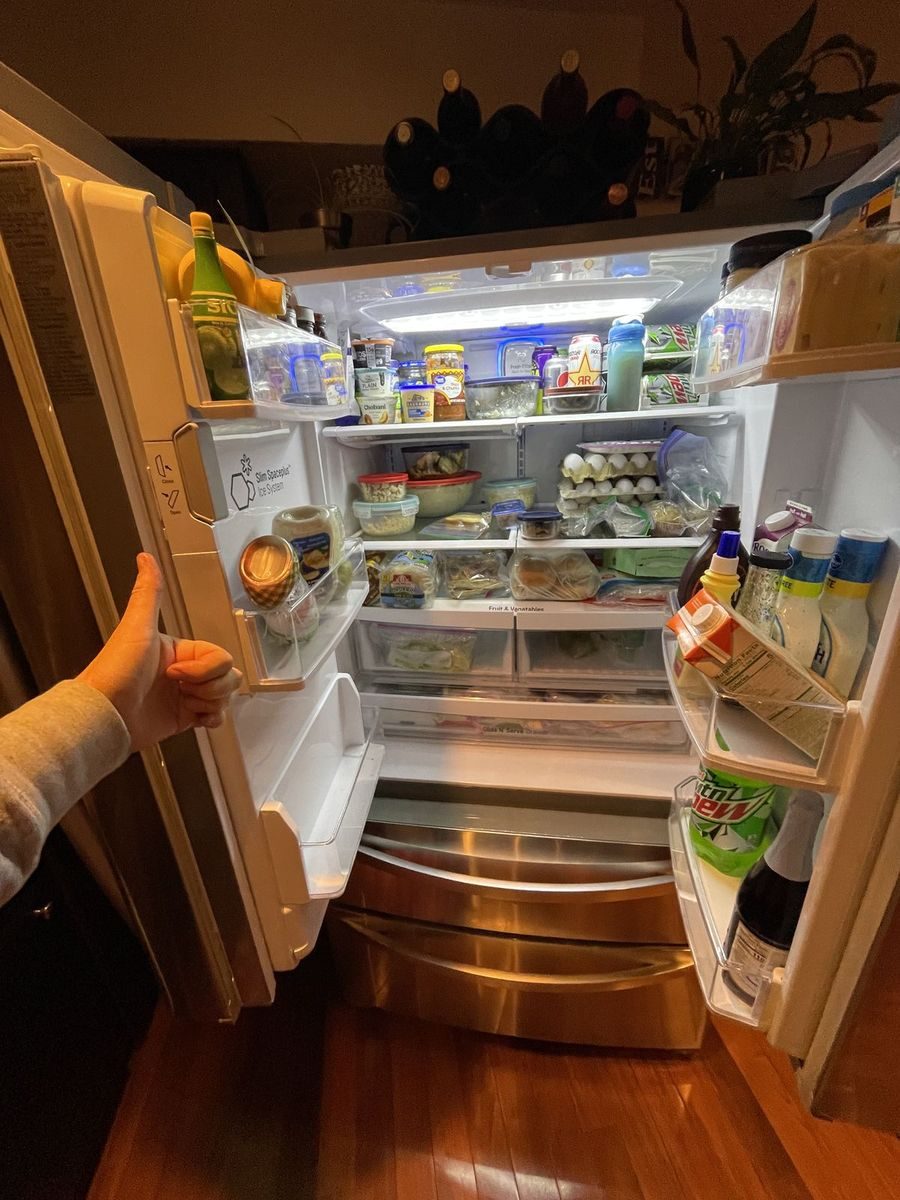
Tab 6 of 12
After a windstorm outage the fill tube often freezes solid and the ice maker goes quiet, so we follow the water up from the inlet valve.
See the service page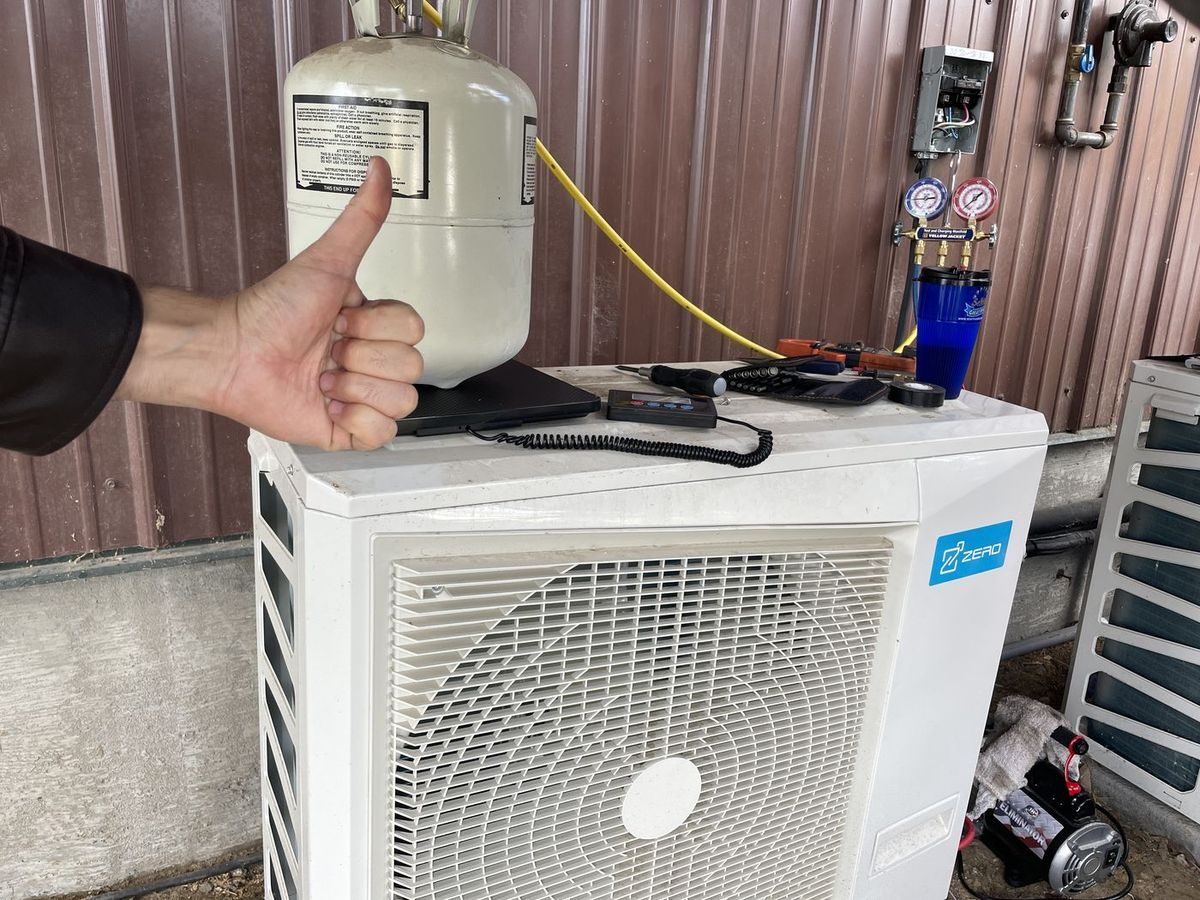
Tab 7 of 12
Through the gray months we watch the defrost cycle closely, because a coil that never clears is the classic Kitsap winter call. Capacitors and the reversing valve come next.
See the service page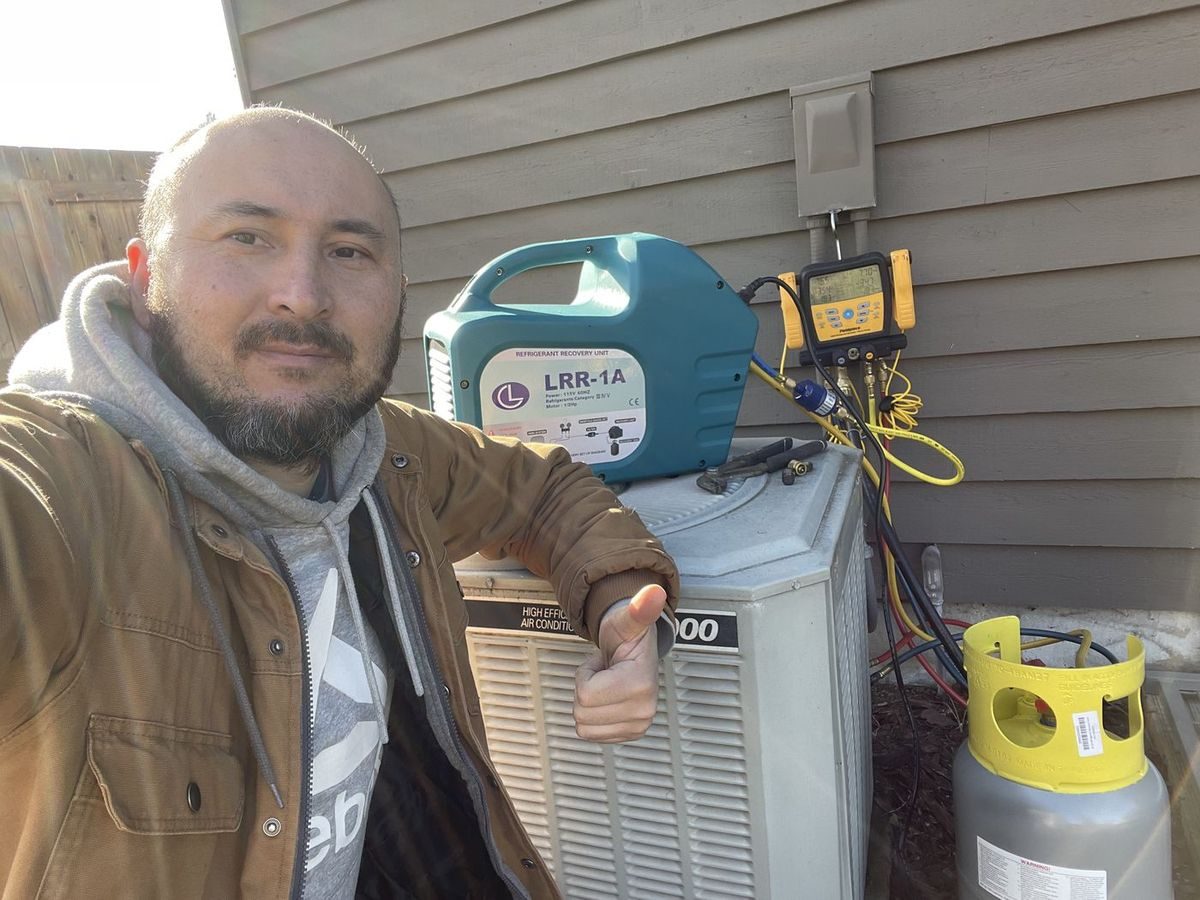
Tab 8 of 12
More Kitsap homes have cooling since the 2021 heat dome. When a system falls behind on a hot afternoon, we start with airflow, the capacitor and the refrigerant charge.
See the service page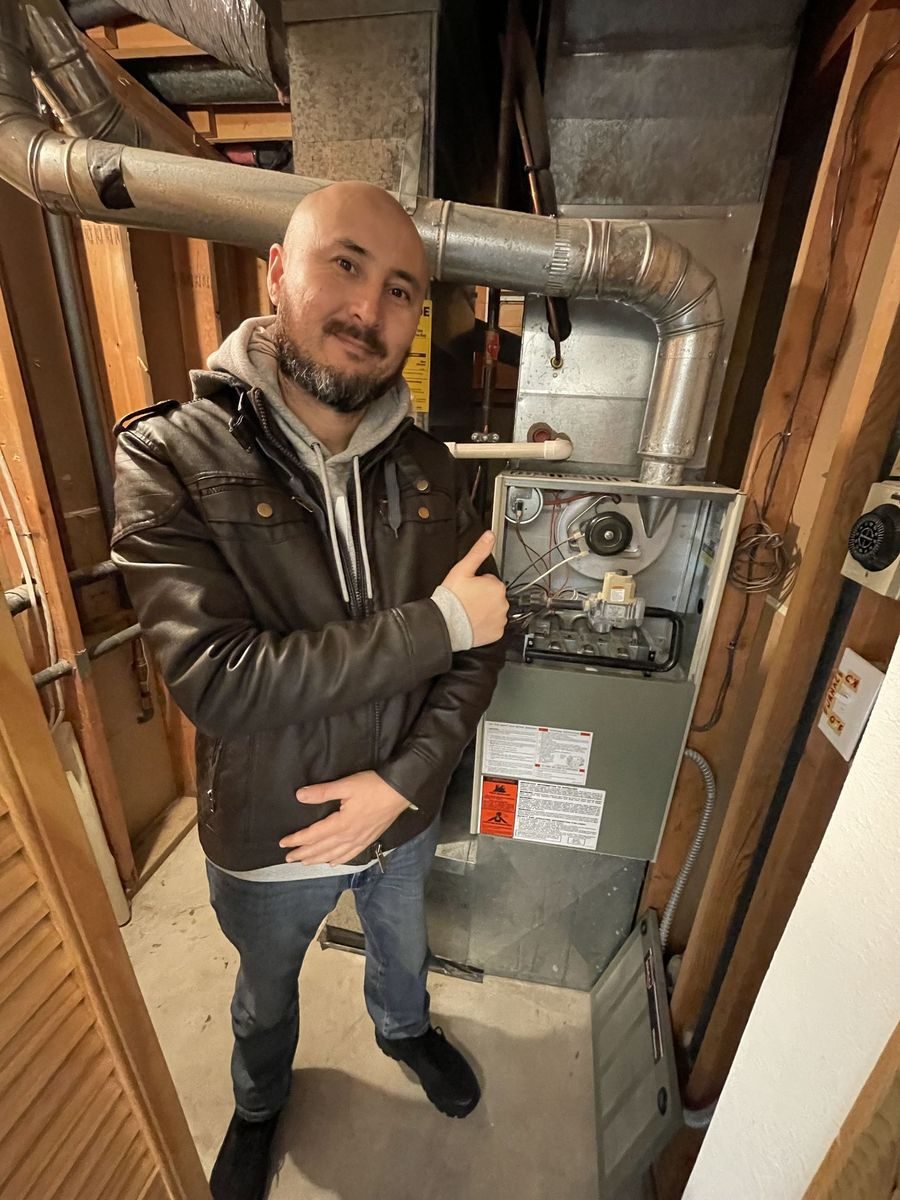
Tab 9 of 12
Many older Bremerton and Manette houses keep the furnace in a closet or under the floor. Filter, inducer, flame sensor and limit switch all get checked in that tight space.
See the service page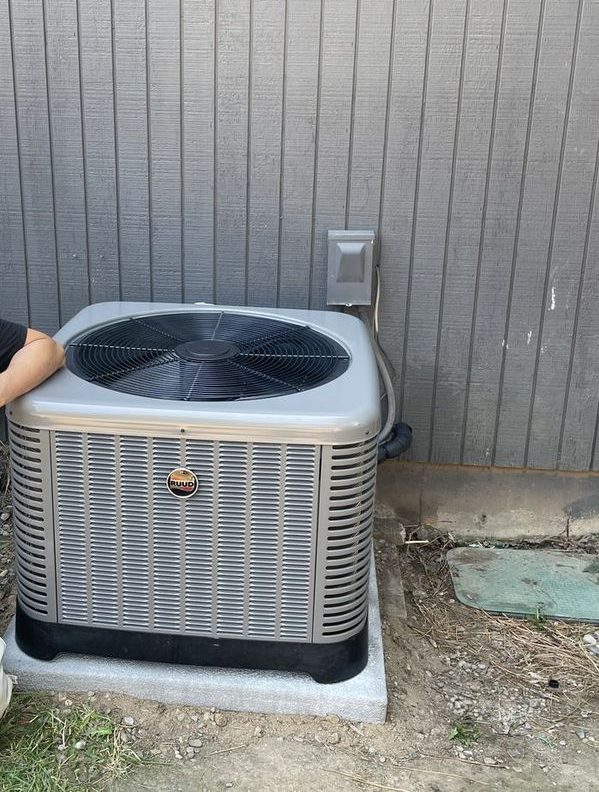
Tab 10 of 12
Placement matters on the peninsula: a raised pad clear of wet ground, back from salt spray where the lot allows, and out from under the needle drop.
See the service page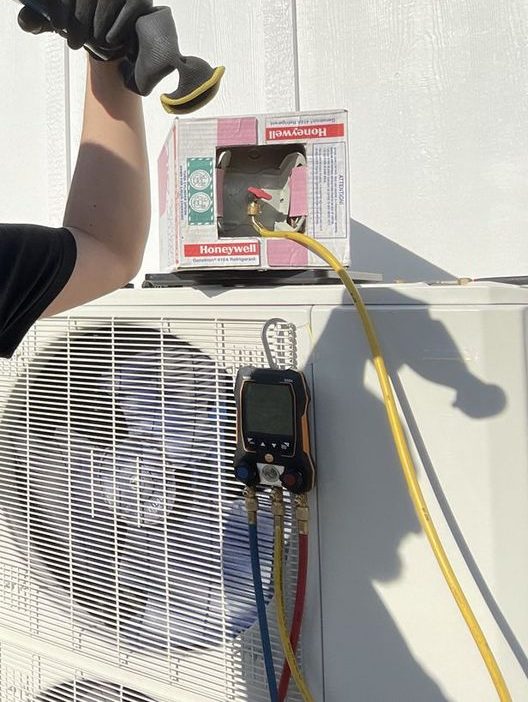
Tab 11 of 12
Mini-splits fit older homes with no room for ducts. Their line sets need sound insulation where they cross a damp crawlspace, and the outdoor unit needs a clear drain path.
See the service page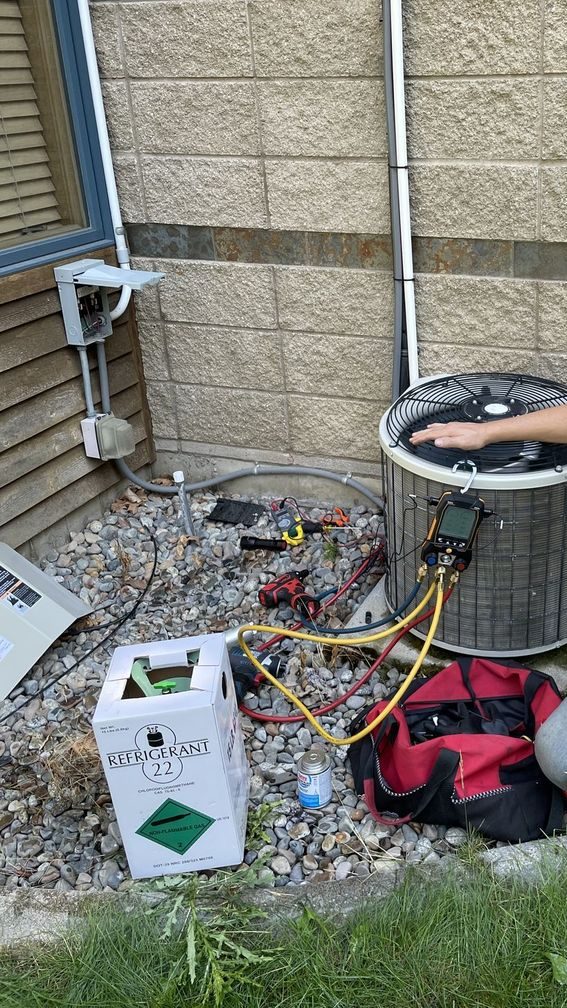
Tab 12 of 12
A seasonal visit near the water means a coil rinse, a look at the fasteners for salt rust and a base pan that drains. Those three buy waterfront equipment years.
See the service pageWhere your water comes from decides what we find at the inlet. Bremerton blends wells with surface water from the Union River watershed; the city puts hardness near 32 mg/L for the surface supply and 56 to 98 mg/L for the wells, so soft to moderately hard. Soft water foams detergent eagerly, and a full scoop poured out of habit usually means too much: extra suds, long extra rinses, and a gray film in the sump. Silverdale, Poulsbo and Gig Harbor run mostly on groundwater pumped by small local water systems or the city. On Fox Island and on acreage outside Poulsbo and Gig Harbor, private and small community wells are common, and their sediment and iron reach the washer's screens far sooner. Rust-orange stains in the dispenser and a fill that slows over months are the usual tells.
Moisture and moves do the rest. Bremerton records roughly 57 inches of precipitation a year, and laundry rooms in basements, garages and older homes on the west side and in Manette stay humid through the gray season, which suits mildew in a front-loader boot perfectly. Households arriving in Bremerton and Silverdale often get the washer reconnected hastily. Any front-loader shipped with transit bolts must have them pulled before its first spin, and one hauled without them may arrive with a cracked damper mount or a shifted tub. A cabinet set on an uneven garage slab walks for a similar reason, and leveling the feet settles more of these calls than people expect.
A washer usually earns its repair when the fault lives outside the tub: a pump, an inlet valve, a lock, a belt, dampers or a door boot. Each is a contained job that leaves a sound machine behind. The arithmetic changes when a front-loader's rear tub bearing goes, because on many models bearing, seal and outer tub come as one assembly and the repair means taking most of the machine apart. A cracked outer tub, a failing drive motor on an older unit, or a drum spider eaten by corrosion fall in the same category. Machines built for long service, like Speed Queen, still lean toward repair even then. You get the price on paper with our read on the bearing, tub and suspension, and the decision is yours.
Because mildew hides where cleaner barely reaches: in the boot folds, the pump filter and sludge around the sump. A laundry room that stays damp all winter keeps feeding it. Dry the boot with a towel, clean the filter, and keep the door cracked after each wash. When the odor returns within days, suspect a torn boot or a partly blocked drain path; our technician can inspect both.
Well water carries sand and iron that settle on the mesh at the valve inlet, and private wells deliver more of it than city systems. Cleaning the screens restores the fill for a while, but grit can also score the valve seats and keep a solenoid from closing fully. Our technician cleans or replaces the screens, tests each solenoid, and swaps the valve if it has worn.
Yes, before the first spin. Front-loaders ship with bolts or spacers through the back panel that lock the tub for the road. Spinning with them in can break dampers, crack a tub mount and shake the cabinet hard. If the bolts were lost before the move, the tub rode unsecured; run a small load and listen. Heavy knocking afterward is worth a visit to check dampers and springs.
Rarely. City figures put hardness around 32 mg/L from the surface supply and between 56 and 98 mg/L from the wells. The bigger issue with soft water is detergent: it foams easily, so the full cap is often too much for an HE machine. Excess suds trigger extra rinses and leave film in the sump and pump. Cutting the dose usually solves it.
Front-load and top-load machines from Whirlpool, Speed Queen, LG, Maytag, GE, Samsung, Kenmore, KitchenAid, Electrolux, Frigidaire and Bosch. The model and serial numbers sit on a sticker, often beneath the lid, on the door frame, or at the back of the cabinet. Read them to the office at booking, letting the technician check parts before driving out.
Just the diagnostic fee, a figure the office gives you before the appointment. That fee pays for testing and a written repair price. If you approve, that amount becomes one line inside the repair total, never a second charge. Declining means the fee settles the visit. Whichever way it goes, you learn what failed, and no part changes hands without your okay.
Talk to a person
The website calendar takes bookings: a date first, then an arrival window. Or ring us, 8 AM–7 PM daily. The office phones back to confirm, and the technician gives a shout by phone when setting out.
Schedule online
Tell us what needs attention, the day that works and the window you prefer. A scheduler calls to make it firm, and the technician rings again before pulling up.
Washington Labor & Industries keeps these records public. Each number can be searched on L&I Verify; scope details sit on a separate page.
Scope of each license