Tab 1 of 12
Refrigerator repair
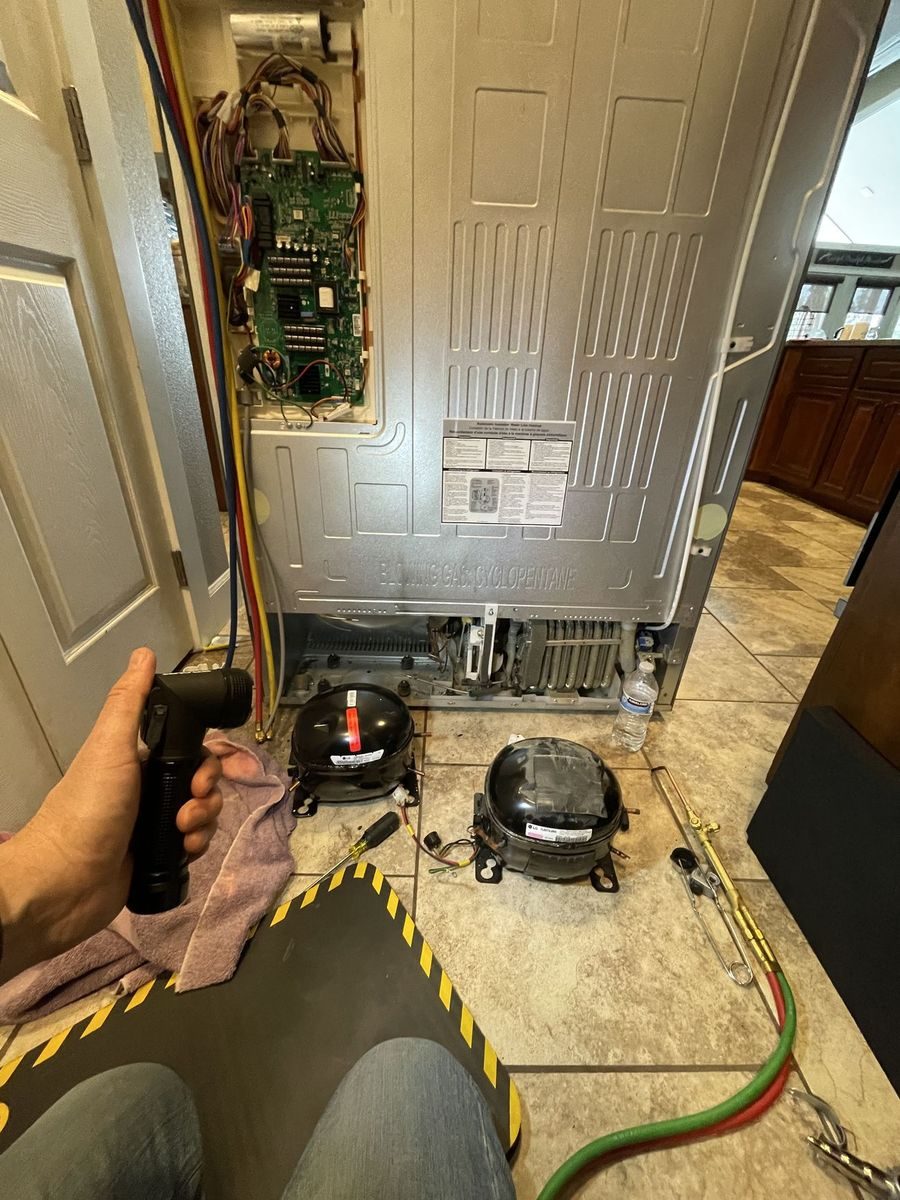
Sealed-system work, from leak search to recharge, happens right in the kitchen under EPA 608 Universal credentials, so the fridge stays where it stands.
See the service page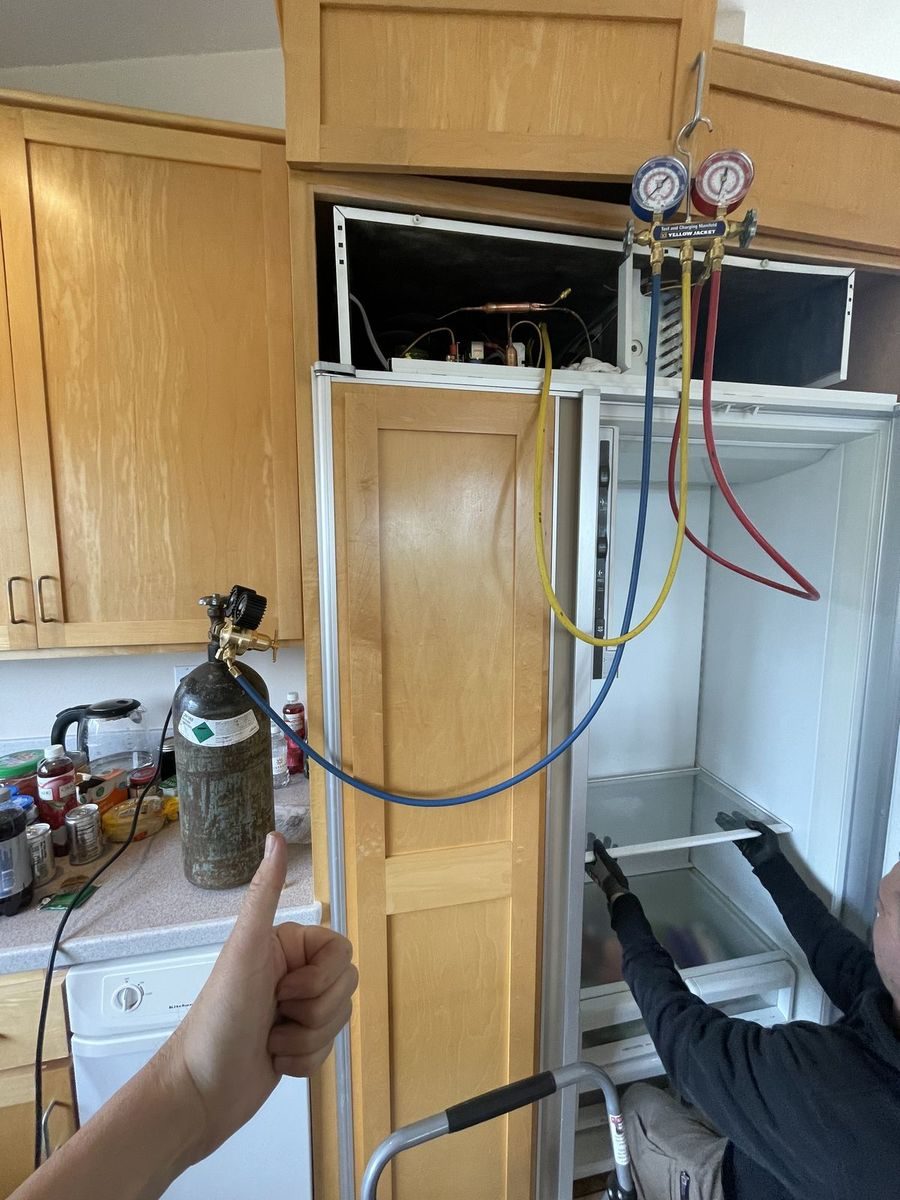
Refrigerator and freezer repair · Kitsap and Gig Harbor
Refrigerators tend to fade before they fail. The milk shelf creeps warm, the freezer's back wall sprouts a frost beard, or a garage unit goes quiet in January. We log temperatures, amperage and resistance until one part stands out, then put a price on paper and pause for your decision.
Straight to it
A warm fresh-food side next to a cold freezer usually traces to the evaporator: frost has sealed it after a defrost heater, bimetal or board gave out, or the fan behind it seized. When both sides warm and the compressor runs on and on, suspects shift to a matted condenser, its fan, the start relay or a refrigerant leak. Each suspect gets metered, and the written price lands with you before a tool comes out.
Blame the air path before the compressor. Wherever the freezer is placed, top, bottom or beside, nearly every refrigerator makes all its cold at a single evaporator coil concealed behind the freezer's back liner. A fan the size of a saucer pulls cabinet air through those fins and shoves a portion past a damper into the fresh-food side. Bury the coil under frost, or let that fan quit, and the freezer stays chilly by sheer proximity while the produce drawers wander into the mid-40s. Turning the control colder won't rescue it; the compressor simply labors longer against ice.
Defrost keeps that coil clear, and it runs on a schedule. A few times each day the board stops the compressor and energizes a heater fastened under the coil, a quartz glass tube on some models and a metal sheath on others. A small bimetal disc, or a thermistor on newer units, reports when the coil has warmed past freezing, and the melt ends. Water trickles through a trough and down a narrow tube to a shallow pan beside the compressor, where warmth from the machine dries it off. If the heater opens, the disc sticks, the sensor misreports, or the board forgets to start a melt, the outcome looks identical: a white slab across the coil and a crisper that feels merely cool.
Our license paperwork covers this work. Washington lists 07D Appliance Repair as a specialty on electrical contractor license LARCHHA742PL, and for sealed-system work our technicians carry the EPA 608 Universal credential, the broadest level the federal refrigerant rules offer. A seized fan and a refrigerant leak can therefore be handled on the same visit if the readings lead there.
We begin with numbers. One probe thermometer per compartment, a clamp meter around the compressor lead, and a glance at how frost is spread over the coil, which often separates a defrost failure from a short charge right away. Resistance on heater and sensor follows, then voltage at both fan motors, then gaskets and hinges, since a drooping door feeds humid kitchen air to the coil quicker than defrost melts it. With built-ins, the top grille comes off and everything happens from the front; the unit leaves its opening only when no other approach works.
Before a screw turns, a written repair figure is in your hand, and our technician waits on your call. The office states the diagnostic charge when you book. Agreeing to the repair tucks that charge inside the repair total; declining leaves it as the day's sole bill. Thermal fuses, door switches and fan motors normally travel on the truck. Boards, model-specific heaters and sealed-system components may have to be ordered, and you see their price before anything is ordered. The invoice spells out our warranty terms.
Each tab holds a photo from our service calls and a note on what we check first. Pick any tab; left alone, they turn every few seconds.
Tab 1 of 12
Sealed-system work, from leak search to recharge, happens right in the kitchen under EPA 608 Universal credentials, so the fridge stays where it stands.
See the service page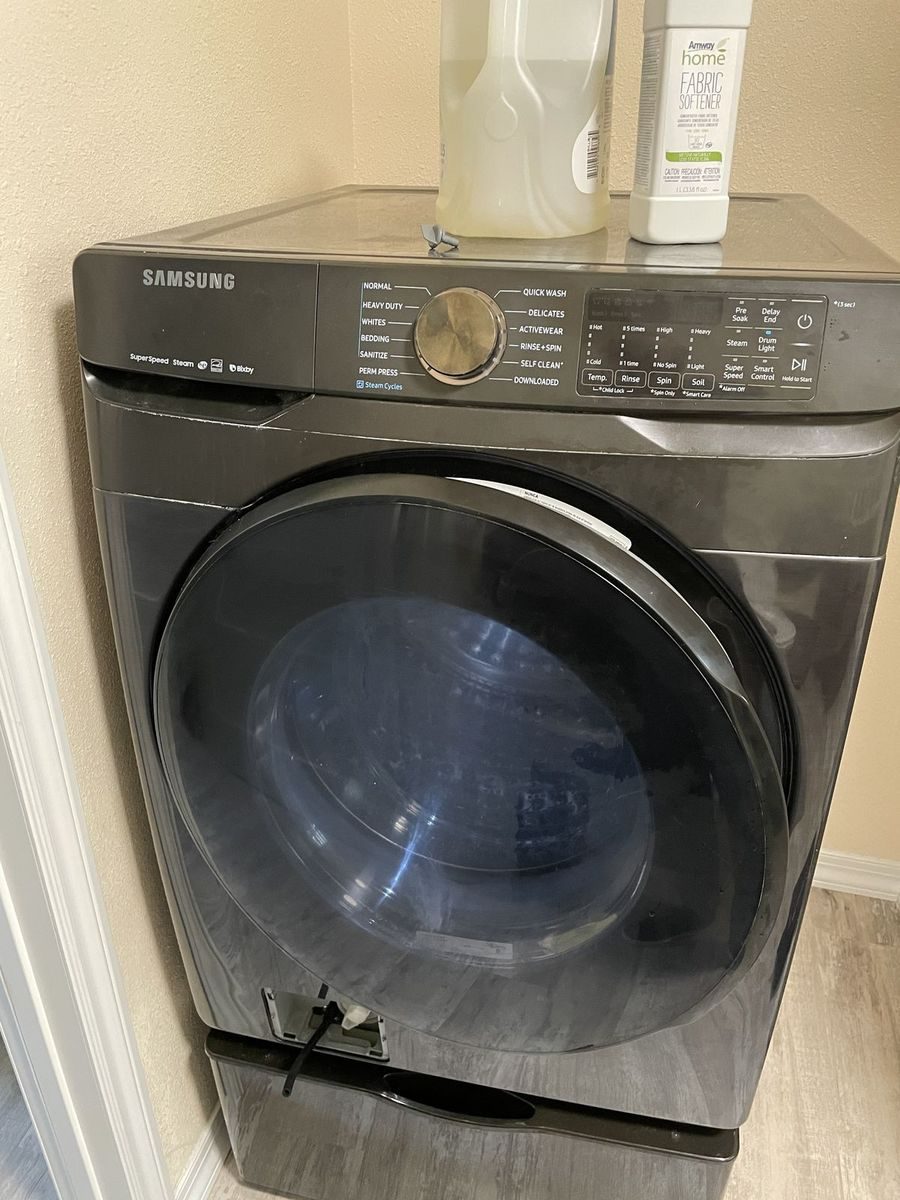
Tab 2 of 12
Damp Kitsap laundry rooms are hard on door boots, so mildew, torn folds and a clogged pump filter are the first things we look at on a front-loader.
See the service page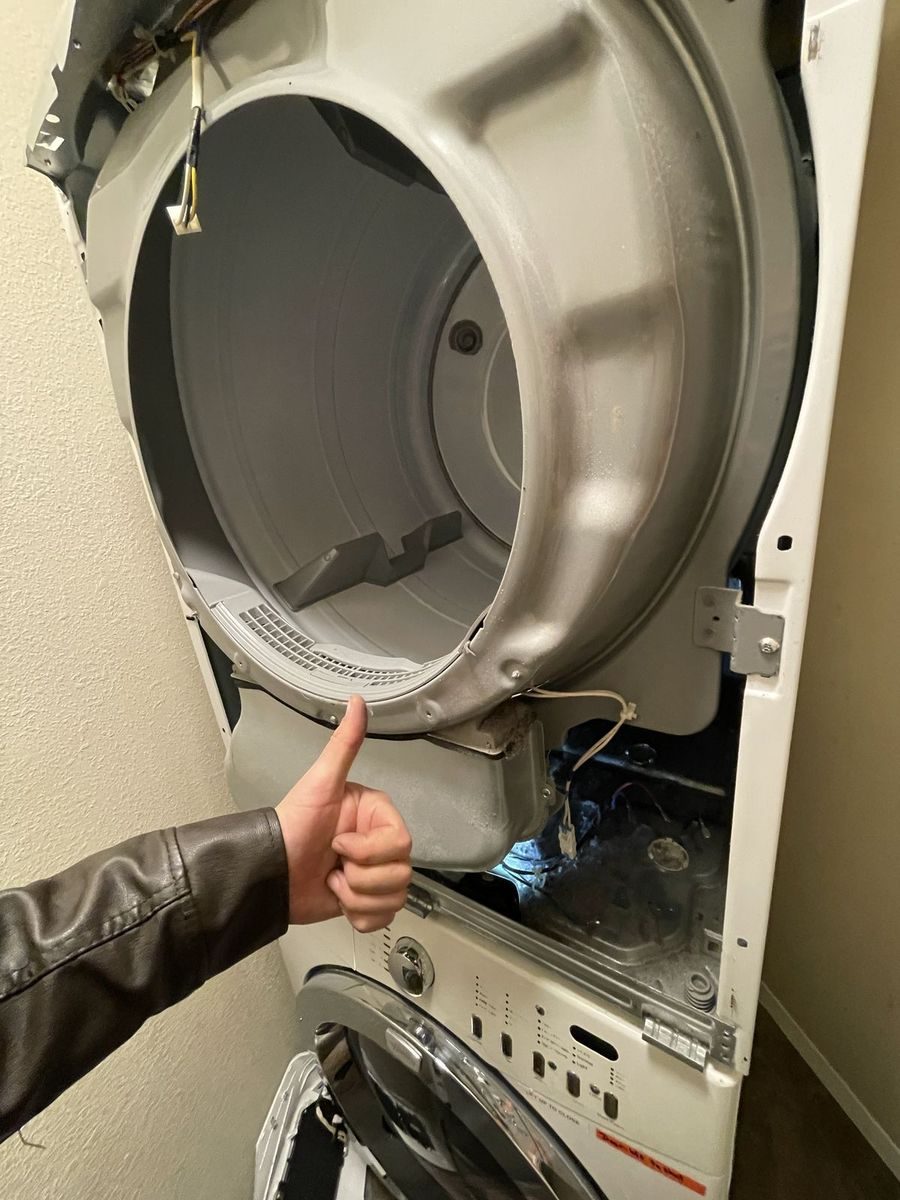
Tab 3 of 12
Long vent runs through damp walls fill with lint quickly, so the vent gets tested along with the heating side: element or burner, thermal fuse and thermostats.
See the service page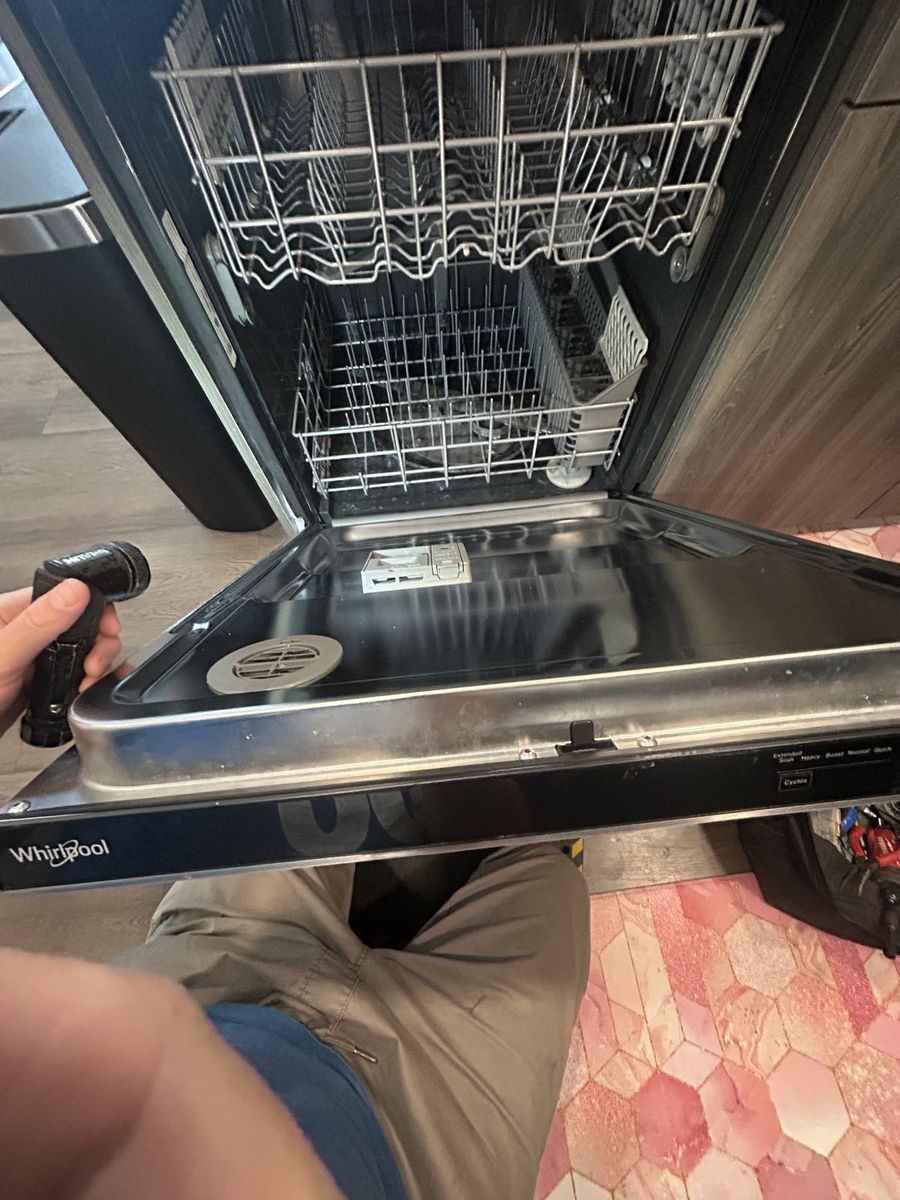
Tab 4 of 12
Well water leaves minerals on the spray arms and the inlet screen, two early stops when dishes come out dull or the tub fills slowly.
See the service page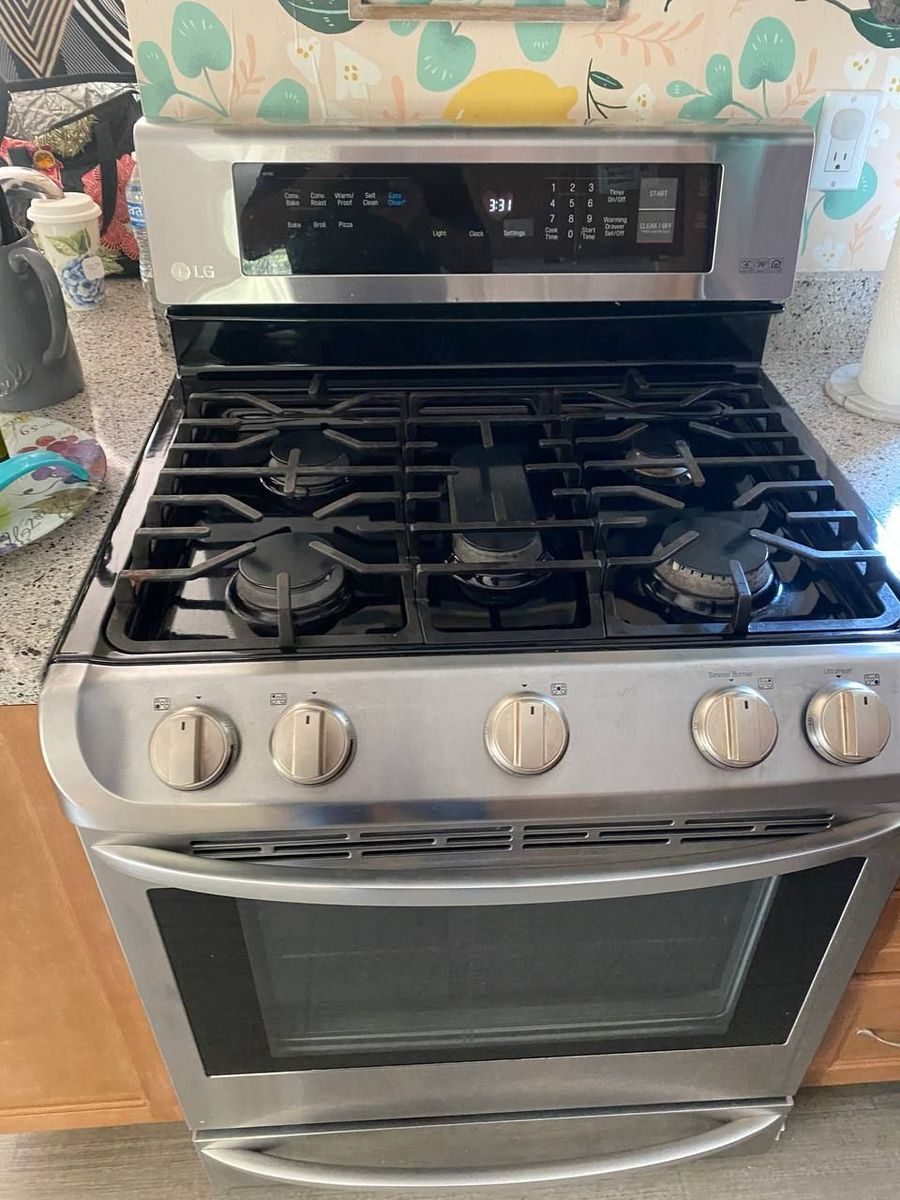
Tab 5 of 12
Natural gas and propane ranges both get igniter, valve and flame checks. The tank and its lines stay with your propane supplier.
See the service page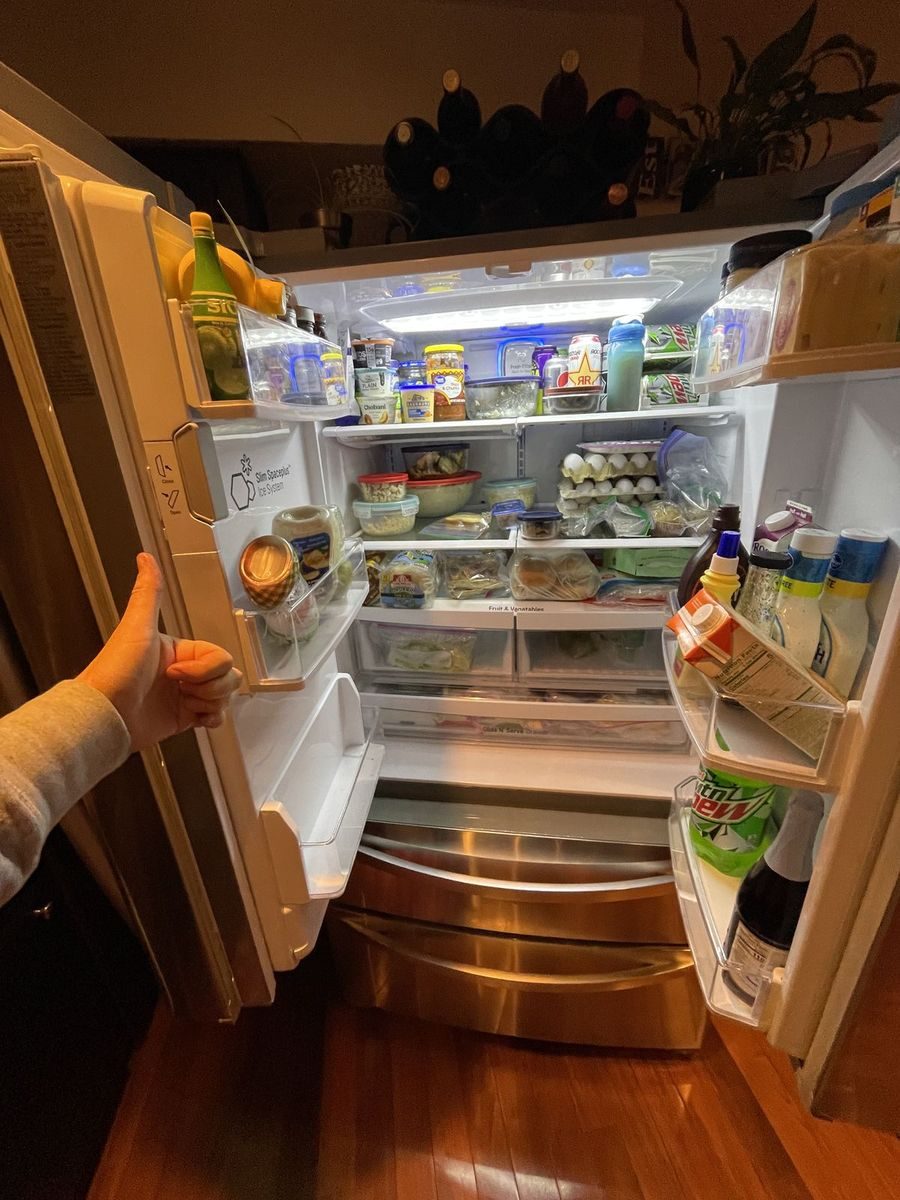
Tab 6 of 12
After a windstorm outage the fill tube often freezes solid and the ice maker goes quiet, so we follow the water up from the inlet valve.
See the service page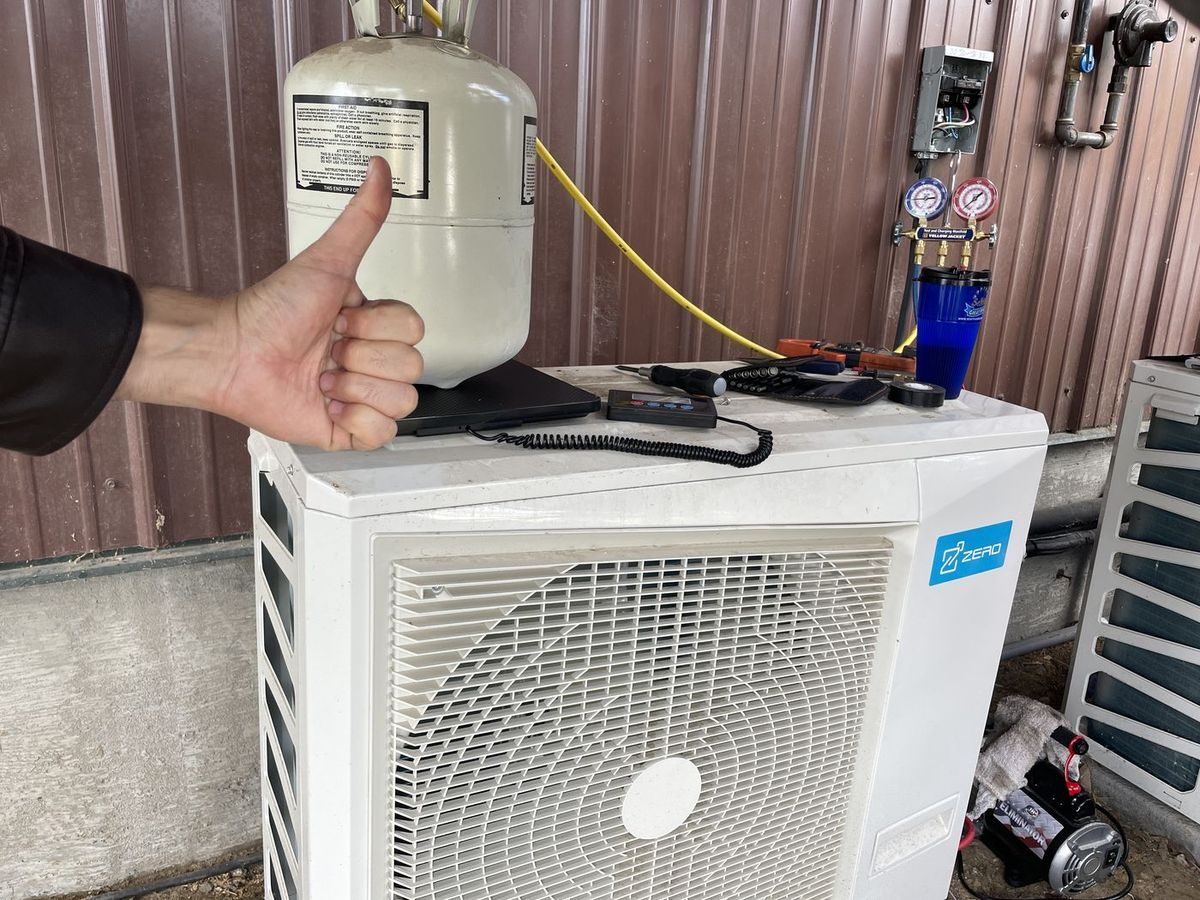
Tab 7 of 12
Through the gray months we watch the defrost cycle closely, because a coil that never clears is the classic Kitsap winter call. Capacitors and the reversing valve come next.
See the service page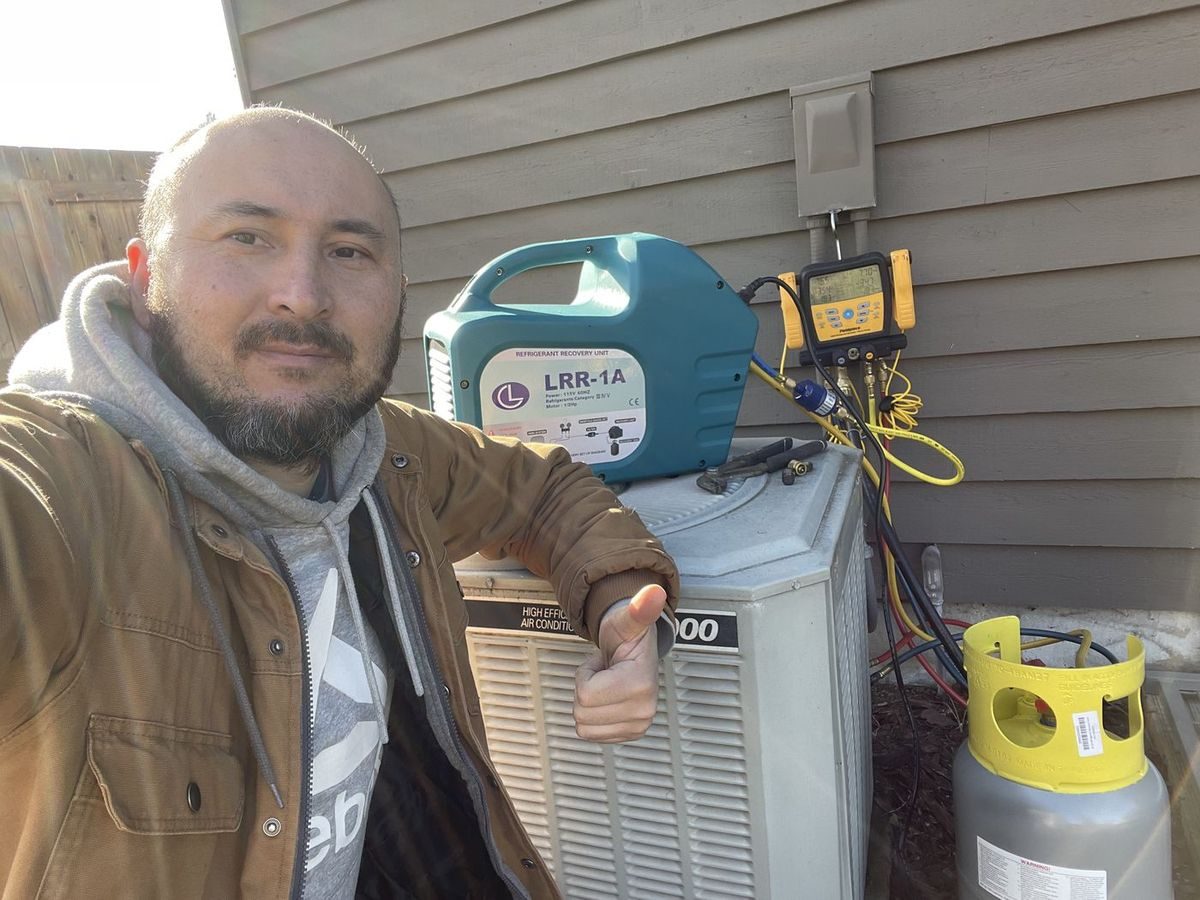
Tab 8 of 12
More Kitsap homes have cooling since the 2021 heat dome. When a system falls behind on a hot afternoon, we start with airflow, the capacitor and the refrigerant charge.
See the service page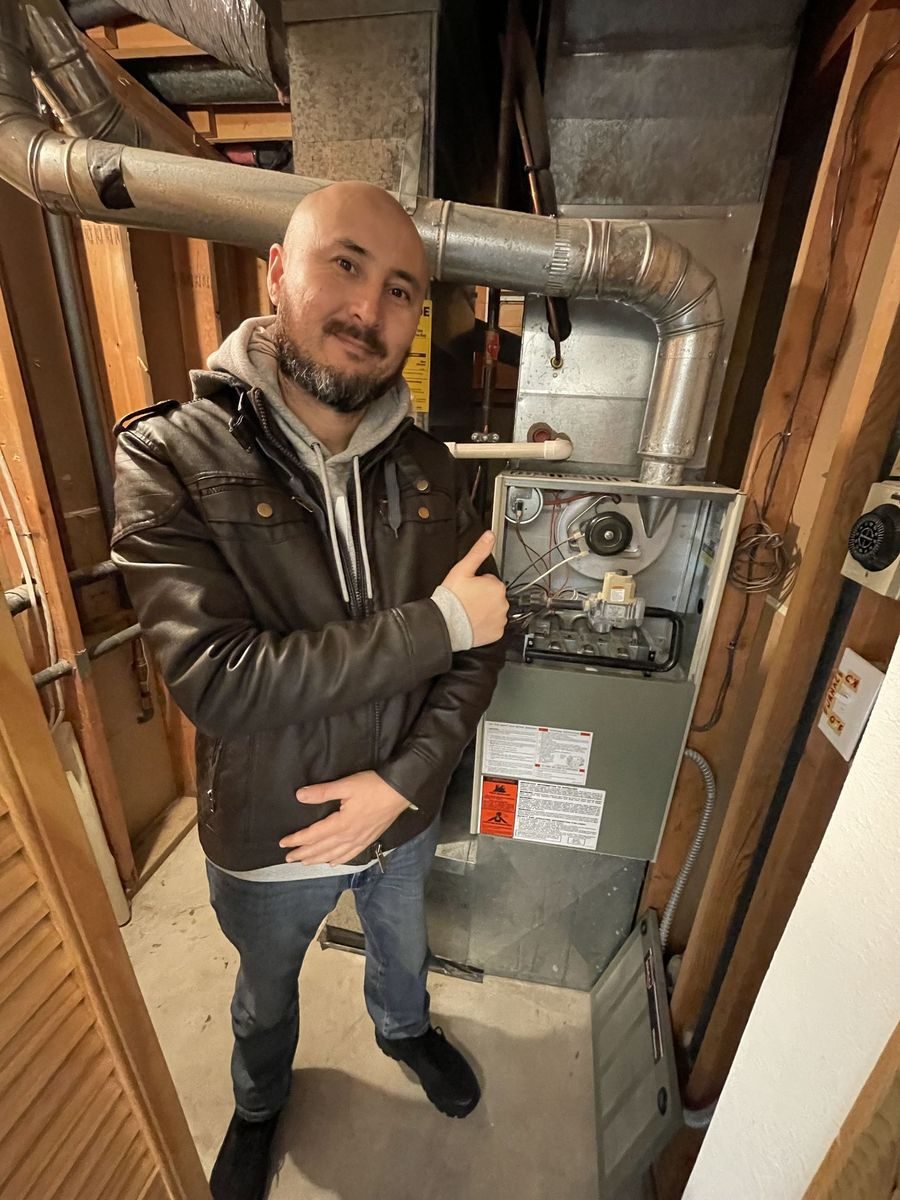
Tab 9 of 12
Many older Bremerton and Manette houses keep the furnace in a closet or under the floor. Filter, inducer, flame sensor and limit switch all get checked in that tight space.
See the service page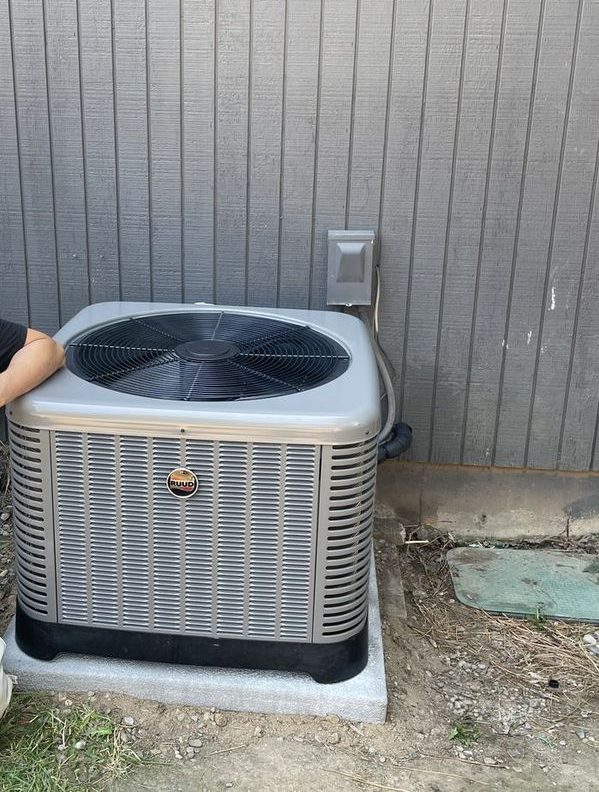
Tab 10 of 12
Placement matters on the peninsula: a raised pad clear of wet ground, back from salt spray where the lot allows, and out from under the needle drop.
See the service page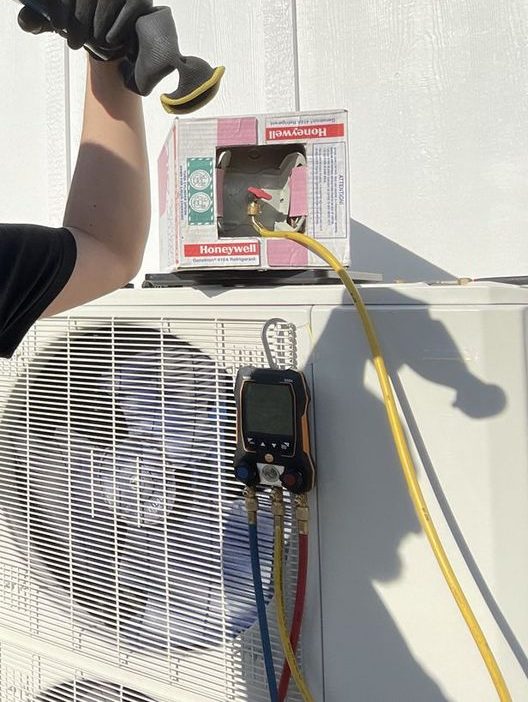
Tab 11 of 12
Mini-splits fit older homes with no room for ducts. Their line sets need sound insulation where they cross a damp crawlspace, and the outdoor unit needs a clear drain path.
See the service page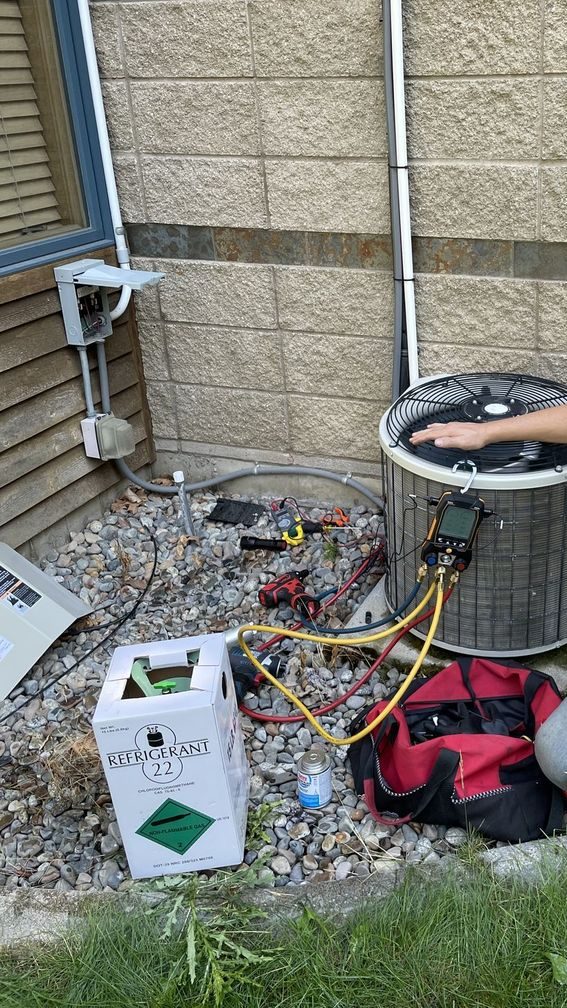
Tab 12 of 12
A seasonal visit near the water means a coil rinse, a look at the fasteners for salt rust and a base pan that drains. Those three buy waterfront equipment years.
See the service pageMoves come first. Households across Bremerton and Silverdale rotate in and out often, and refrigerators often ride the truck on their backs. Lying flat lets compressor oil wander into the lines, so stand the unit up and let it rest unplugged for as long as it lay down, longer if you can. Built-ins are the other local pattern. View homes on Fox Island and in the Gig Harbor uplands often have Sub-Zero or Thermador column and built-in units, with the condenser on top behind a grille that gathers dust. Because the island hangs on one bridge across Hale Passage, we ask for the model number first so the likely parts ride along.
Garages and storms finish the list. Winter lows in Bremerton average around 35°F, so a two-door refrigerator in an unheated garage may have its fresh-food sensor satisfied for hours while the freezer side softens. Summer can cut the other way: when the June 2021 heat dome pushed Bremerton to 110°F, a garage fridge with a dusty condenser had nowhere to dump its heat. Then come windstorms, with fir, cedar and alder falling across lines. The November 2024 bomb cyclone darkened homes throughout the region and closed 22 county roads. Restoration often arrives with a spike that electronic controls and start relays dislike, so pull the plug during the outage and reconnect only once the lights have stayed on for several minutes.
If one part failed, repair is the usual answer: a defrost heater, fan motor, relay, board or gasket, inside a cabinet whose liner and sealed system still have life. Sealed-system work on an older standard fridge, say a leaking evaporator or a stubborn compressor, is harder to justify, since that bill can creep toward the price of a replacement. Built-ins change the arithmetic. A Sub-Zero or Thermador sized to its cabinet opening belongs to the kitchen itself, and swapping it can mean new panels or carpentry, so even larger repairs often pencil out. You get the written figure along with our view of the liner, gaskets and compressor, and the decision is yours.
Wait first. Stand it upright and keep it unplugged for as many hours as it spent lying down, overnight if you can, so oil settles back into the compressor. Then give it a day to pull down to temperature. A compressor that hums while the cabinet stays warm, or one that clicks and never starts, suggests a line got pinched on the road, and that calls for a technician.
Yes. Built-ins from Sub-Zero and Thermador are on our list, as are refrigerators from GE, Whirlpool, KitchenAid, Frigidaire, LG, Maytag, Electrolux and Kenmore. Most built-in work happens from the front through the top grille, so the unit stays in place. Give the office the model and serial numbers at booking, because some parts for these units are ordered and quoted before the return trip is set.
Cold garage air fools the control. A typical two-door model has one sensor, and it lives with the milk, not the ice cream. Once the garage sits in the 30s, that compartment hits its setpoint with almost no help, so the compressor stays mostly idle and the freezer thaws. A few models are built for unheated rooms or take a garage kit from their maker. Otherwise, bring it indoors for winter or use a chest freezer meant for garages.
Most often the electronics. Control boards, the relays soldered to them and display boards take the brunt of the spike when service returns, while compressors usually come through fine. Our technician measures voltage at the appliance, checks board fuses and outputs, and recommends a new board only when the readings prove it. Next outage, pull the plug and wait several minutes after power returns before reconnecting.
Yes, provided the figure makes sense for that fridge. Federal refrigerant rules require Section 608 credentialing before anyone opens a sealed system; our technicians hold the Universal level. The job means locating the leak, recovering the remaining refrigerant, brazing, fitting a fresh filter-drier, evacuating deeply, then weighing refrigerant in on a scale. Such work outweighs a fan or relay swap by a wide margin, so the written quote comes first and you decide.
Only the diagnostic fee, quoted by the office while you book. It pays for tracking down the fault and writing the price. Approve the work and that fee lands inside the repair total; it is never charged twice. Turn it down and you still leave with a named failed part and a written number for the fix, and nothing gets swapped without your permission.
Talk to a person
Pick a date on the online calendar, then the arrival window that suits you, or phone us (lines open 8 AM–7 PM, every day). Our office calls back to confirm, and your technician rings shortly before pulling into the driveway.
Schedule online
Tell us what needs attention, the day that works and the window you prefer. A scheduler calls to make it firm, and the technician rings again before pulling up.
Washington Labor & Industries keeps these records public. Each number can be searched on L&I Verify; scope details sit on a separate page.
Scope of each license