Tab 1 of 12
Air conditioner repair
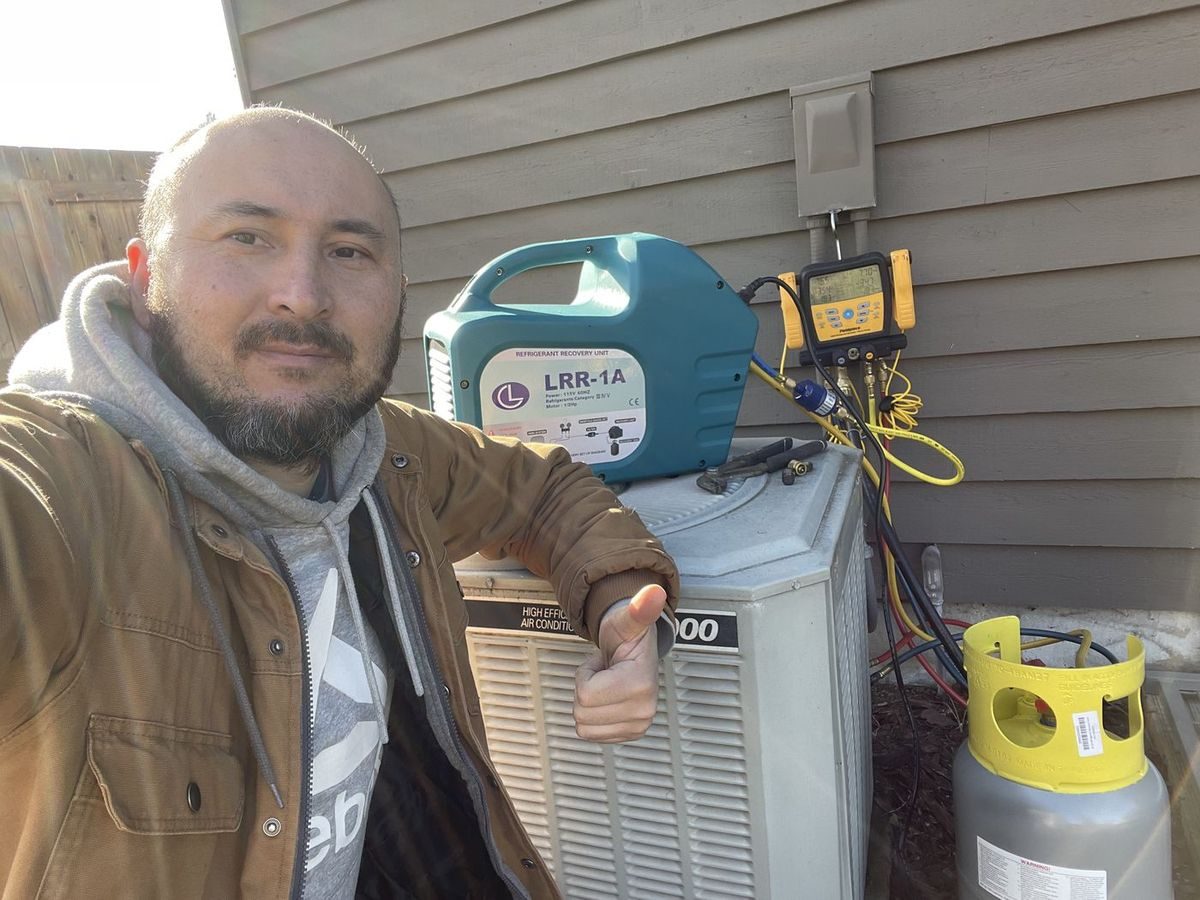
More Kitsap homes have cooling since the 2021 heat dome. When a system falls behind on a hot afternoon, we start with airflow, the capacitor and the refrigerant charge.
See the service page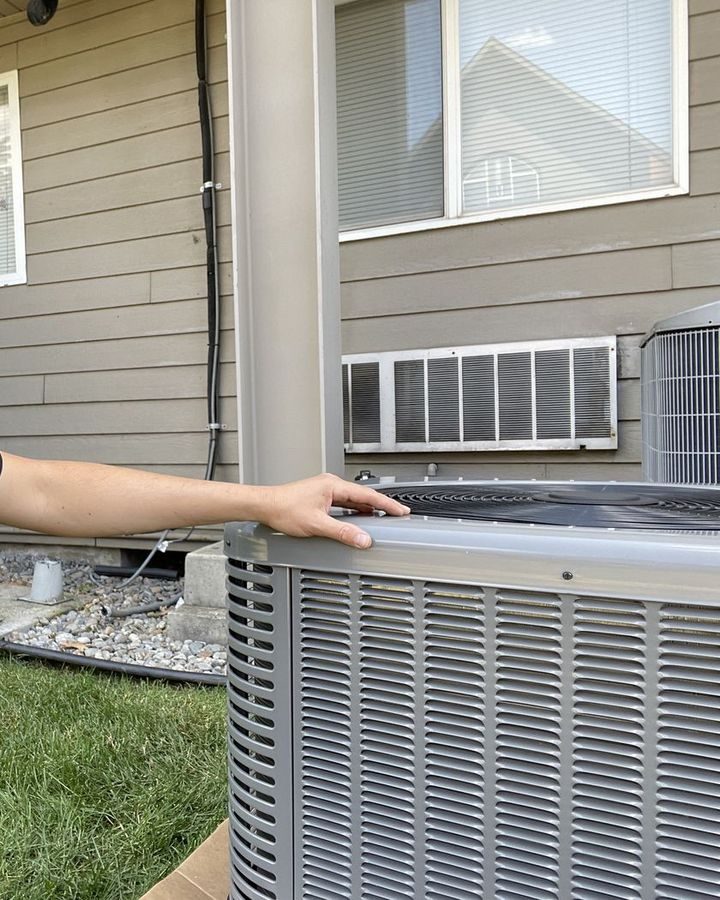
Air conditioner repair for Kitsap and Gig Harbor homes
A Kitsap air conditioner may idle from September to June, then get asked for a week of triple digits. Bremerton hit 110°F on June 28, 2021. Our technicians track down what the idle stretch left behind, from a shrunken capacitor to a pinhole leak, and put the repair cost in writing first.
Straight to it
When a peninsula AC gives up on the first hot day, the usual culprit is one of five things: a capacitor that lost microfarads over the off-season, contactor points pitted or crusted with corrosion, an outdoor fan motor whose bearings have gone dry, charge lost through a slow leak, or an evaporator coil frozen by weak airflow. We measure, quote on paper, and start only with your approval.
Mostly because they spend the year parked. In Bremerton, July and August highs average roughly 77 to 78°F, so many systems run a scattering of afternoons and then rest through eight or nine wet months. All that while, rain, moss and salty fog keep working on the outdoor cabinet, and the first cooling call of the season lands on parts that have not moved since the previous summer.
Then a heat wave arrives and demands everything at once. On June 28, 2021, Bremerton logged its all-time high of 110°F, and readings between 105 and 110 stretched across the peninsula. Plenty of houses here were built with no central air, and many owners added a heat pump or AC afterward. In a spell like that, the weak link breaks first, typically late in the day after hours of nonstop running: a capacitor sagging under its rating, a contactor with scorched faces, a fan motor that finally seizes.
We repair central air conditioners, heat pumps running in cooling mode and ductless systems. Larch's electrical contractor license carries the 06A HVAC/Refrigeration specialty that covers this work, and refrigerant is handled only by technicians with an EPA 608 Universal credential. York, Ruud, Carrier, Bryant, Trane, Goodman, Lennox and Daikin condensers all turn up on our calls. When the house is heating up and the vents are not helping, book a visit.
By following the cooling call from wall to compressor. The technician confirms the thermostat is in cooling and actually asking for it, checks the filter, and measures how much colder the supply air is than the return. At the condenser, power is verified, the capacitor gets a microfarad reading, contactor points get a close look, and fan motor amps are compared with the nameplate. Gauges come out only if those numbers point to charge; then superheat or subcooling, read against a TXV or fixed-orifice target, shows whether refrigerant is short or airflow is the real problem.
No part is swapped until you have a written price. Pinning down the fault carries a diagnostic fee, quoted up front by the office. Approve the work and the fee gets folded into its cost. Pass on it and the fee is the visit's entire cost. Capacitors, contactors and fan motors ride in our vans, so a proven failure is often handled before we leave, once you agree. Leak repairs and special-order parts are quoted before anything is ordered, and the invoice lists our written warranty terms.
Each tab holds a photo from our service calls and a note on what we check first. Pick any tab; left alone, they turn every few seconds.
Tab 1 of 12
More Kitsap homes have cooling since the 2021 heat dome. When a system falls behind on a hot afternoon, we start with airflow, the capacitor and the refrigerant charge.
See the service page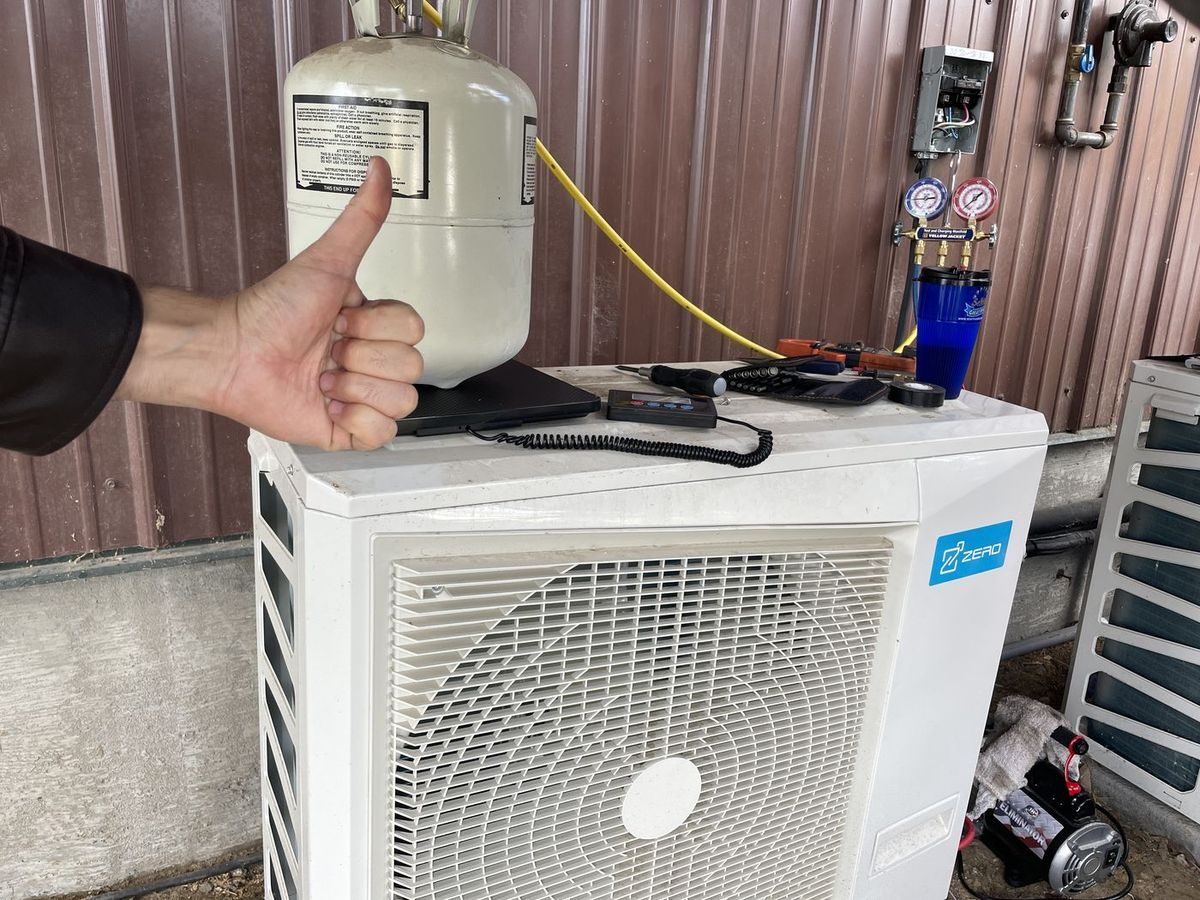
Tab 2 of 12
Through the gray months we watch the defrost cycle closely, because a coil that never clears is the classic Kitsap winter call. Capacitors and the reversing valve come next.
See the service page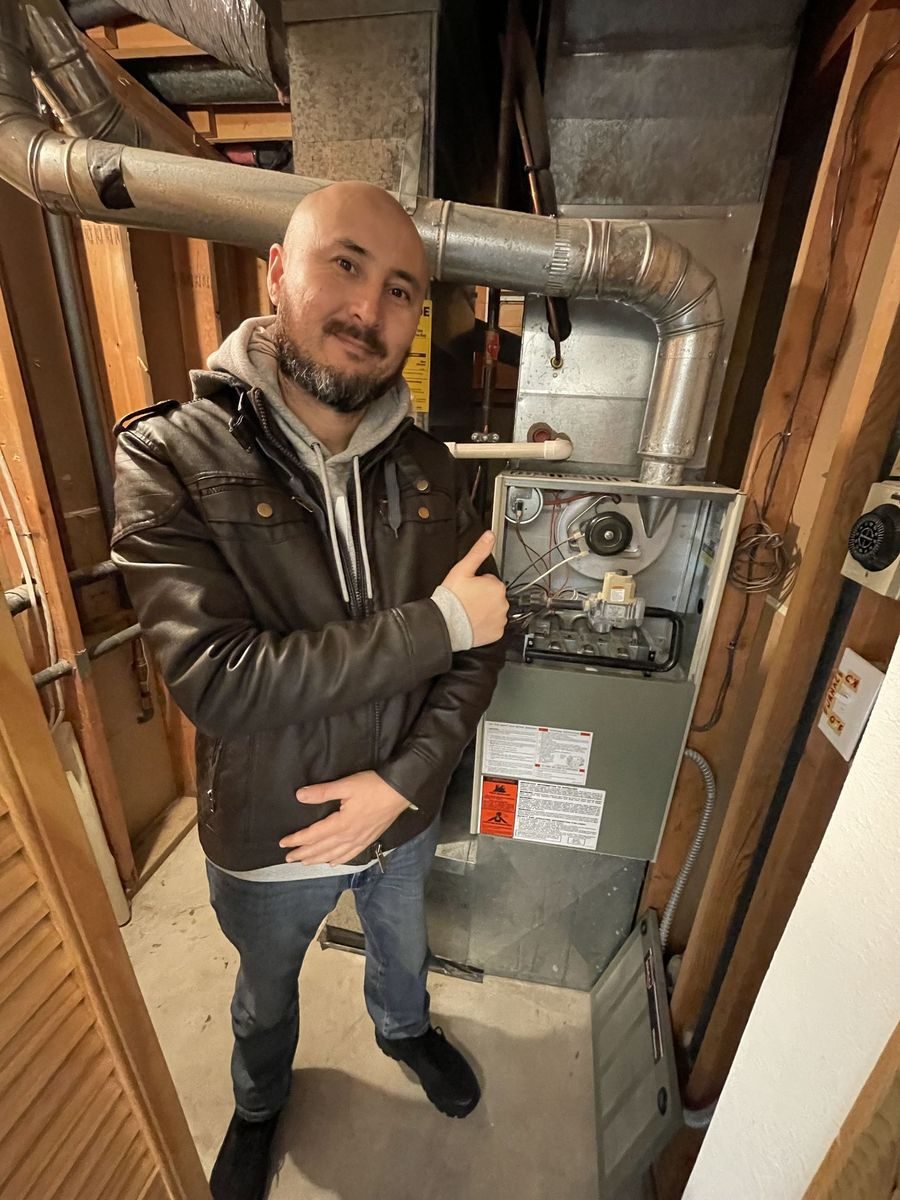
Tab 3 of 12
Many older Bremerton and Manette houses keep the furnace in a closet or under the floor. Filter, inducer, flame sensor and limit switch all get checked in that tight space.
See the service page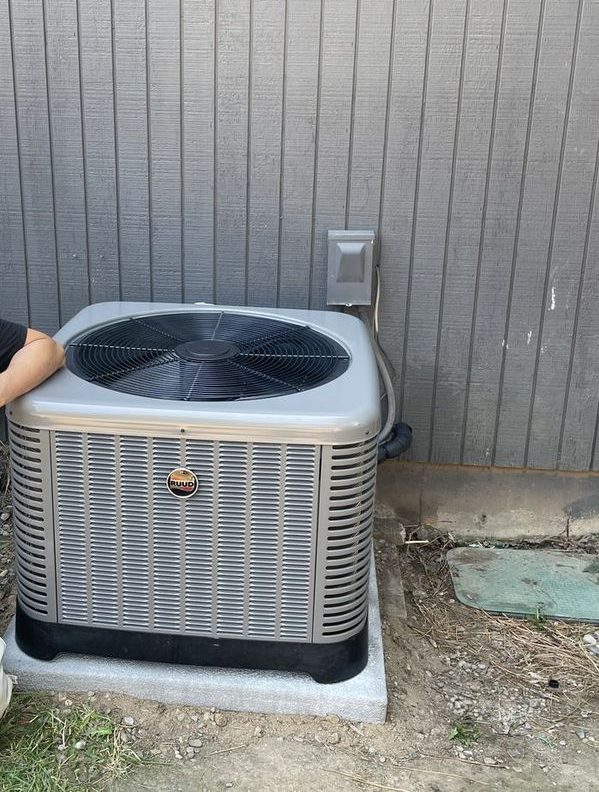
Tab 4 of 12
Placement matters on the peninsula: a raised pad clear of wet ground, back from salt spray where the lot allows, and out from under the needle drop.
See the service page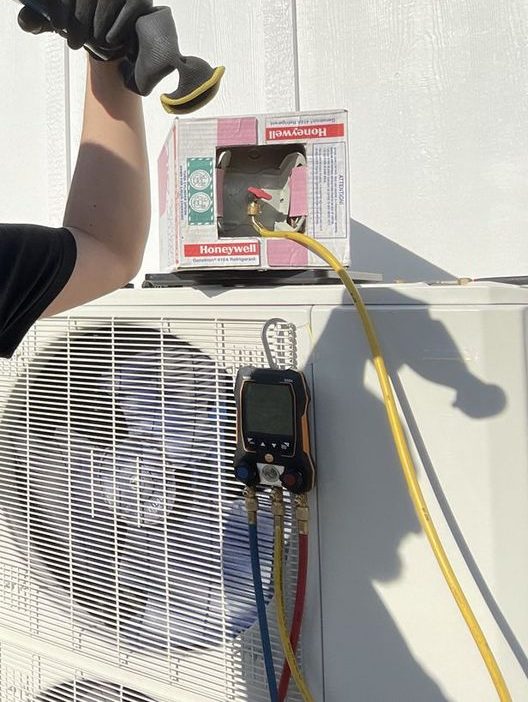
Tab 5 of 12
Mini-splits fit older homes with no room for ducts. Their line sets need sound insulation where they cross a damp crawlspace, and the outdoor unit needs a clear drain path.
See the service page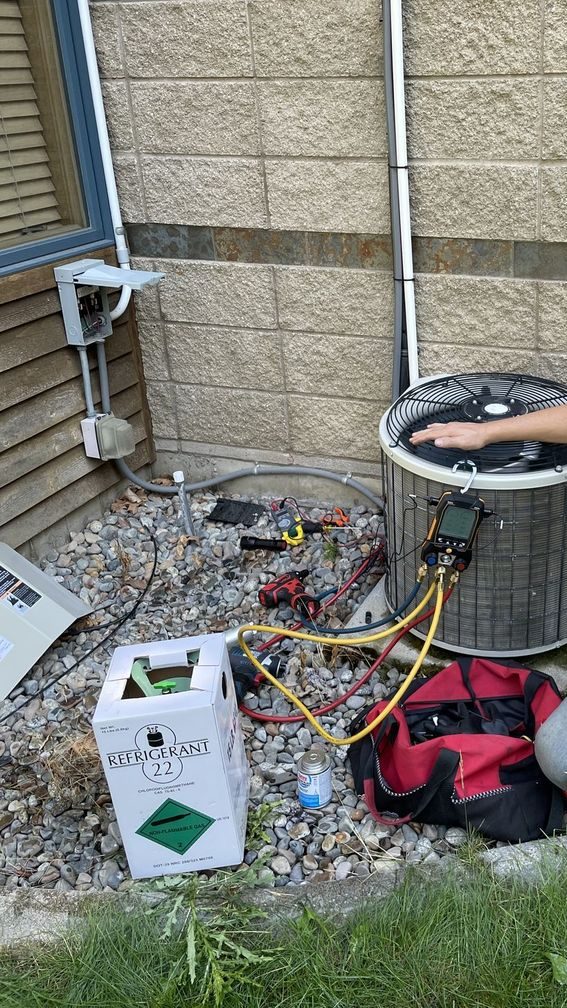
Tab 6 of 12
A seasonal visit near the water means a coil rinse, a look at the fasteners for salt rust and a base pan that drains. Those three buy waterfront equipment years.
See the service page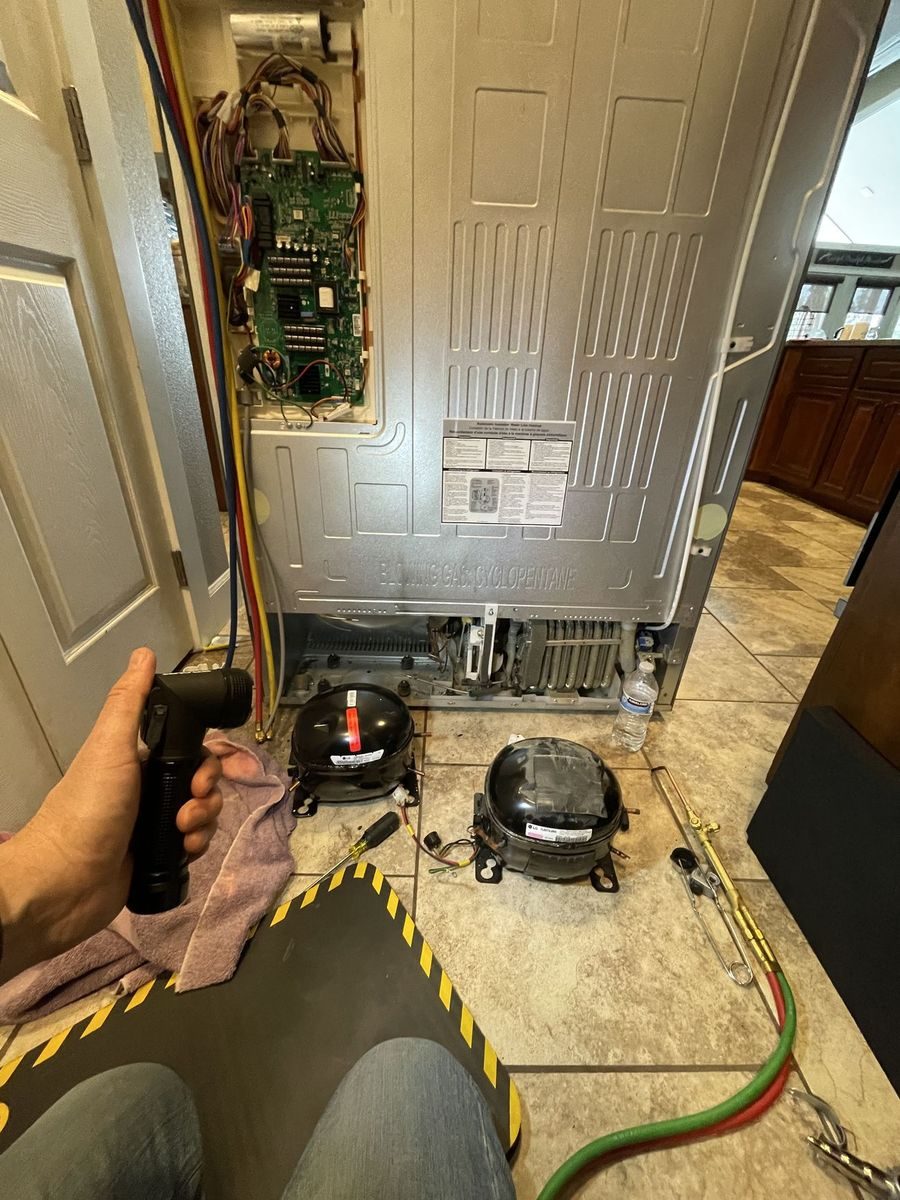
Tab 7 of 12
Sealed-system work, from leak search to recharge, happens right in the kitchen under EPA 608 Universal credentials, so the fridge stays where it stands.
See the service page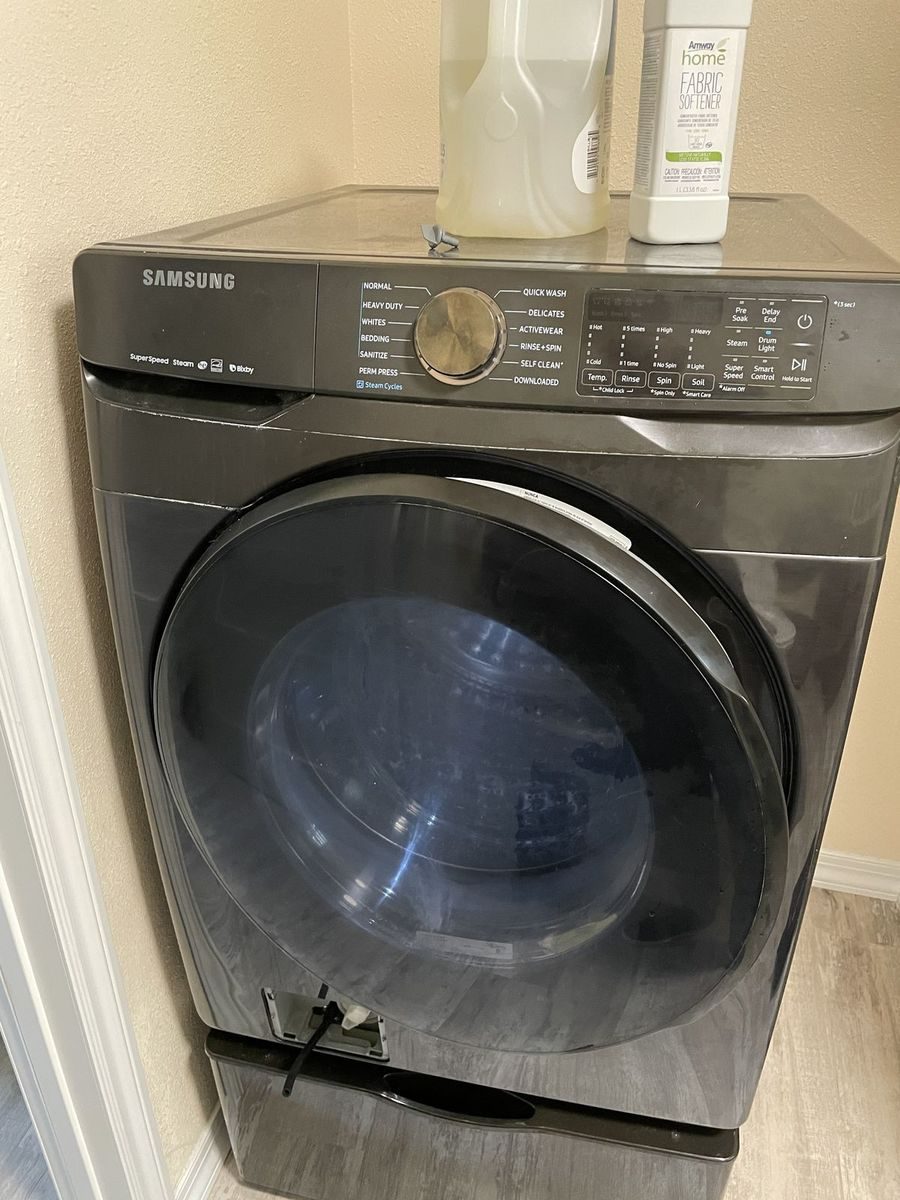
Tab 8 of 12
Damp Kitsap laundry rooms are hard on door boots, so mildew, torn folds and a clogged pump filter are the first things we look at on a front-loader.
See the service page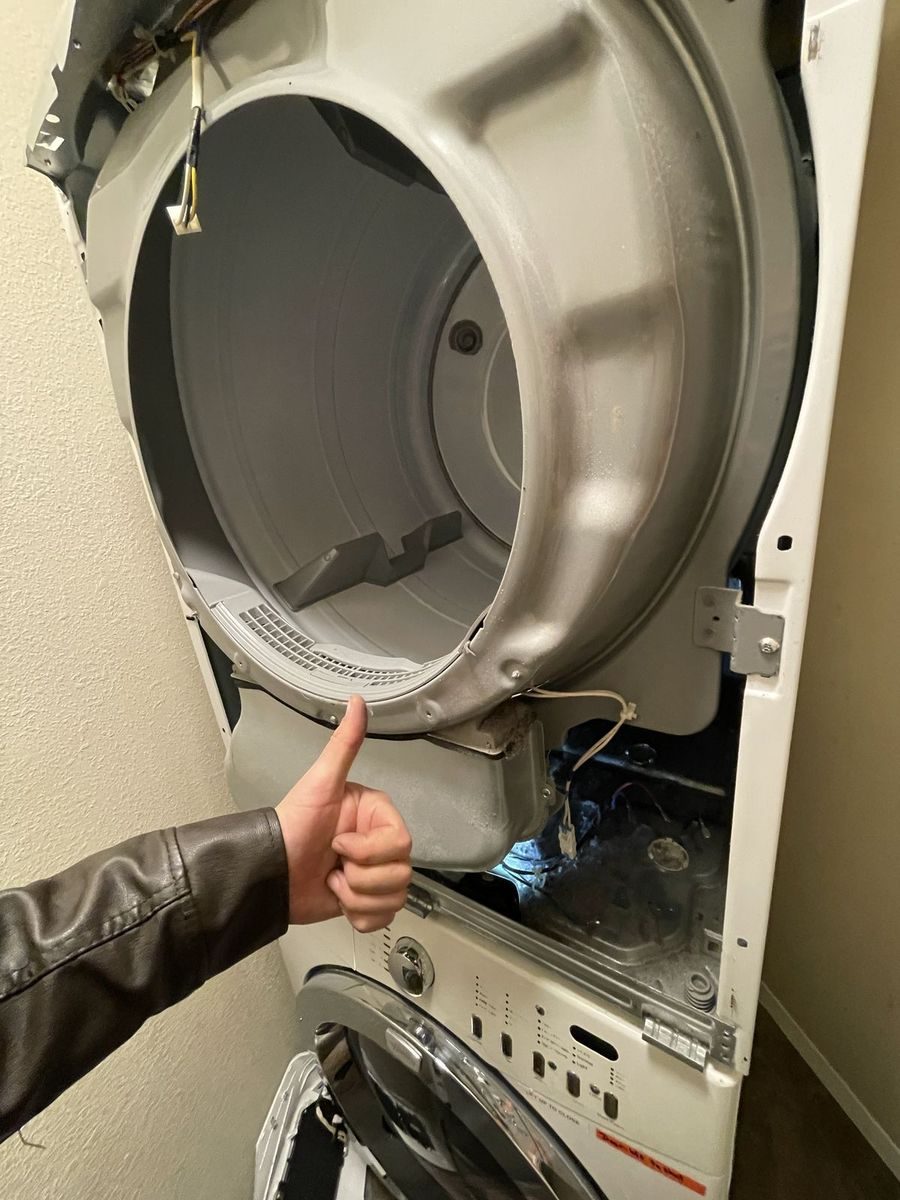
Tab 9 of 12
Long vent runs through damp walls fill with lint quickly, so the vent gets tested along with the heating side: element or burner, thermal fuse and thermostats.
See the service page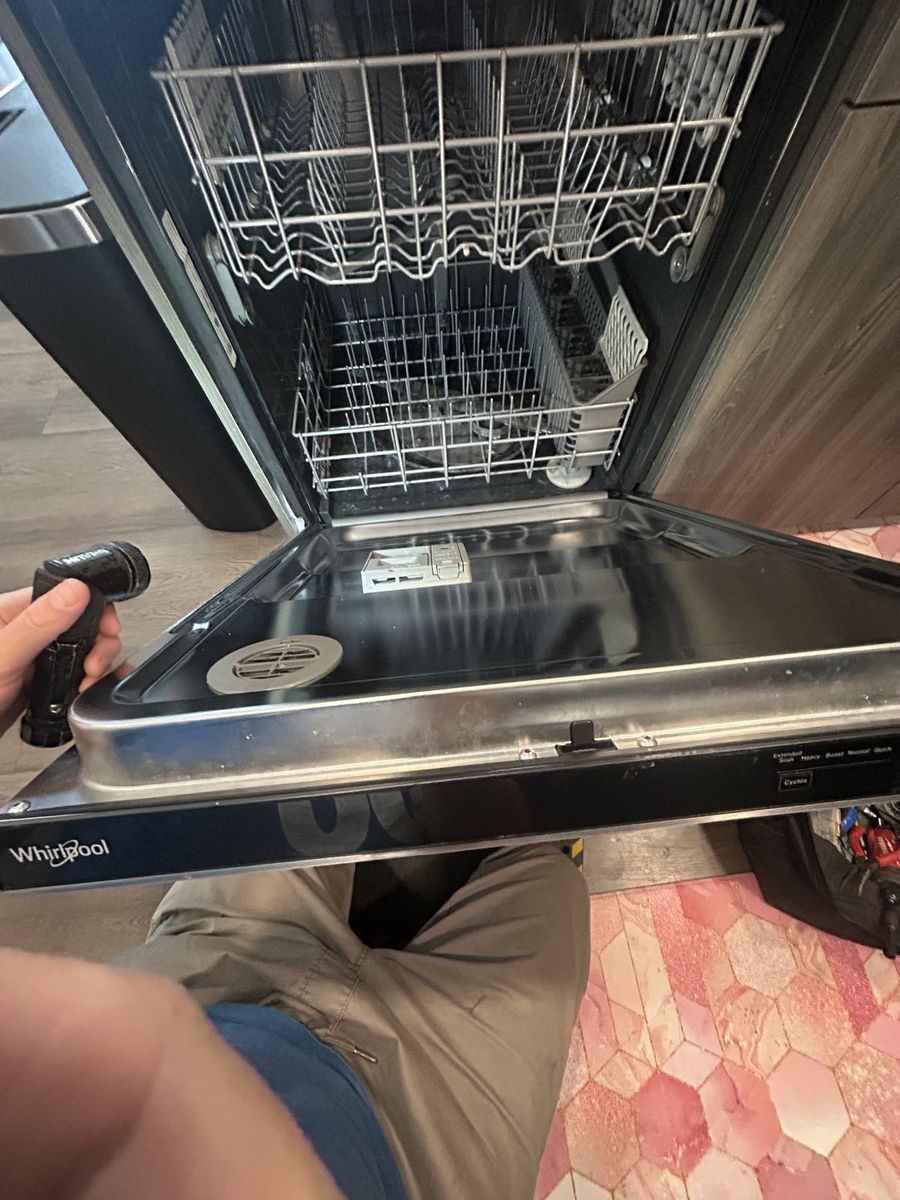
Tab 10 of 12
Well water leaves minerals on the spray arms and the inlet screen, two early stops when dishes come out dull or the tub fills slowly.
See the service page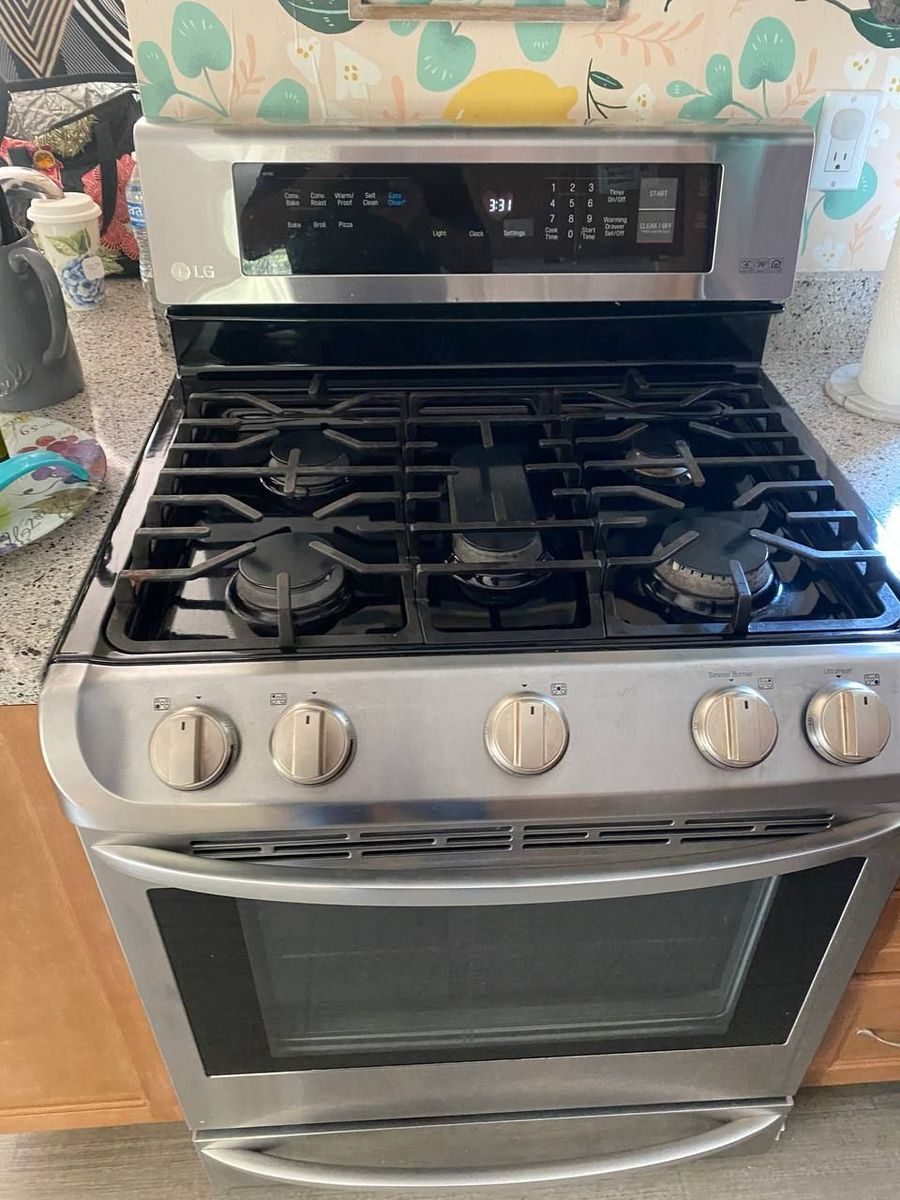
Tab 11 of 12
Natural gas and propane ranges both get igniter, valve and flame checks. The tank and its lines stay with your propane supplier.
See the service page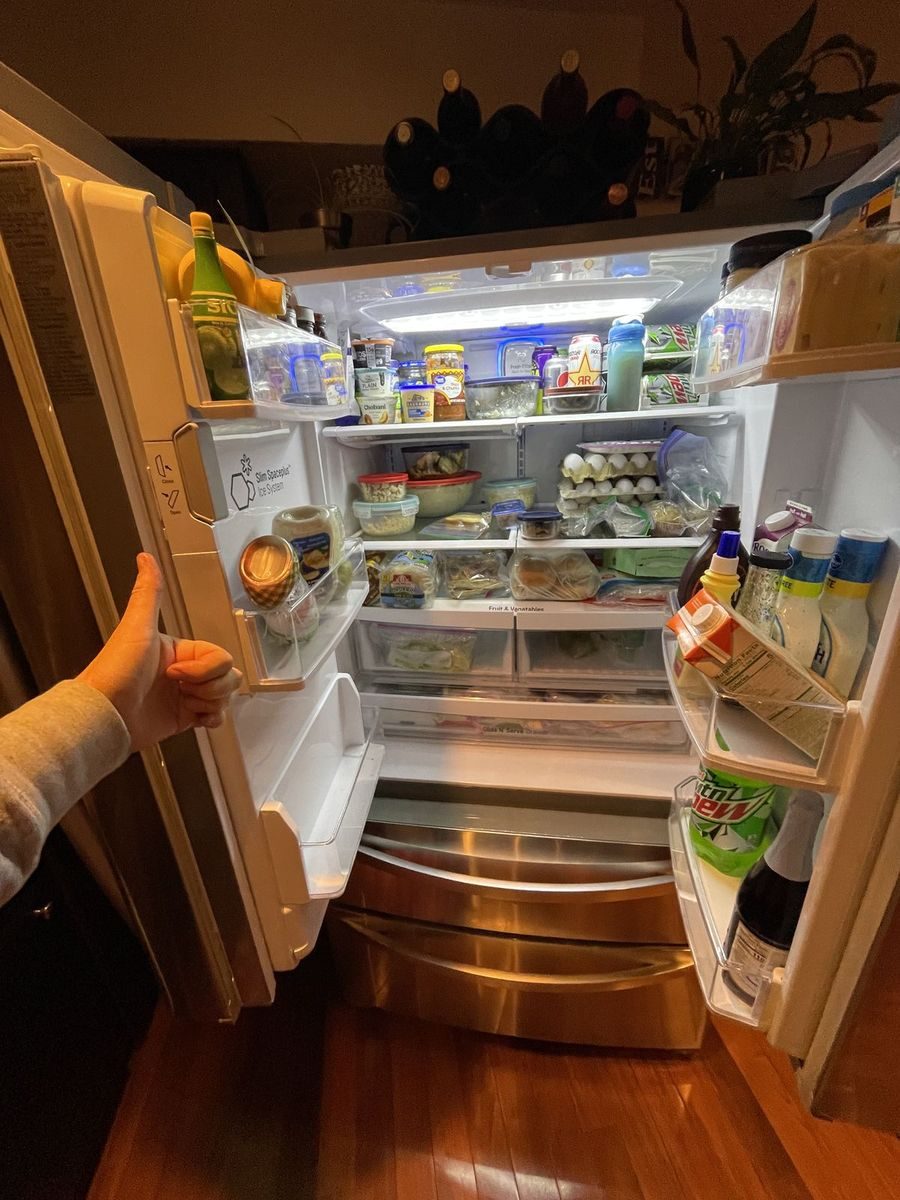
Tab 12 of 12
After a windstorm outage the fill tube often freezes solid and the ice maker goes quiet, so we follow the water up from the inlet valve.
See the service pageUpper floors feel it first. Newer two-story homes in Silverdale subdivisions and in the uplands above Gig Harbor often put bonus rooms and bedrooms over the garage, where long duct runs end, so those rooms can sit several degrees warmer than the ground floor even when the system is healthy. In a 105-degree stretch the gap widens. We read static pressure and supply airflow upstairs, look for kinked or loose flex duct at the equipment, and tell you whether the fix is a repair, a balancing job or more capacity.
Waterfront condensers age on a faster clock. Units near Sinclair and Dyes Inlets, beside Liberty Bay and around the harbor in Gig Harbor breathe salt all year, and that corrosion continues while the AC sits idle. Fins go chalky, screws rust into place, and capacitor and contactor terminals grow a crust that raises resistance and heat. A unit that looks fine in April can fail on its first long July run. Hosing the coil gently with the power off, plus a spring look at the electrical parts, buys a lot of margin.
The great majority of AC failures are worth repairing. A capacitor, contactor, fan motor, leaking service valve or plugged drain costs a fraction of a new system. Replacement belongs in the conversation when the compressor is shorted or grounded, when salt exposure has left the condenser coil weeping at several points, or when an older unit still depends on R-22, which US plants have stopped producing. If the system is aging and the upstairs never cooled well anyway, a heat pump can bring both cooling and efficient winter heat. We hand over the repair price and, where it fits, a replacement figure that covers equipment and installation together. The decision stays yours.
In most cases a part weakened while the system sat. Capacitors lose microfarads with age, contactor points corrode in damp and salty air, and fan motor bearings dry out. The first long run on a hot afternoon is when those weak parts finally give up. A spring check before the heat turns up most of them while the repair is minor.
On June 28, 2021, the Bremerton thermometer read 110°F, the highest ever recorded there according to weather service figures, and highs from 105 to 110°F covered the Kitsap Peninsula. Many homes here had no central air then. Systems sized for an ordinary Kitsap summer run without a break in that kind of heat, which is why the electrical parts deserve a spring check.
A small difference is normal, because heat rises and the attic warms the upper ceilings. A gap wider than a few degrees usually points to airflow: long or crushed duct runs, closed registers, a weak blower or low charge. Our technician measures airflow and temperature at the registers and explains which change would help the warm rooms most.
We can, but only after learning why it is low. An air conditioner is a sealed system, so missing charge means a leak somewhere. Our technicians search with an electronic detector or bubble solution, repair the leak, pull a vacuum, then weigh the charge back in and verify it with superheat or subcooling readings. Topping off without a repair just schedules the next breakdown.
Yes, a short trial on the first warm day, with temperatures in the low 70s or higher, is a good habit. Listen for the outdoor fan, feel for cold air at a register within a few minutes, and check that the larger copper line outside turns cold and sweats. If something hums, clicks or stays warm, book before the next hot spell fills the calendar.
Yes. Ductless mini-splits and central heat pumps cool exactly the way an air conditioner does, so we troubleshoot them with the same readings: capacitor values, fan motors, charge, coil condition and condensate flow. For a ductless head that drips or blinks a code in summer, we clear the drain path and read the fault before quoting.
Talk to a person
Pencil in a date online, then the arrival window that fits around work and school. Prefer to talk? Our line is answered daily, 8 AM–7 PM. A confirming call comes from our office; the technician phones while driving over.
Schedule online
Tell us what needs attention, the day that works and the window you prefer. A scheduler calls to make it firm, and the technician rings again before pulling up.
Washington Labor & Industries keeps these records public. Each number can be searched on L&I Verify; scope details sit on a separate page.
Scope of each license