Tab 1 of 12
Air conditioner repair
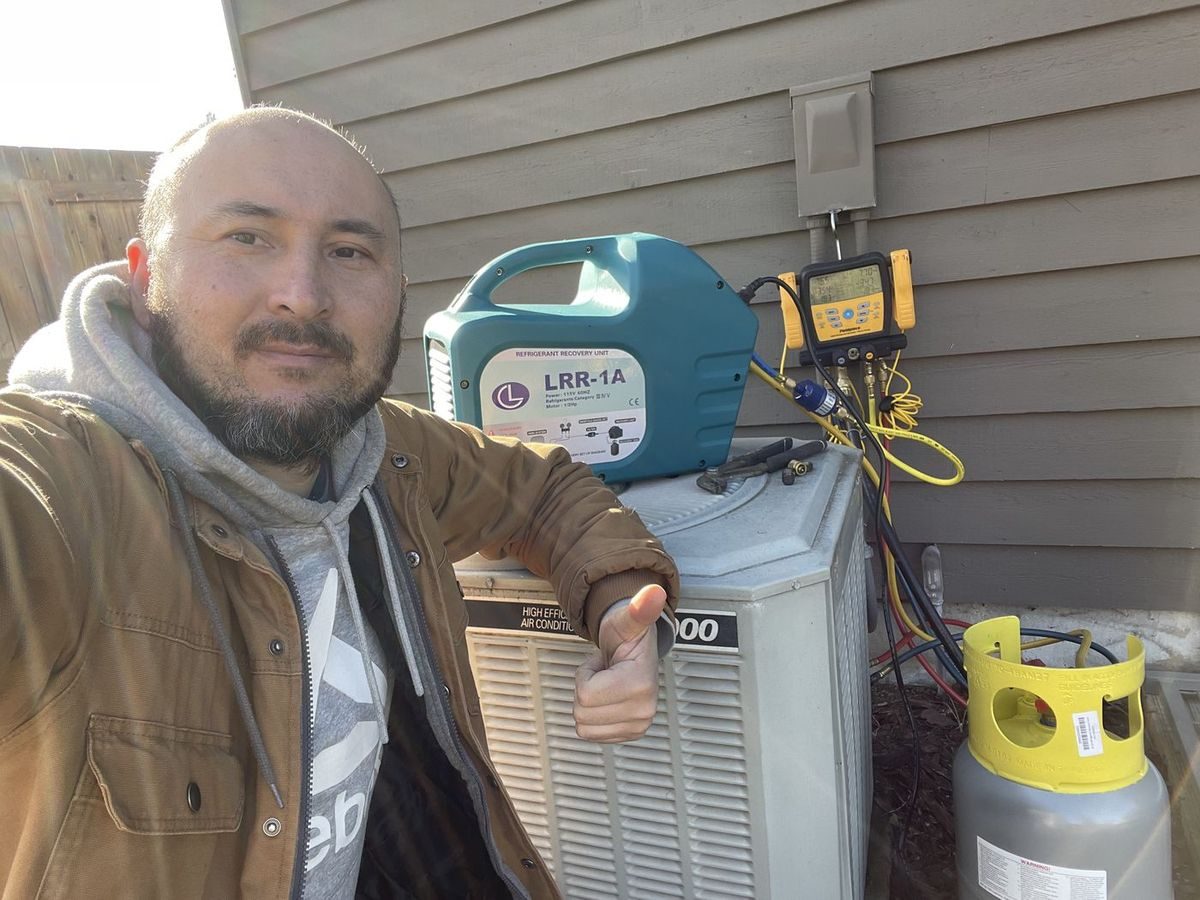
More Kitsap homes have cooling since the 2021 heat dome. When a system falls behind on a hot afternoon, we start with airflow, the capacitor and the refrigerant charge.
See the service page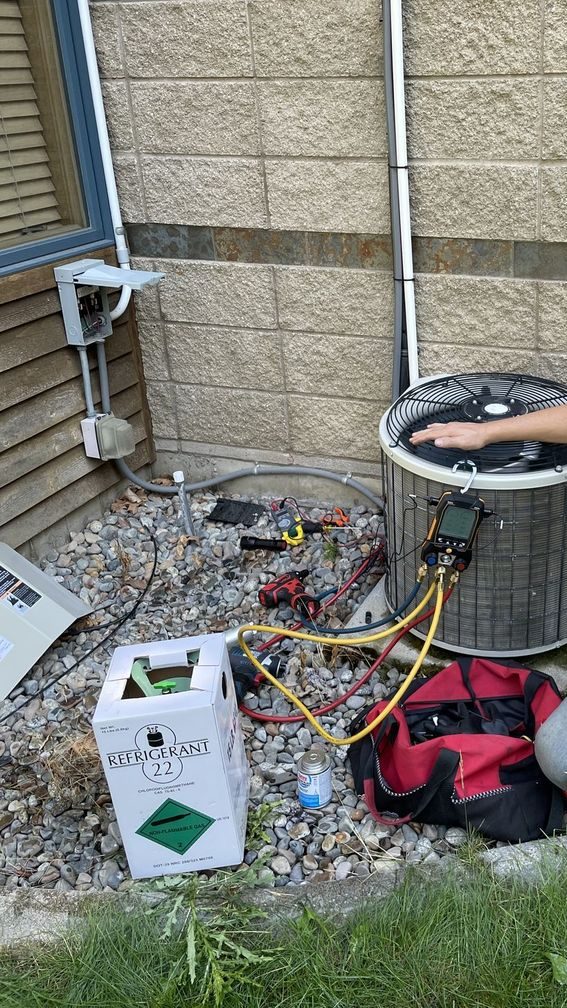
Bremerton · Air conditioner repair
On June 28, 2021, Bremerton reached 110°F, its hottest reading on record, and many houses on the west side and in Manette went up long before central air was common. When the cooling added since then gives out, we find the failed part, show it to you, and write the price down first.
Straight to it
A Bremerton air conditioner that quits cooling usually has a run capacitor that has lost microfarads, contactor points burned by hard starts, a condenser choking on its own exhaust in a narrow side yard, fins eaten by salt air off Sinclair Inlet, or refrigerant seeping from a joint on a line set added decades after the framing went up. We measure, quote in writing, and start only once you agree.
Most were squeezed into houses designed long before anyone planned on cooling. Homes from the early and middle 1900s on the west side and in Manette often sit on tight lots, so the condenser lands in a side yard a few feet from a fence, where it inhales its own hot discharge. Pressures creep upward, the compressor overheats, and capacitors age faster. Indoors, the cooling coil may perch on an older furnace whose ducts were sized for heat rather than the heavier airflow cooling demands. So our technician measures both halves: amperage and capacitor microfarads outside, static pressure and temperature split at the indoor coil, then superheat and subcooling to judge the charge.
Bremerton summers seldom push a system hard. Highs in July and August average about 77–78°F, so a unit can coast for weeks and then meet a scorching stretch with a capacitor that has quietly drifted below its rating. EPA 608 Universal credentials are held by every technician we send, and LARCHHA742PL, our electrical contractor license, lists the 06A HVAC/Refrigeration specialty, so leak searching, recovery and recharging fit inside one visit. Diagnosis carries a fee, and the office gives its size while booking you in. If you green-light the work, that sum is credited within the repair bill; if you decline, nothing beyond it is due.
They attack from two directions: corrosion grinds away all year, and then a hot spell loads every weakened part at once. On the inlet side of downtown and West Bremerton, and on homes facing the Port Washington Narrows, damp salty air settles on outdoor coils, and the thin fins corrode from their edges inward. Bremerton also takes about 57 inches of precipitation a year, so the cabinet floor stays wet and moss creeps into the bottom rows of the coil. A gentle spring rinse with a garden hose, thermostat switched off, helps the unit reject heat when the next scorcher comes.
Before forecast heat, try a short test on a cool morning. Drop the setpoint a little below room temperature, step outside to hear whether fan and compressor both start, and check that vent air turns noticeably cooler within about ten minutes. Requests come in two ways: tap an open day and arrival window in our online scheduler, or ring the office, staffed daily 8 AM–7 PM. Expect a confirming phone call, then a ring from your technician en route to your home in 98310, 98311, 98312, 98314 or 98337.
Each tab holds a photo from our service calls and a note on what we check first. Pick any tab; left alone, they turn every few seconds.
Tab 1 of 12
More Kitsap homes have cooling since the 2021 heat dome. When a system falls behind on a hot afternoon, we start with airflow, the capacitor and the refrigerant charge.
See the service page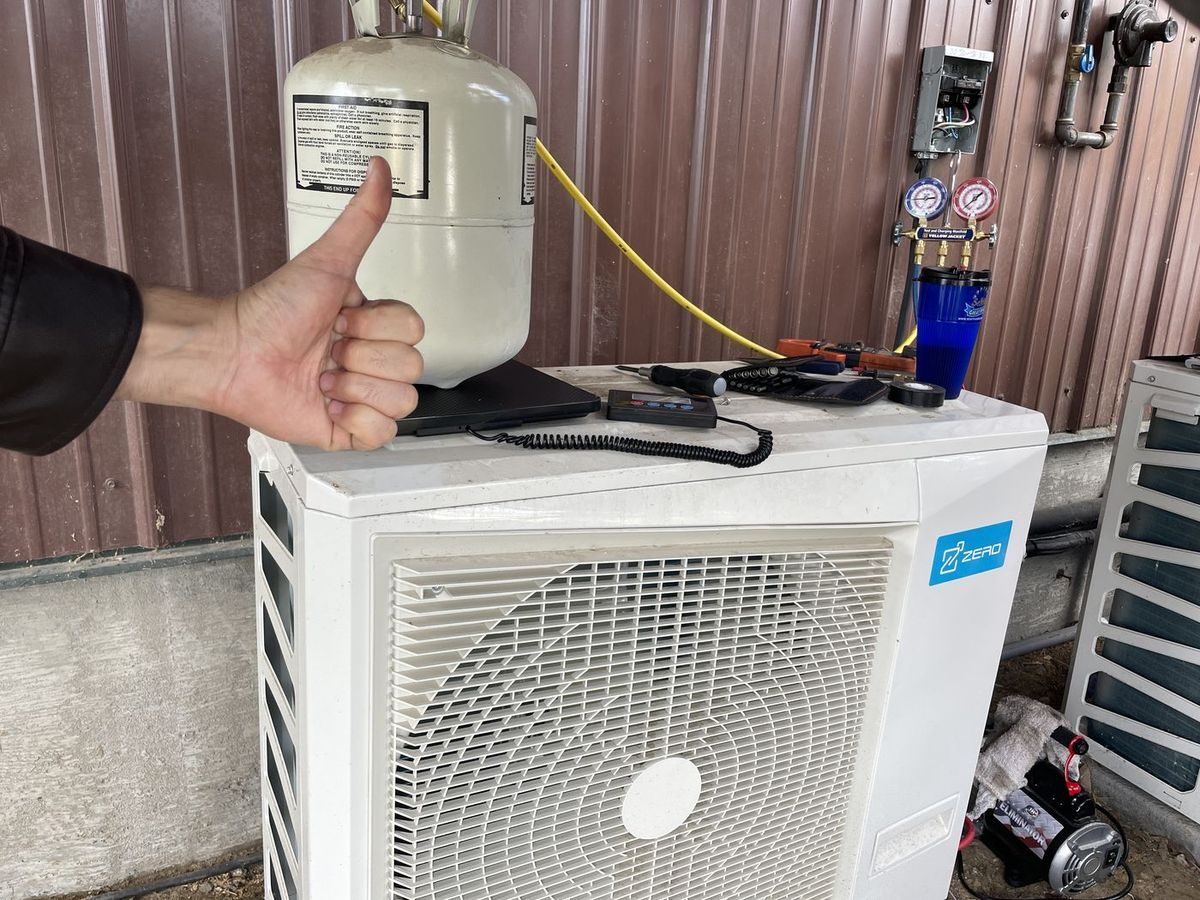
Tab 2 of 12
Through the gray months we watch the defrost cycle closely, because a coil that never clears is the classic Kitsap winter call. Capacitors and the reversing valve come next.
See the service page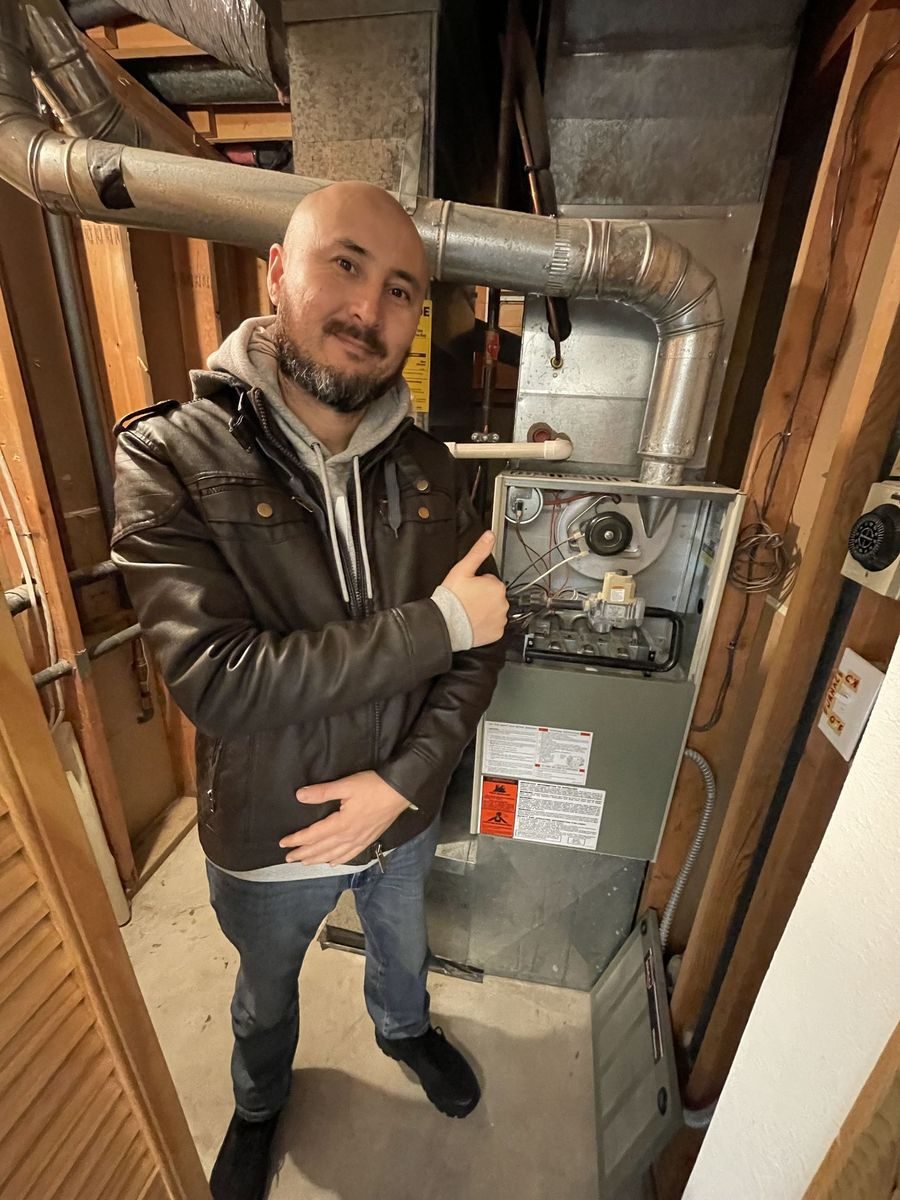
Tab 3 of 12
Many older Bremerton and Manette houses keep the furnace in a closet or under the floor. Filter, inducer, flame sensor and limit switch all get checked in that tight space.
See the service page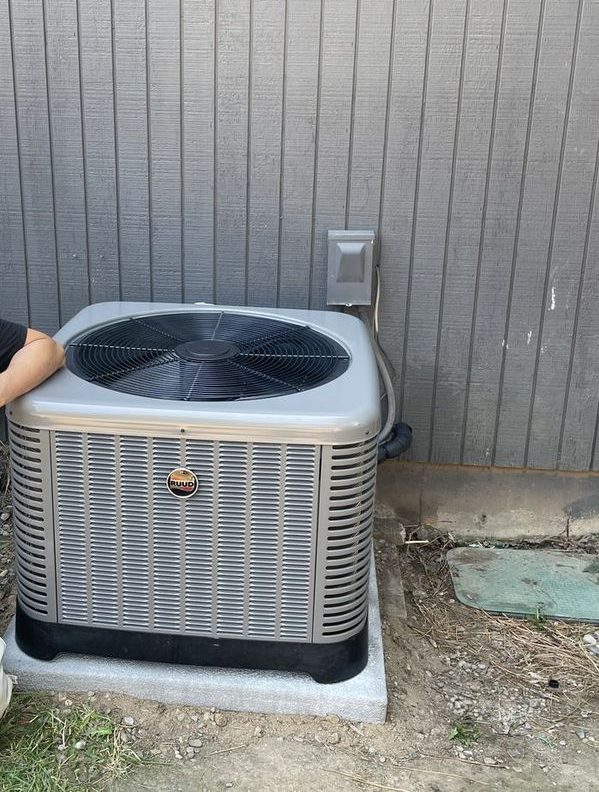
Tab 4 of 12
Placement matters on the peninsula: a raised pad clear of wet ground, back from salt spray where the lot allows, and out from under the needle drop.
See the service page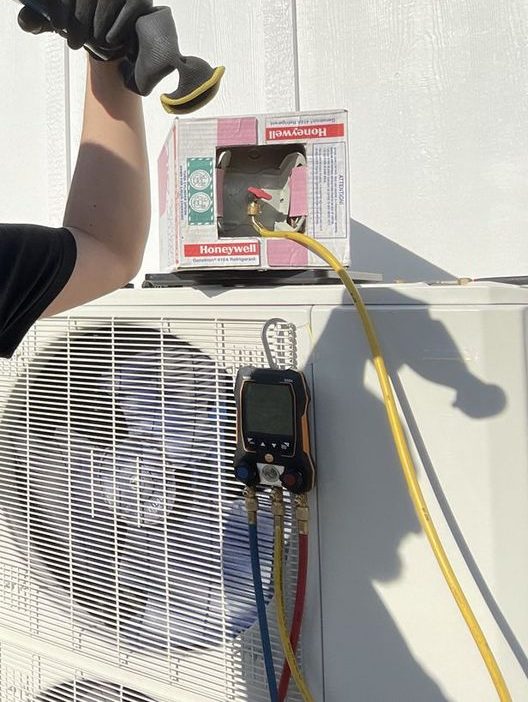
Tab 5 of 12
Mini-splits fit older homes with no room for ducts. Their line sets need sound insulation where they cross a damp crawlspace, and the outdoor unit needs a clear drain path.
See the service pageTab 6 of 12
A seasonal visit near the water means a coil rinse, a look at the fasteners for salt rust and a base pan that drains. Those three buy waterfront equipment years.
See the service page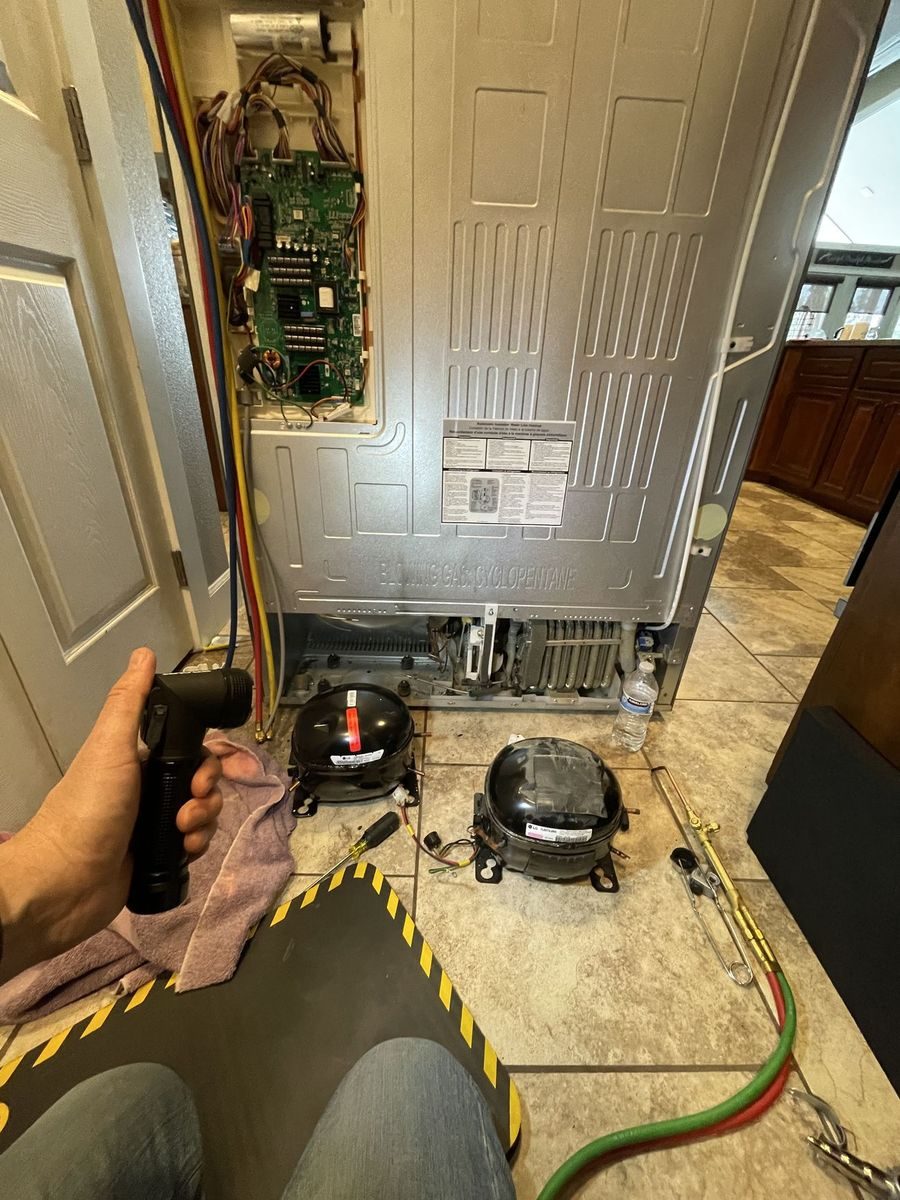
Tab 7 of 12
Sealed-system work, from leak search to recharge, happens right in the kitchen under EPA 608 Universal credentials, so the fridge stays where it stands.
See the service page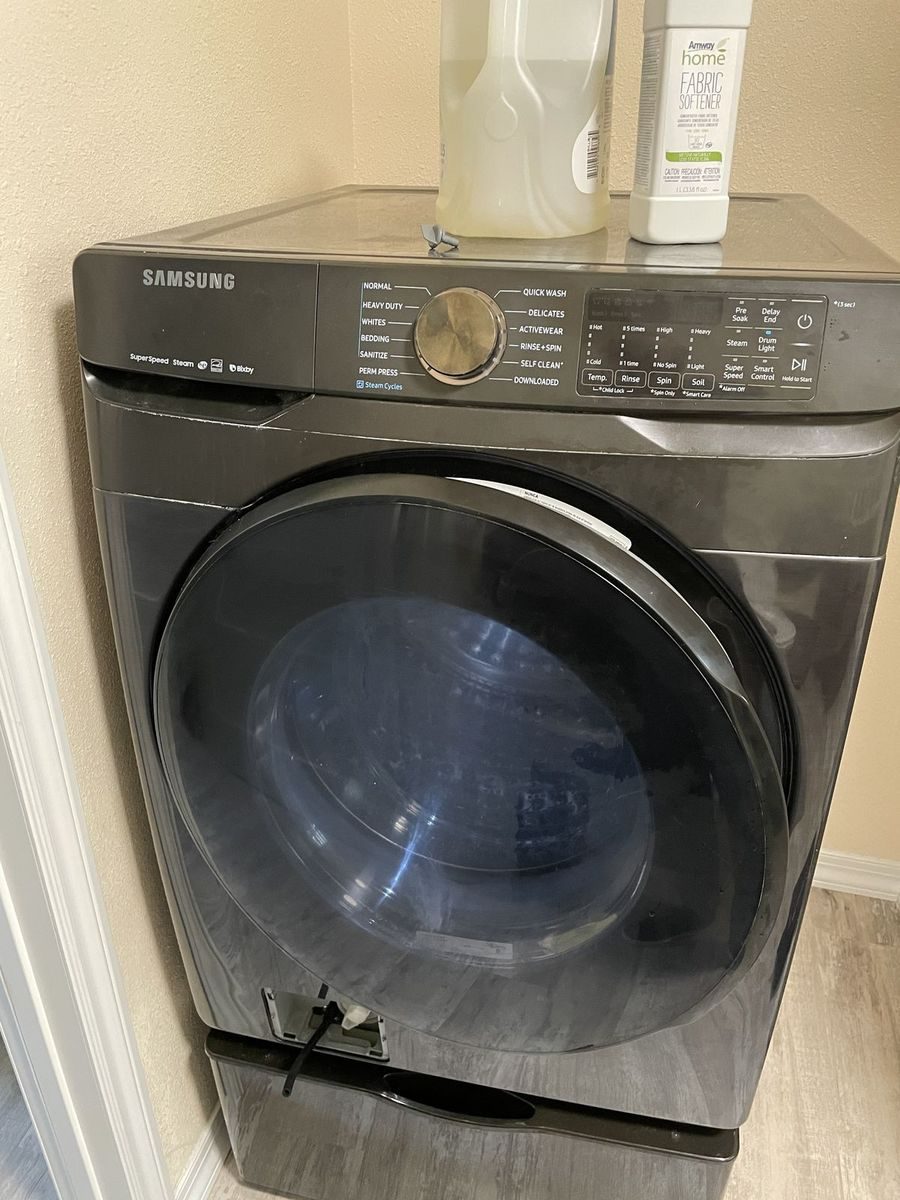
Tab 8 of 12
Damp Kitsap laundry rooms are hard on door boots, so mildew, torn folds and a clogged pump filter are the first things we look at on a front-loader.
See the service page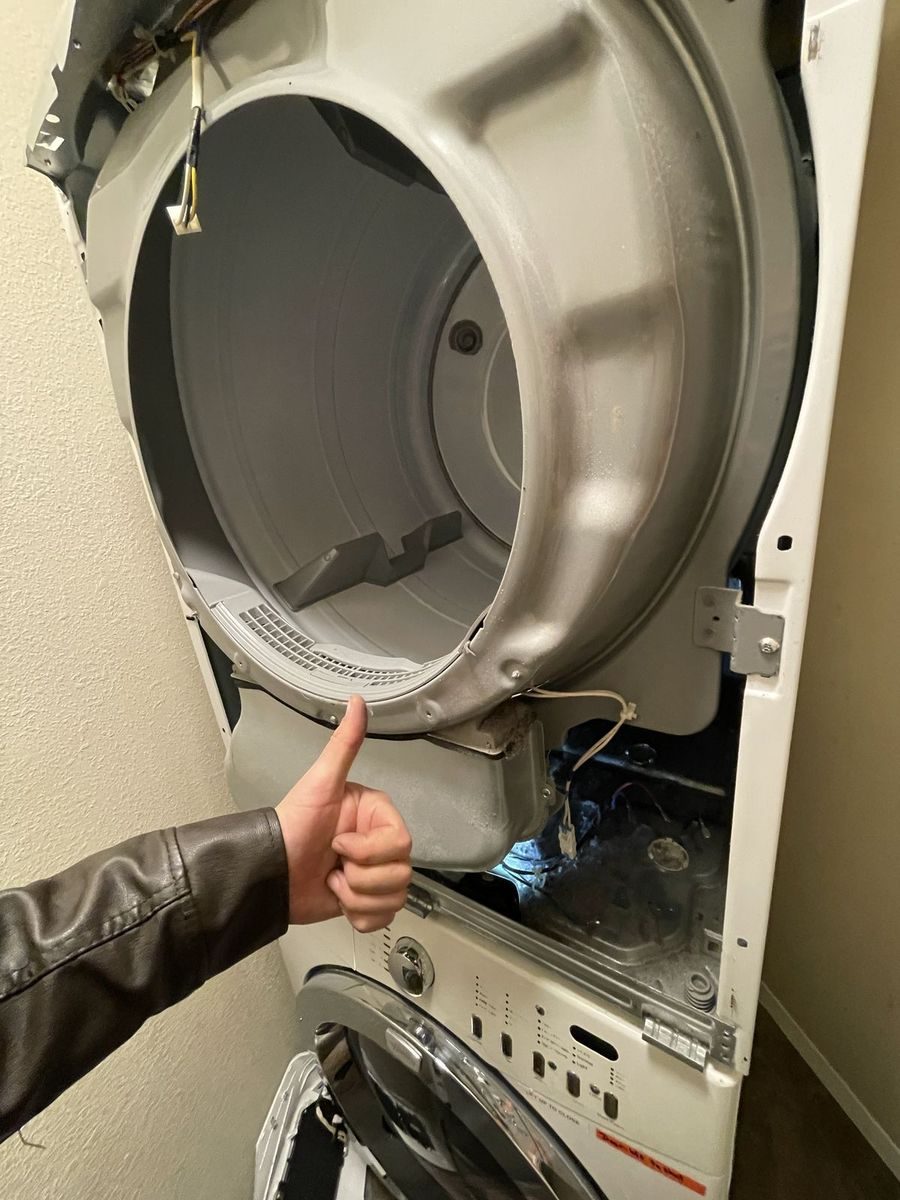
Tab 9 of 12
Long vent runs through damp walls fill with lint quickly, so the vent gets tested along with the heating side: element or burner, thermal fuse and thermostats.
See the service page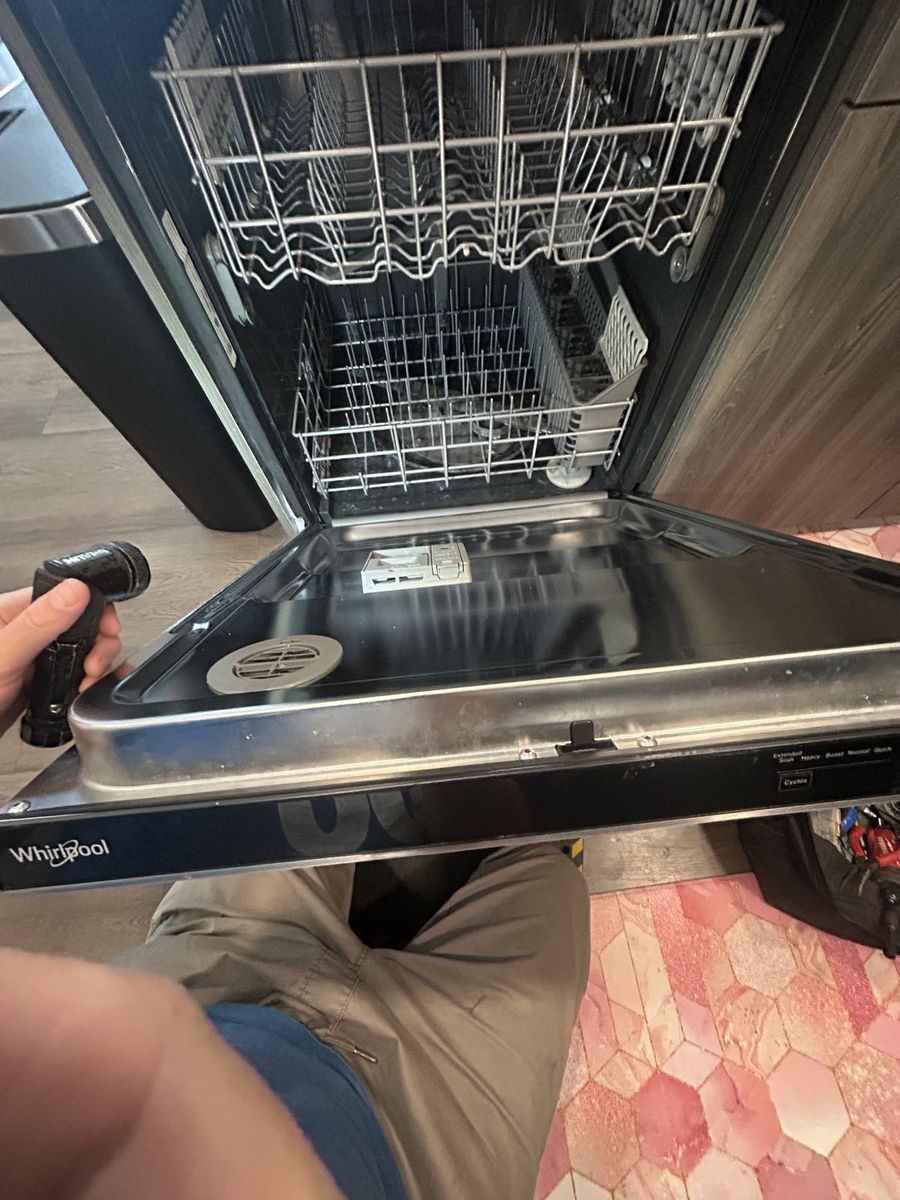
Tab 10 of 12
Well water leaves minerals on the spray arms and the inlet screen, two early stops when dishes come out dull or the tub fills slowly.
See the service page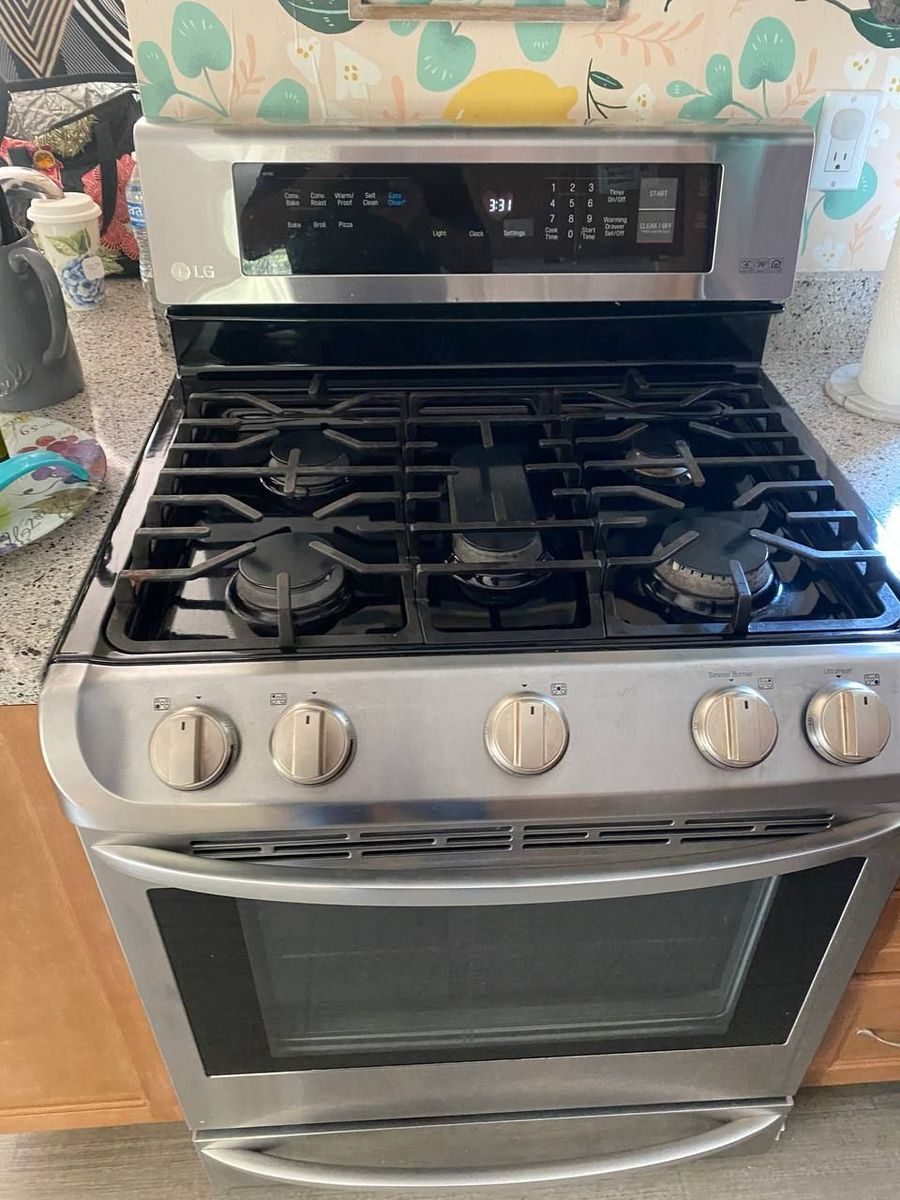
Tab 11 of 12
Natural gas and propane ranges both get igniter, valve and flame checks. The tank and its lines stay with your propane supplier.
See the service page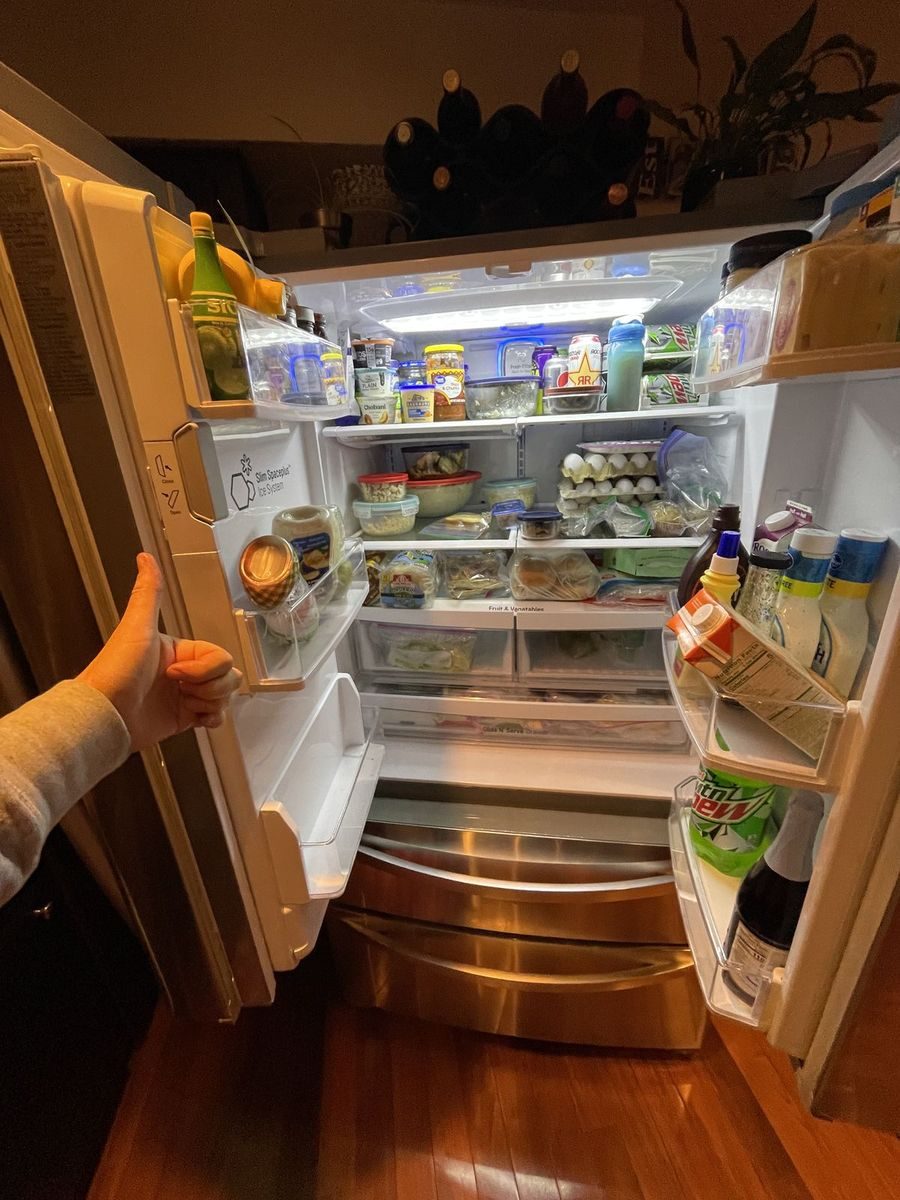
Tab 12 of 12
After a windstorm outage the fill tube often freezes solid and the ice maker goes quiet, so we follow the water up from the inlet valve.
See the service pageAcross the Manette Bridge from downtown, many Manette houses date from the first half of the last century and were heated long before anyone thought about air conditioning. Cooling here is often a ductless system or a coil set on top of an older furnace, with line sets routed along siding or through the crawlspace. We check those long runs for kinks, rubbing and leaks.
In Charleston, older homes sit near enough to Sinclair Inlet that salt air reaches the condenser. Units wedged into side yards here tend to show corroded fins and tired capacitors at the same time. We clean what can be cleaned, measure what is left, and lay out repair and replacement side by side, the latter as a written quote.
Away from the shoreline, much of East Bremerton is shaded by tall fir, cedar and alder. Needles and spring catkins drift into condensers and clog the coil from the base up, starving the fan of air on the first hot afternoon. We clear the cabinet floor and check airflow and fan amperage before deciding whether the charge needs a look.
Yes, it can shorten the unit's life. A condenser pushes hot air out through its coil and top fan, and a fence or wall within a foot or so sends part of that air straight back in. Head pressure rises, the compressor strains, and capacitors fail sooner. Makers list clearances on the installation sheet; our technician compares yours and suggests what could be trimmed or pulled away.
Only the diagnostic fee, a figure the office shares during booking. Accept the repair, and that fee gets swallowed by the repair total rather than billed apart. Pass, and it settles the visit in full. The repair price goes onto paper first, and no wrench turns until you sign off on it.
Yes. Our technicians repair ductless systems from Mitsubishi, Fujitsu, Daikin, LG and other common makers. Typical faults include a clogged indoor coil, a failed fan motor, a drifting thermistor, or refrigerant creeping out at a flare nut. We decode the blinking light, test whichever part it implicates, and handle refrigerant work ourselves, since the EPA 608 Universal credential travels with every technician.
It hinges on how crowded that day's route already is, and hot weeks crowd fast. The online scheduler shows every day and arrival window still open, and the office line is answered daily, 8 AM–7 PM. After you book, the office rings to confirm, and later the technician phones while rolling toward you. Testing your system before forecast heat leaves more openings to choose from.
Talk to a person
Choose any open day and arrival window in the scheduler or phone the office; either way, a call confirms it. Before our technician lifts a tool, the repair price is on paper in front of you.
Schedule online
Tell us what needs attention, the day that works and the window you prefer. A scheduler calls to make it firm, and the technician rings again before pulling up.
Washington Labor & Industries keeps these records public. Each number can be searched on L&I Verify; scope details sit on a separate page.
Scope of each license