Tab 1 of 12
Heat pump repair
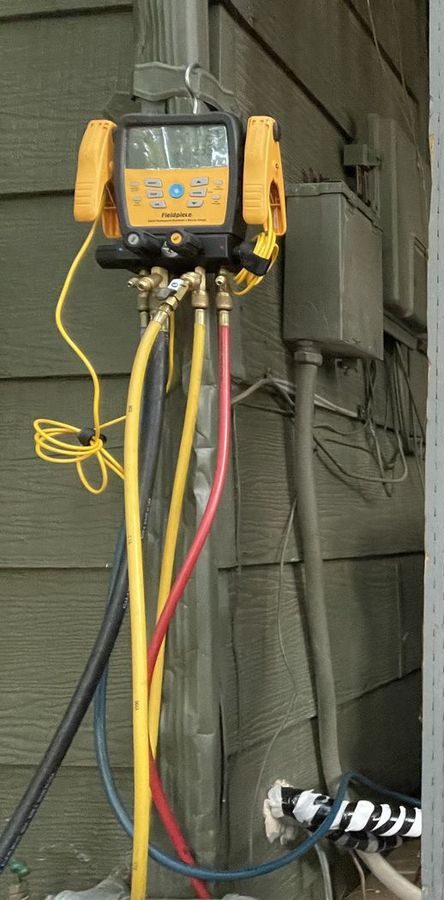
Through the gray months we watch the defrost cycle closely, because a coil that never clears is the classic Kitsap winter call. Capacitors and the reversing valve come next.
See the service page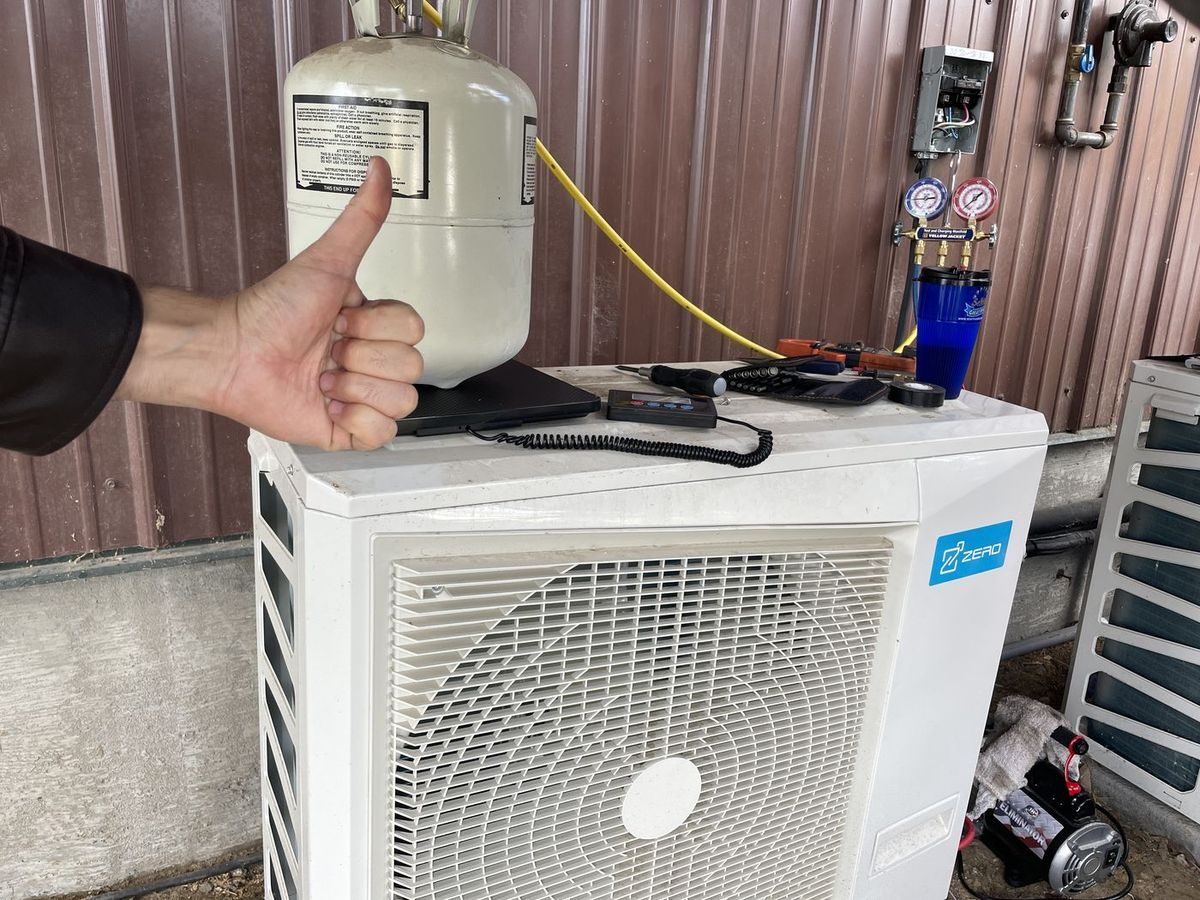
Silverdale · Heat pump repair
Houses in Silverdale trade occupants often, and a heat pump has to work the day a family unpacks. Our technicians sort out defrost faults, stubborn AUX heat and tired original equipment, pricing each repair on paper first.
Straight to it
A Silverdale heat pump that frosts over, puffs out lukewarm air or keeps its AUX heat busy usually needs attention at the defrost control, outdoor fan, reversing valve, capacitor or refrigerant charge, and original units in newer subdivisions are reaching that stage. We test the system, write the repair price, and wait for your approval; if you are relocating, pick an arrival window that fits your moving dates.
Run it in heat mode for fifteen minutes, ideally before the walkthrough or right after you get keys. Warm air should reach the registers within a few minutes, the outdoor fan and compressor should both hum along, and the AUX light should fade once the house nears its setpoint. Pull the filter and note its size, then read the outdoor unit's nameplate for its manufacture date. Look at the thermostat as well, since a previous occupant may have left it locked on auxiliary heat or configured for different equipment. If you rent, repairs are normally the landlord's or property manager's call, so bring them in early and book around your move-in date and the moving truck.
Builder-grade heat pumps in Silverdale's newer subdivisions are aging into the repairs that follow years of long winter runtimes: run capacitors losing microfarads, contactors pitting, outdoor fan motors wearing, defrost boards and coil sensors failing, and now and then a reversing valve or TXV that sticks. For refrigerant recovery and charging, our people work under EPA 608 Universal credentials, and LARCHHA742PL lists our 06A HVAC/Refrigeration specialty. As for cost, a diagnostic fee applies, and the office names it when the visit goes on the calendar. Accepting the repair rolls that fee into its total; refusing it means the fee is all that is due.
They keep it running long hours and defrosting often. The peninsula is wetter than the cities across the Sound, which sit in the Olympic rain shadow, and winter days hover in the 35–50°F range: efficient weather for a heat pump, but humid enough that the outdoor coil frosts readily. Each defrost shifts the reversing valve, so a whoosh and a puff of steam from the outdoor unit now and then is normal. Fir needles in fall, alder catkins in spring and moss on shaded cabinets all choke the coil, which makes frost form faster and defrost come around more often.
Windstorms add outages to the mix, and power that returns in fits can upset a control board. Once power is back, turn the thermostat off for a few minutes, check the breaker once, then restore heat. Keep a two-foot apron of open ground around the outdoor unit and brush off its top grille. When you need us, reserve a day and an arrival slot through our scheduler or reach the office, which picks up every day, 8 AM–7 PM; a confirming phone call follows, and the technician rings when the van is rolling.
Each tab holds a photo from our service calls and a note on what we check first. Pick any tab; left alone, they turn every few seconds.
Tab 1 of 12
Through the gray months we watch the defrost cycle closely, because a coil that never clears is the classic Kitsap winter call. Capacitors and the reversing valve come next.
See the service page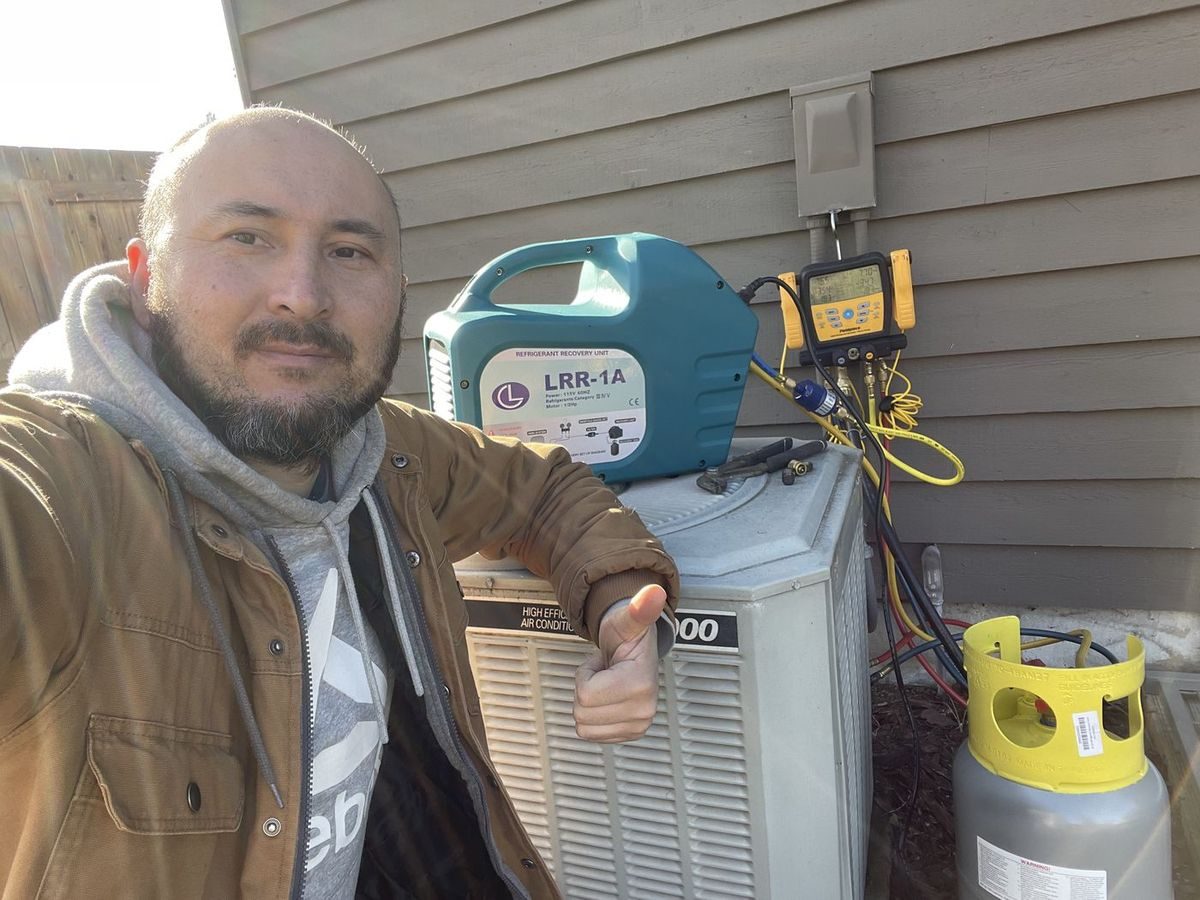
Tab 2 of 12
More Kitsap homes have cooling since the 2021 heat dome. When a system falls behind on a hot afternoon, we start with airflow, the capacitor and the refrigerant charge.
See the service page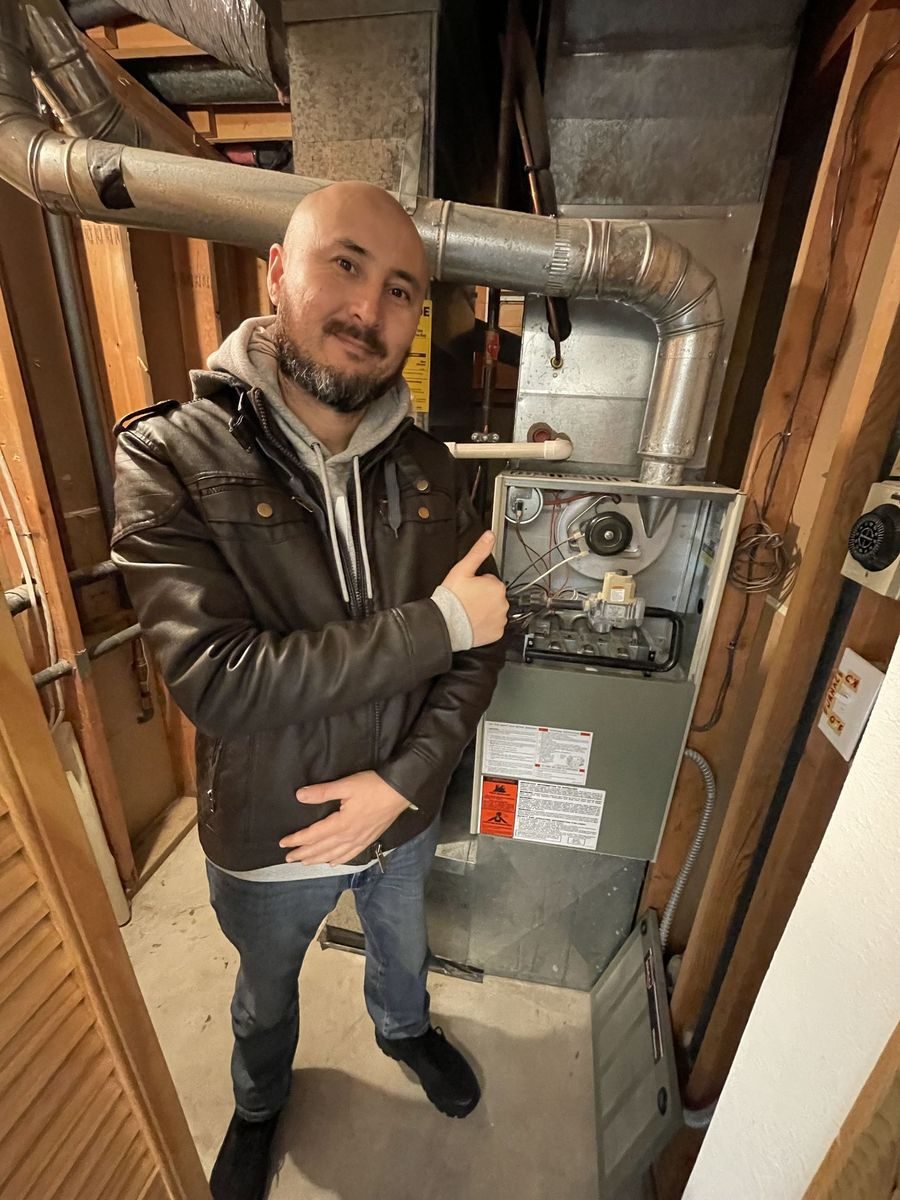
Tab 3 of 12
Many older Bremerton and Manette houses keep the furnace in a closet or under the floor. Filter, inducer, flame sensor and limit switch all get checked in that tight space.
See the service page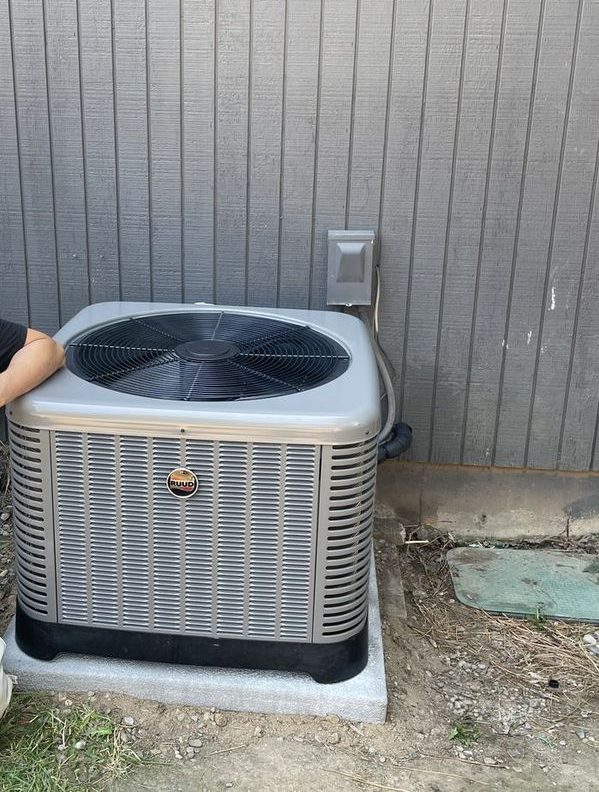
Tab 4 of 12
Placement matters on the peninsula: a raised pad clear of wet ground, back from salt spray where the lot allows, and out from under the needle drop.
See the service page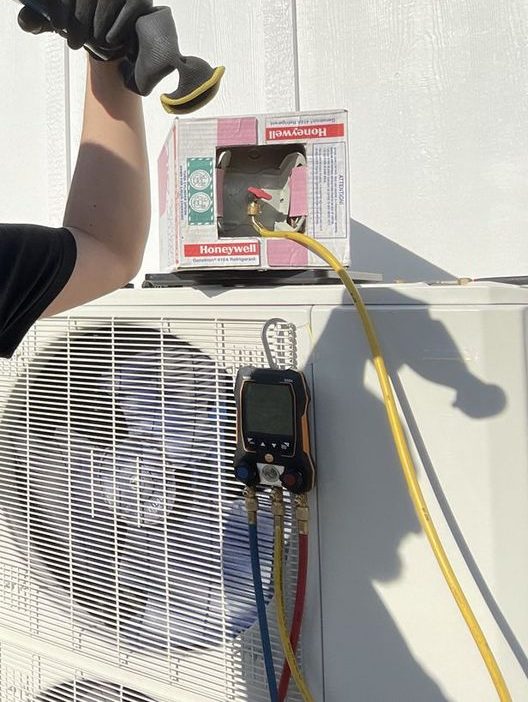
Tab 5 of 12
Mini-splits fit older homes with no room for ducts. Their line sets need sound insulation where they cross a damp crawlspace, and the outdoor unit needs a clear drain path.
See the service page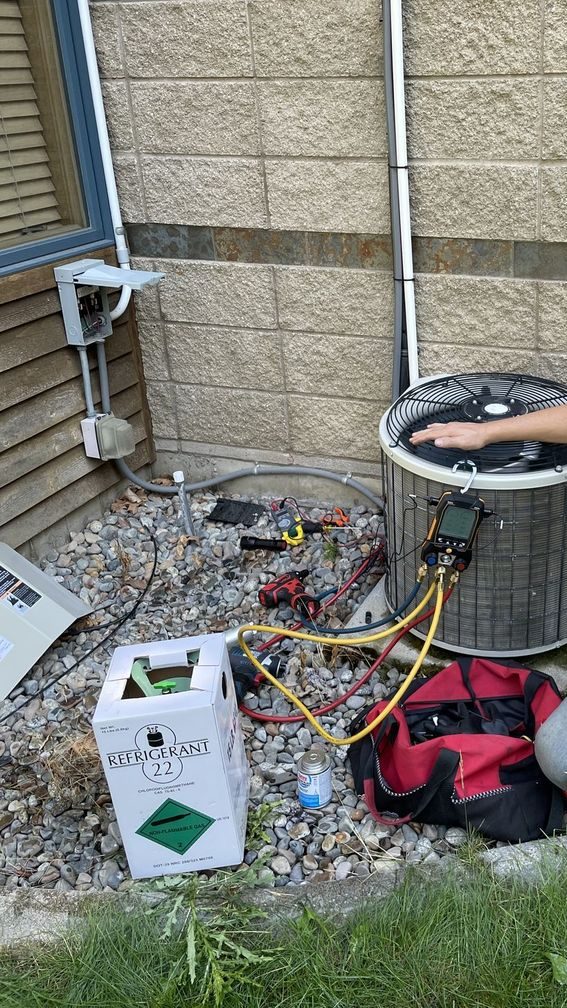
Tab 6 of 12
A seasonal visit near the water means a coil rinse, a look at the fasteners for salt rust and a base pan that drains. Those three buy waterfront equipment years.
See the service page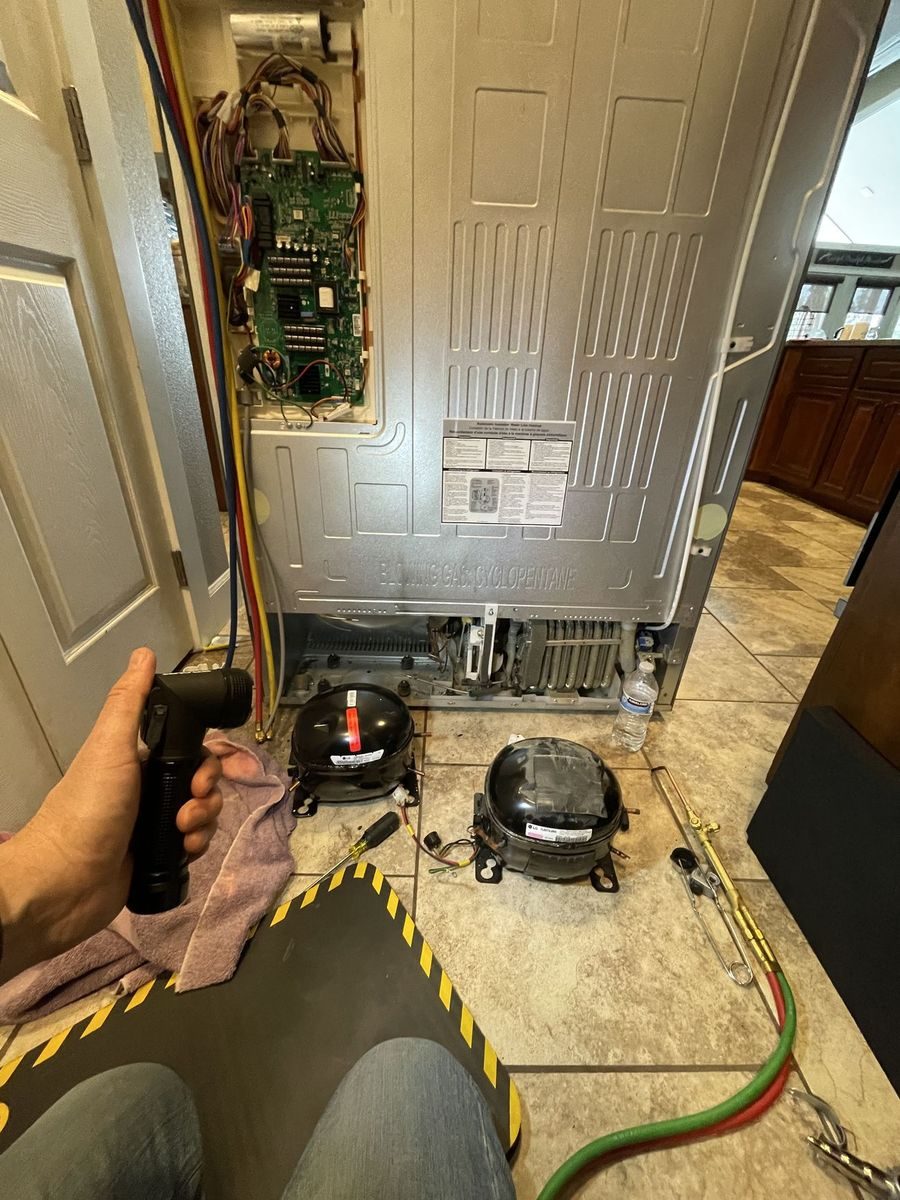
Tab 7 of 12
Sealed-system work, from leak search to recharge, happens right in the kitchen under EPA 608 Universal credentials, so the fridge stays where it stands.
See the service page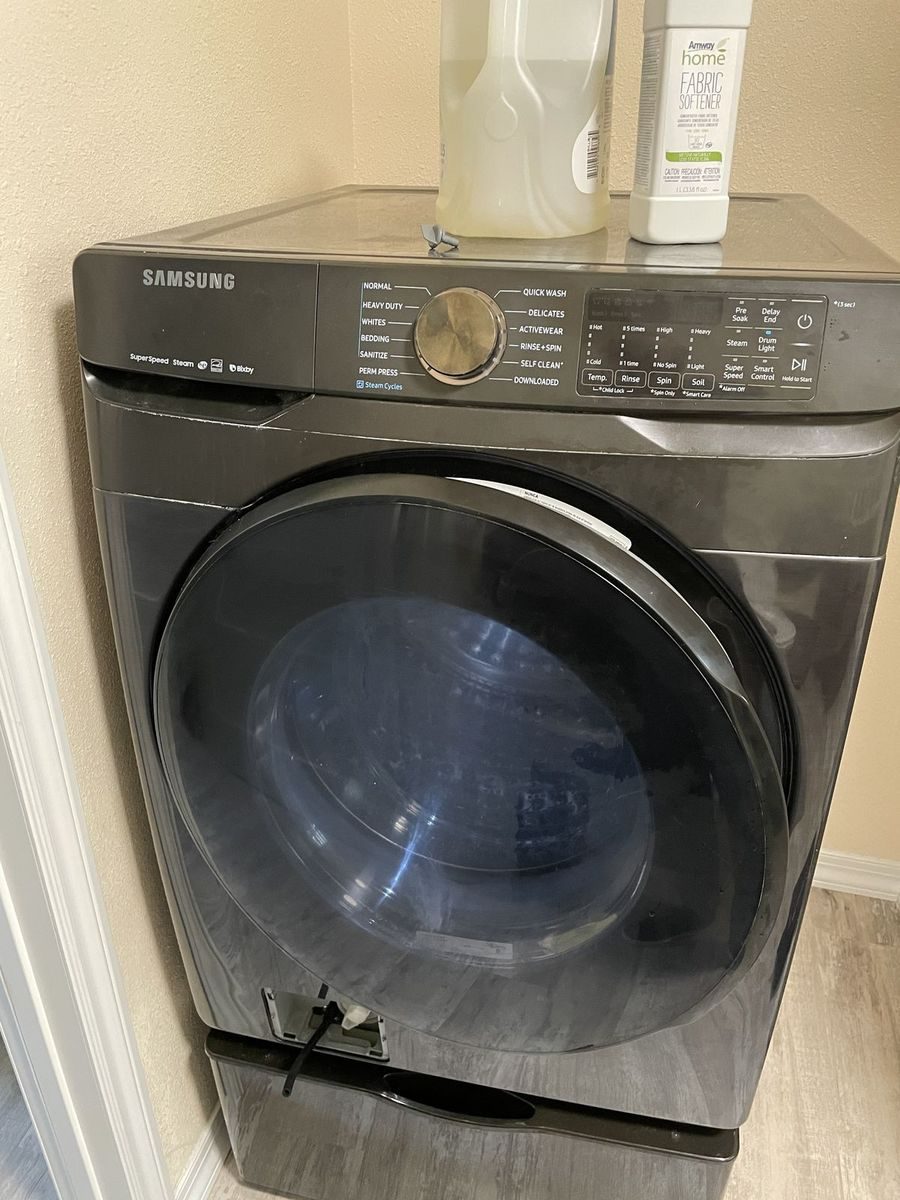
Tab 8 of 12
Damp Kitsap laundry rooms are hard on door boots, so mildew, torn folds and a clogged pump filter are the first things we look at on a front-loader.
See the service page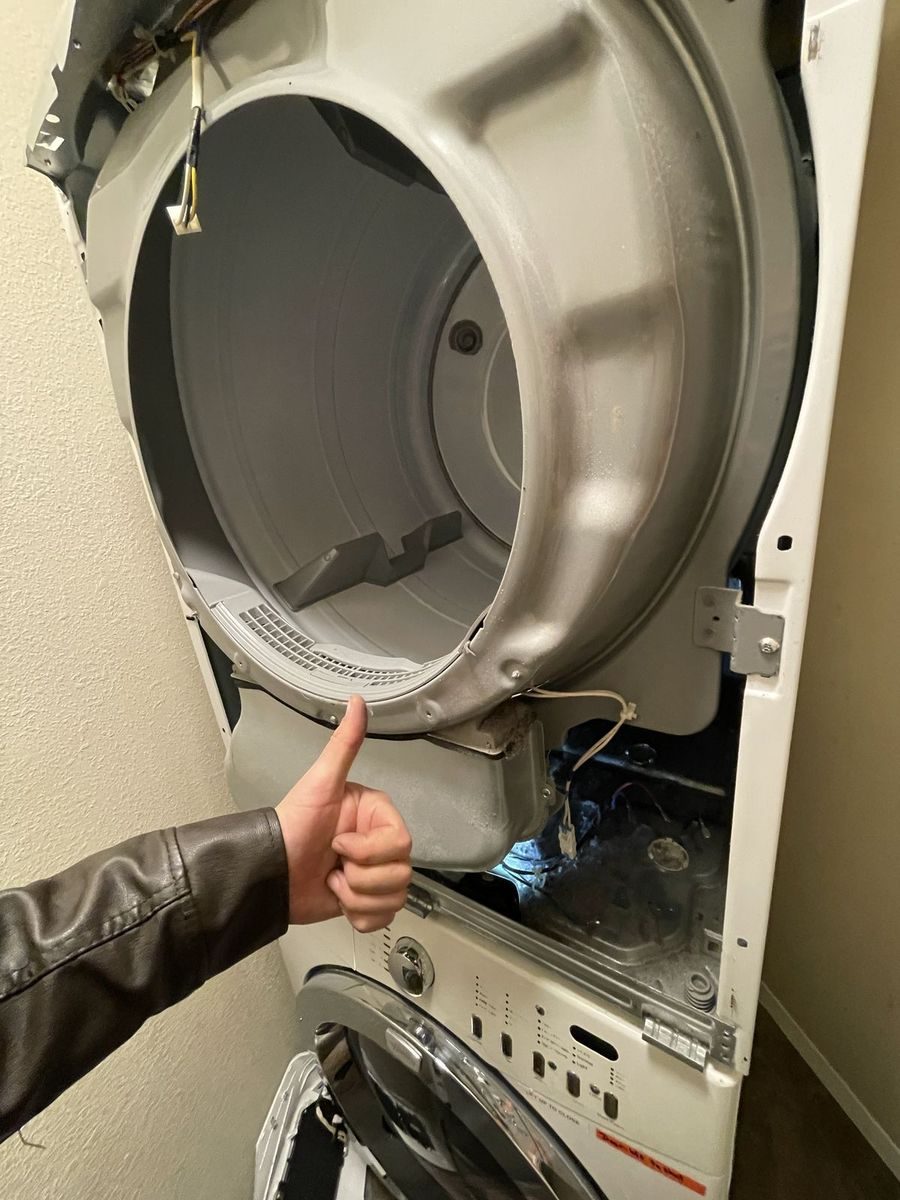
Tab 9 of 12
Long vent runs through damp walls fill with lint quickly, so the vent gets tested along with the heating side: element or burner, thermal fuse and thermostats.
See the service page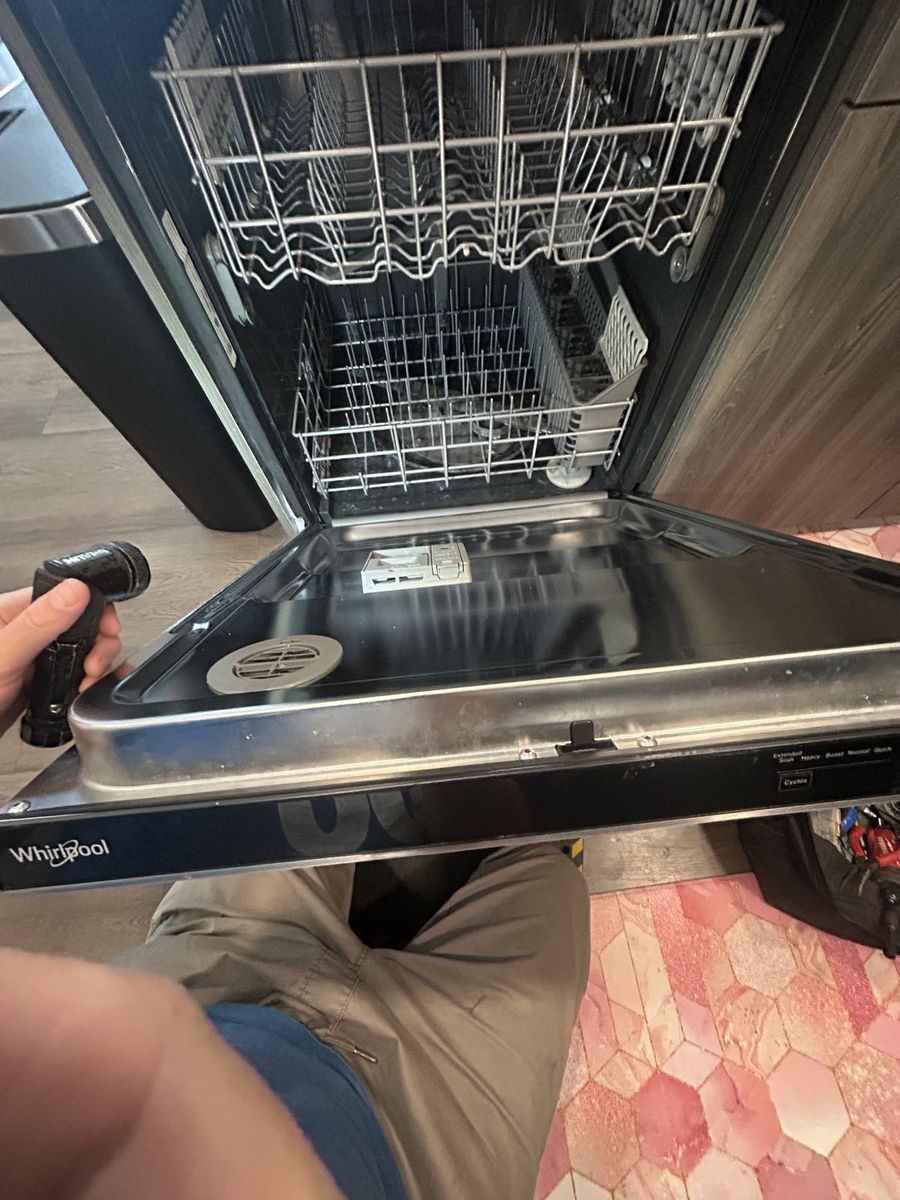
Tab 10 of 12
Well water leaves minerals on the spray arms and the inlet screen, two early stops when dishes come out dull or the tub fills slowly.
See the service page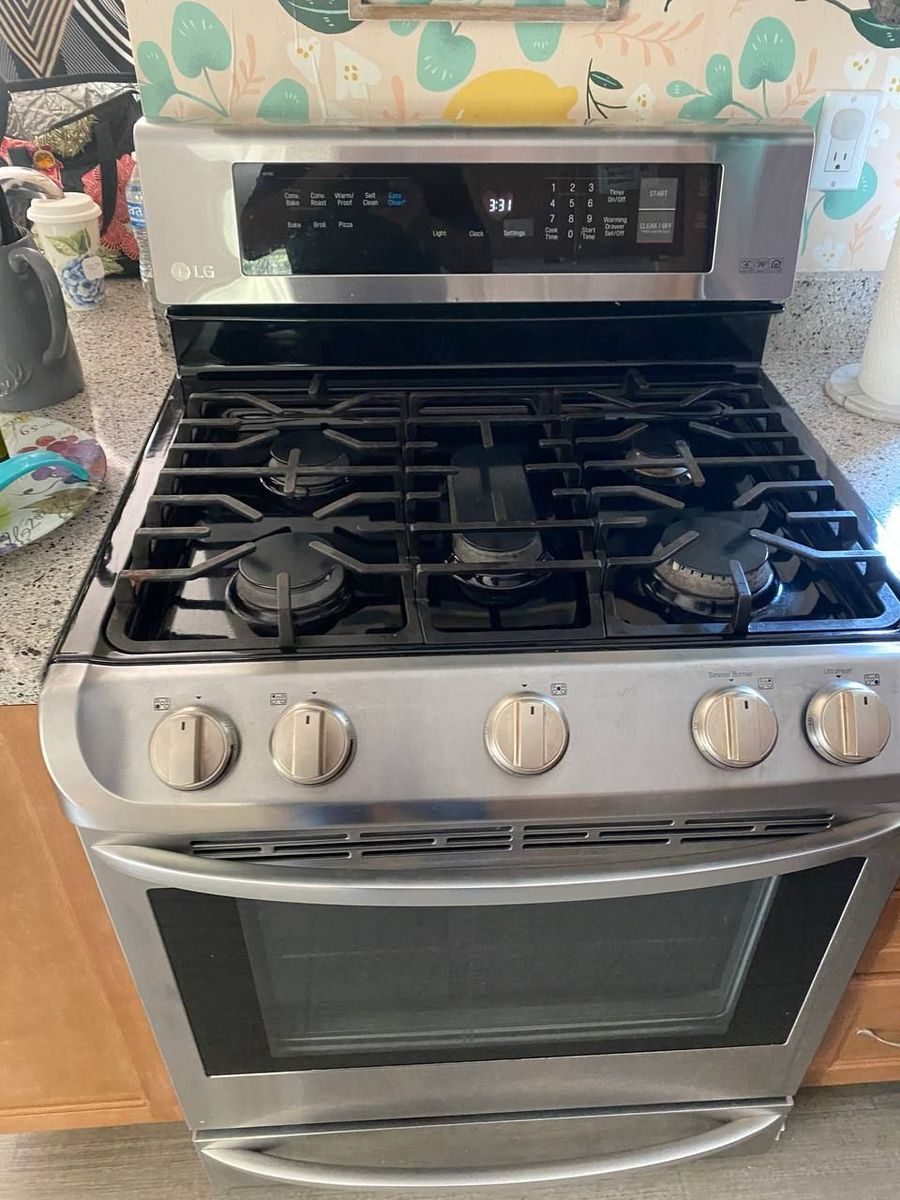
Tab 11 of 12
Natural gas and propane ranges both get igniter, valve and flame checks. The tank and its lines stay with your propane supplier.
See the service page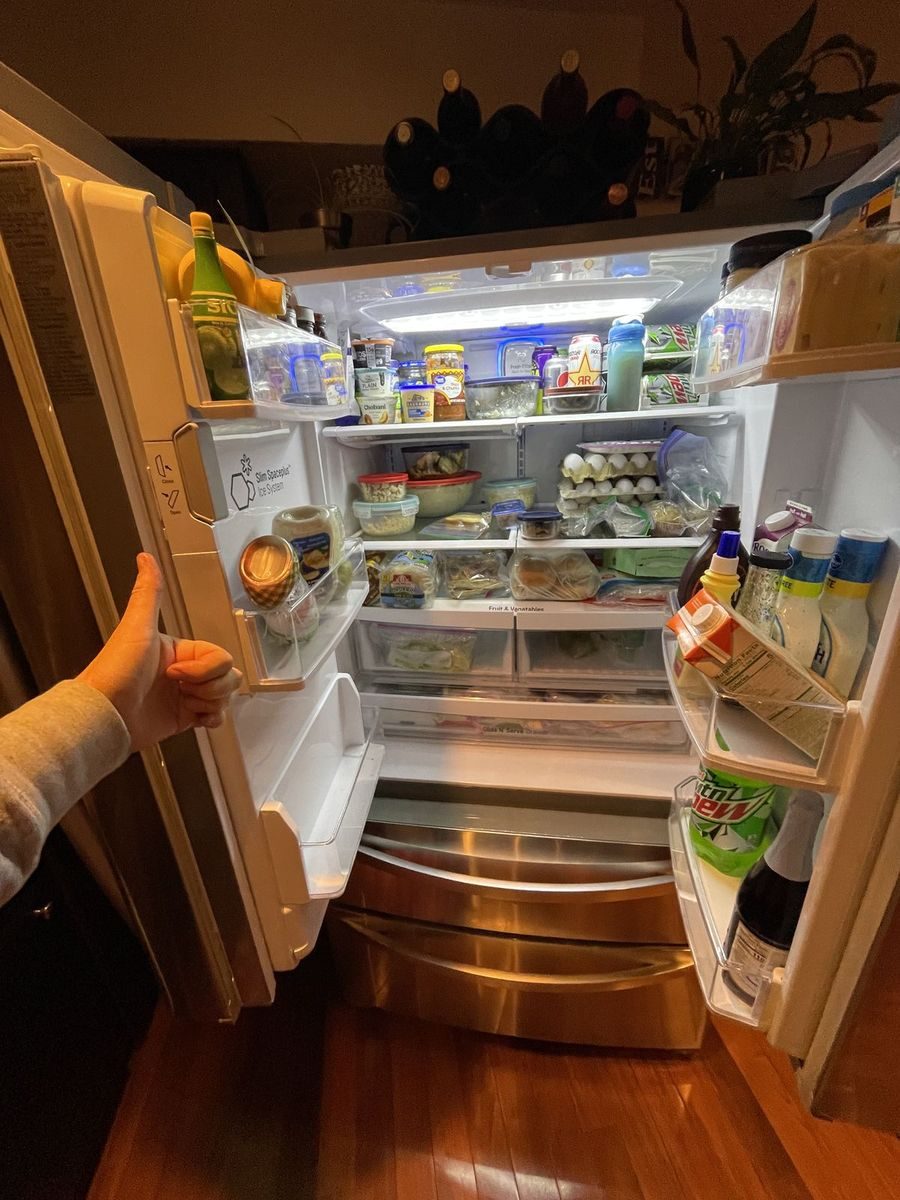
Tab 12 of 12
After a windstorm outage the fill tube often freezes solid and the ice maker goes quiet, so we follow the water up from the inlet valve.
See the service pageHomes on the north side of town turn over often, and many sit empty for a few weeks between households. A heat pump left idle between occupants may show a dead capacitor, mice in the air handler or a filter long overdue. Booking ahead of move-in day gives time to sort it before the boxes arrive.
The newer neighborhoods on the hills were built with builder-grade heat pumps that are now well into their service life, so original defrost boards, contactors and fan motors tend to wear together. When repair stops making sense, we price a new system, equipment and installation combined in one number, so you can weigh both on paper.
Older homes near Old Town and the port sit close to Dyes Inlet, where salt air corrodes outdoor coils and fasteners, and many added a heat pump or ductless system years after they were built. We check for corroded joints and slow leaks, and confirm the system defrosts and heats as it should.
Yes, when an open window fits your dates. Use the scheduler to choose a day plus arrival window, or phone the office, and mention the move so scheduling can work around it. The technician tests heating, defrost and AUX staging, then writes up any needed repair with its price. In a rental, have the owner or manager approve before the visit.
Almost certainly it is defrosting. In damp weather near freezing, frost builds up on the outdoor coil, and the heat pump reverses itself briefly to melt it, producing a whoosh, a pause and a burst of vapor. That is normal. If ice remains on the coil afterward, if defrost repeats every few minutes, or if the outdoor fan never restarts, a sensor, board or valve may need testing.
Usually because the thermostat is recovering from a night setback. When the house sits several degrees below setpoint, many thermostats bring on backup heat strips to catch up quickly, which uses far more electricity. Try a smaller setback or none at all, or enable a slow-recovery setting if the thermostat has one. When AUX keeps running though the setpoint holds steady, have us check the charge and controls.
Through a diagnostic fee, its amount given by the office while booking you. Approving the repair turns that fee into a portion of the repair total. Pass, and you settle only that fee. Before any wrench comes out you get a written price; special-order parts are quoted in advance, and your invoice spells out warranty coverage in writing.
Talk to a person
Settle on a day and an arrival slot in the scheduler, or ring the office during its hours. Confirmation arrives as a phone call, and the technician checks in once heading your way.
Schedule online
Tell us what needs attention, the day that works and the window you prefer. A scheduler calls to make it firm, and the technician rings again before pulling up.
Washington Labor & Industries keeps these records public. Each number can be searched on L&I Verify; scope details sit on a separate page.
Scope of each license